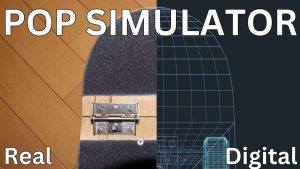
"Lower trucks pop lighter," and "higher trucks pop higher." Scientifically, are they really correct?
Key points:
1. The height of the trucks and the force required to start tilting the tail are almost unrelated.
2. Based on calculations, with a difference of 5mm, the tail can reach the ground with 9% less force with lower trucks, and the popping force can be 10% stronger with higher trucks.
3. It also affects the turning ability.
Is it true that lower trucks make it easier to pop with less force?
Since multiple factors are involved, we will separate it into two parts:
- The force required for the tail to start going down
- The force required for the tail to reach the ground
Let's begin with the first one. When you pop, the board begins to rotate around the rear wheels' axle.
There is physics behind this, but the shape of a skateboard is somewhat too complex to explain it, so let me give you an example of an object with a simpler shape: a door. When you push it, it opens around the hinge just like a skateboard rotates around the axle. In that sense, although there are some differences in the shapes, the same basic principle applies to both.
Now, imagine an L-shaped door. The force needed to start opening the door does not change with a flat door, despite the difference in shape. The same can be said regardless of the length of the vertical part of the door. No matter how long the vertical part is, the door starts to open with the same amount of force.
**Assuming the weight and center of mass remain constant.
It does change, however, when you push closer to the hinge. The point is that the primary factor determining how much force it takes to open the door is where you push, not the door's length.
A skateboard works in a similar way. Increasing the truck height is like making the "vertical part" of the L longer. As long as you pop the same spot, the force required to start tilting the board remains the same. So, the height of the truck does not change how lightly the tail starts to tilt. The required force changes only when you change where you pop.
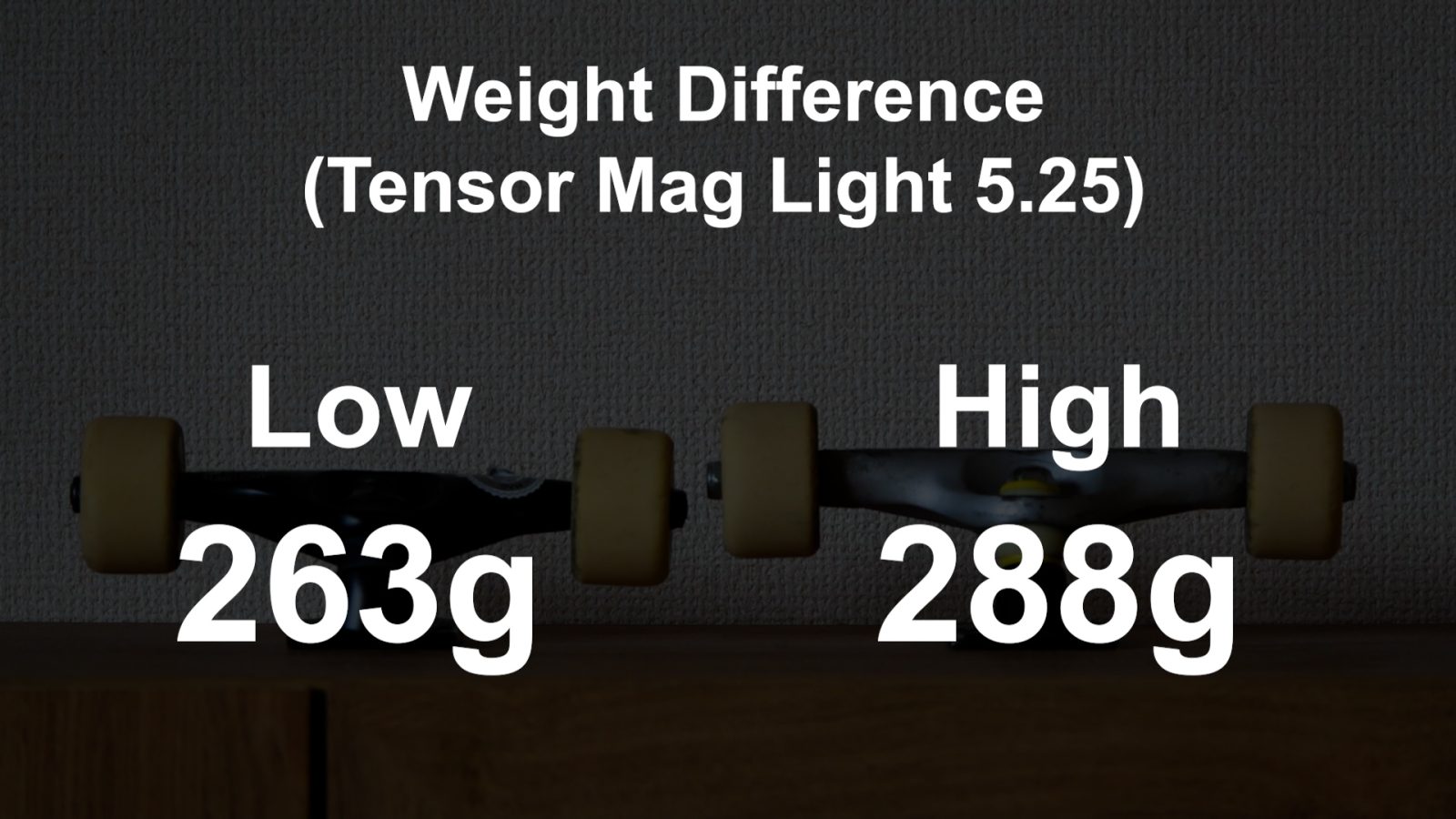
In practice, changing the truck height also changes the weight. However, the mass difference between typical Hi and Low trucks is only a few tens of grams, so we will exclude it this time.
Next, let's consider the force required for the tail to reach the ground. Assume the truck height differs by 5 mm between Hi and Low trucks, and the distance from the axle to the tail is 20 cm for the low truck, and the time to complete a pop is 0.1 seconds in both cases. If you calculate it, you can see that the tail reaches the ground with about 9% less force with lower trucks. 9%. I'm not saying it is meaningless. It's just that the difference in the lightness of pop is so subtle that I personally couldn't feel it.
Is it true that higher trucks allow you to pop higher?
To begin with, what matters most for a stronger pop is how forcefully the tail hits the ground. For that to happen, the tail must accelerate sufficiently before hitting the ground.
Assume you apply a constant force to the tail until it reaches the ground when popping. The higher the trucks, the farther the tail is from the ground, which means it has more time to accelerate before impact.
The actual pop is more of a momentary, instantaneous snap, and the force after the first moment doesn't remain constant; it should rapidly decrease. But this topic is so complicated already, so to simplify it, we assume it remains constant until the end.
If you use the same board as before, the energy is about 10% greater with higher trucks. Meaning, the tail hits the ground more strongly with higher trucks, potentially allowing you to Ollie higher. Why potentially? Because this calculation applies when you continue to apply the constant force to the tail.
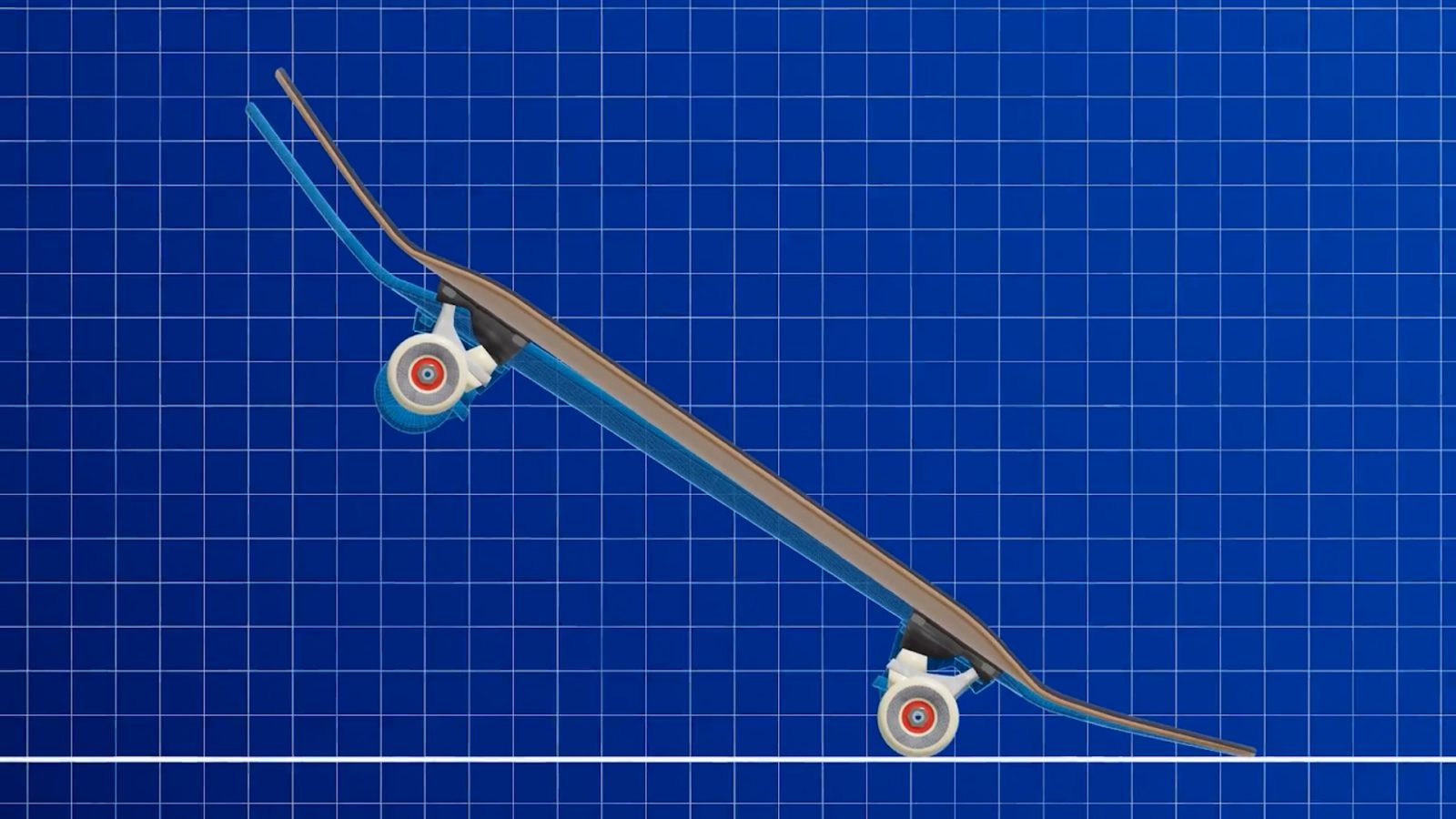
Also, please don't forget the board angle. Higher trucks make the board's angle bigger by about 2~3 degrees, and the nose can bite into your front foot more strongly, too.
Effects on Turning
Next, let's see the effect on turning. Higher trucks allow you to angle the deck more deeply.
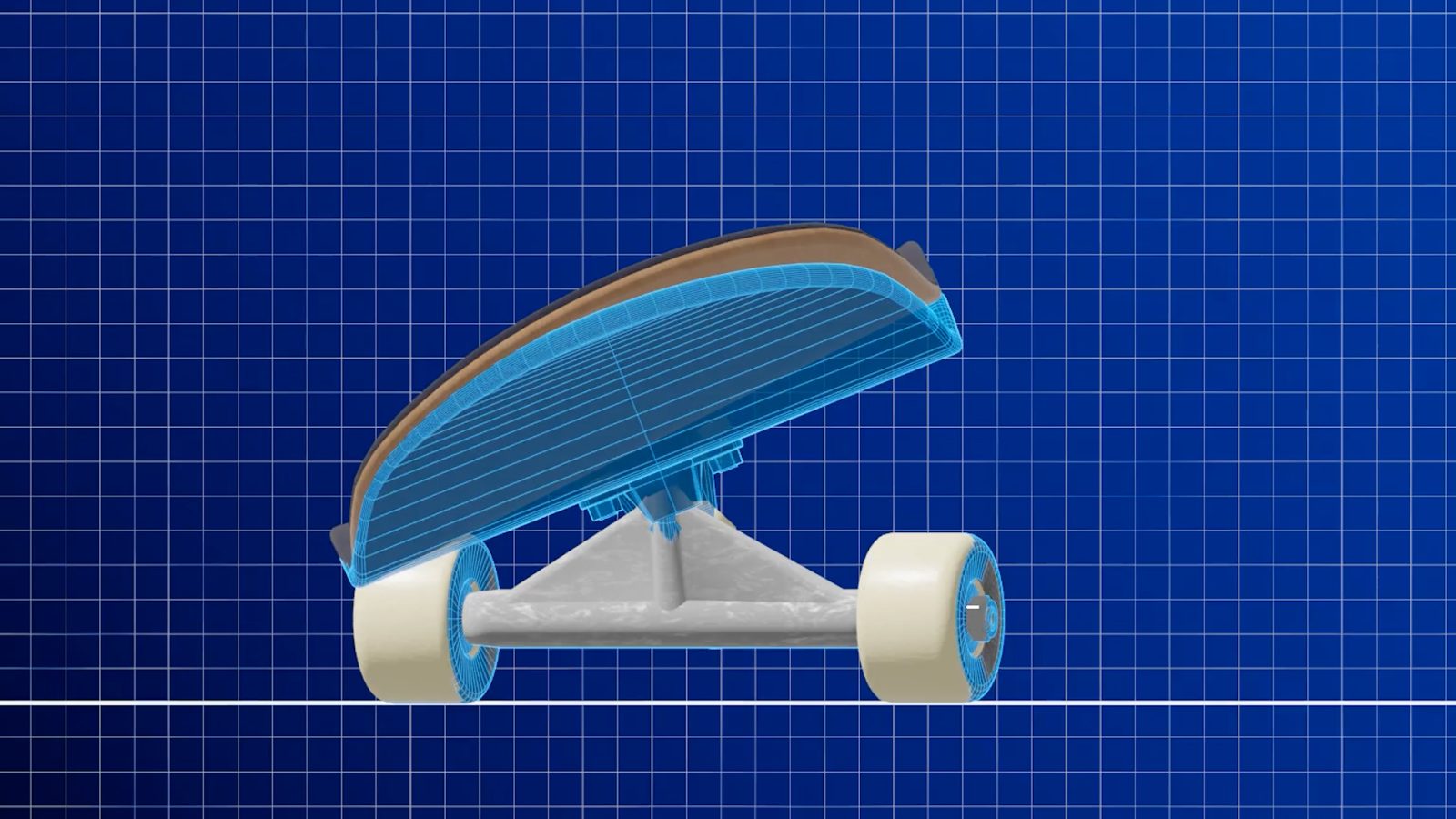
Being able to angle more deeply results in a tighter turning arc, enabling quicker turns. In addition, higher trucks greatly reduce the chance of wheelbite.
Summary and cautions
In turning, higher trucks definitely feel better. And in light of pop, lower trucks give you 9% lighter pop, and higher trucks give you 10% higher pop. But the most important point is that even if the board rebounds higher, that does not directly determine the height of an Ollie. For example, if the front foot does not move above a certain height, the board cannot rise higher than that, no matter how much upward force it has. What allows you to lift your board higher is the friction generated when the nose pushes back against your front foot, which can be sufficiently generated with lower trucks, too.
For tricks like a Pop Shove-it, where the front foot leaves the board instantly, the stronger pop from higher trucks may be more beneficial. But higher trucks also mean you must pop deeper to hit the ground and require more precise control. Lower trucks make it easier to hit the ground, potentially making tricks like Pop-Shoves easier to pull off.