

Impact Skateboard features advanced technology. But from an objective, scientific point of view, how are they? We'll see the shape, weight, pop, durability, slide ability, and sound.

Basic Structure & Shape
A skateboard deck is usually not a single wooden plate, but is made of plywood. As wood is essentially composed of fibers, the deck's strength is increased by stacking multiple layers together so that the grain of one layer runs lengthwise while the grain of the next layer runs crosswise. This itself increases the board's strength dramatically.
But Impact Skateboard uses far advanced technology. Take Impact XPU, for example. Inside, it has a wooden core, which is made of wood stacked together side-by-side. Surrounding this is a polyurethane sidewall. On top of it is a carbon fiber layer and a fiberglass layer. Underneath, there is another fiberglass layer, a carbon fiber layer, and finally something called FlowSlick, which is said to make it easier to slide.
There's another version called XPU LITE, which has the same core structure but uses more fiberglass instead of carbon fiber.
Also, when you hear about decks using advanced technology like this, one brand that naturally comes to mind is Almost Skateboards. We'll compare the differences between these decks later.
Weight
Here, I have the Impact XPU and an ordinary blank deck. The blank deck is 7-ply, and both are 8.125 * 31 inches. They have almost identical Noses, and the Tail angles are very similar, but you can see that the Impact XPU has a noticeably longer tail. This is just my personal impression, but after more than 15 years of skateboarding, the tails of the Impact Skateboard feel clearly longer than those of other decks I've used.
Let's actually measure them. XPU weighs 1.235 kilograms, while the blank deck weighs 1.150 kilograms. So yes, XPU is about 85 grams heavier, which is roughly the weight of a D-sized battery.
But is that because XPU has a longer tail? What if they were both the same length? The blank deck is 31 inches and weighs 1.150 kilograms. If we simply scale it up to 32 inches, it becomes 1.186 kg. That means XPU would still be about 50 grams heavier — roughly the weight of an egg. I think a difference equivalent to one egg is something that can be compensated for by the skater's technique. The reason the deck feels heavier could be less about its actual weight and more about the shape. The longer tail gives the nose more energy, which may increase the amount of energy you need when flicking out your front foot in your Kickflip, for example.
Pop Strength
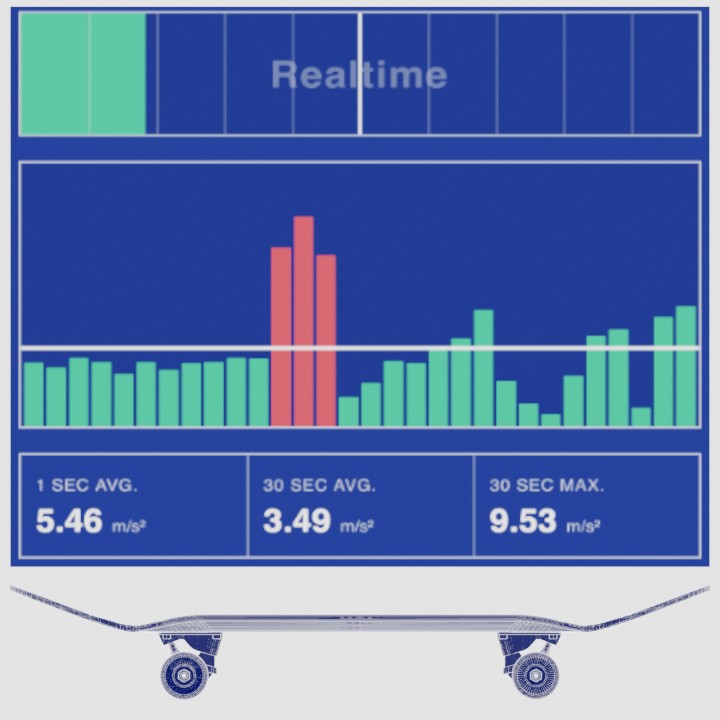
We'll test how much pop do the Impact Skateboard decks have within the range of forces that occur in actual skateboarding. In order to evaluate it objectively, I built a little contraption that can generate a consistent amount of force every time. Basically, the center rod is raised up to the height of a stopper so that it gets released from the same height, and the shoe attached to its end pops the tail. This way, the amount of force applied to the tail remains constant every time. One major issue in any experiment is measurement error. So, we'll try the same condition 30 times and take the average.
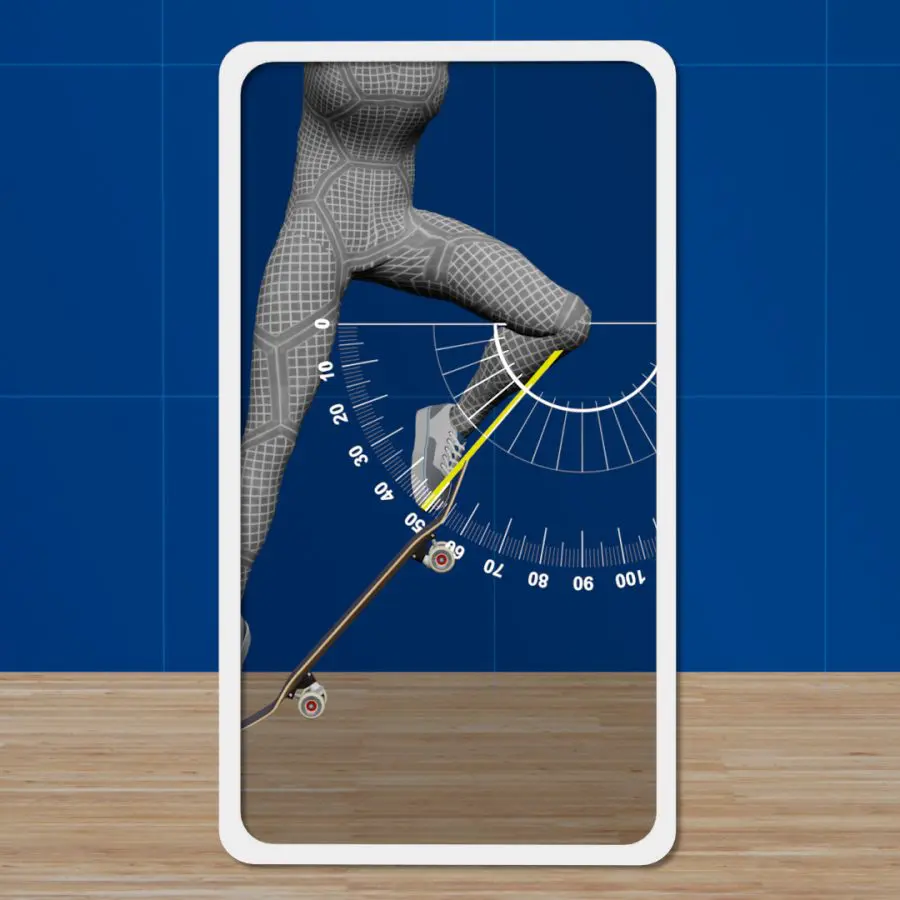
First, the blank deck was tested 30 times. This is the one that's the closest to the average value. On average, it popped to a height of about 9 centimeters off the ground, and its angle reached 57 degrees at the peak height of the tail.
Next, XPU was also tested 30 times. The result was almost identical. It popped 9 centimeters off the ground, and its angle reached 57 degrees.
As explained, these decks have different tail lengths. In order to eliminate unnecessary variables as much as possible, let's pop the nose instead. The blank deck averaged 10 centimeters and 58 degrees.
And XPU averaged 10 centimeters and 59 degrees. From these results, at least when a force is applied instantaneously, there does not appear to be a major difference in how high the boards pop. Please note that this setup differs from an actual skateboarding pop where the force is applied progressively, not instantaneously like in this experiment.
Durability
As stated on the official website, the true strength of Impact decks is that the pop lasts longer. I've tested XPU LITE and XPU for a month individually. As you know, after riding a regular deck for a month, the tail usually starts wearing down, and the nose often begins to chip. But impact decks have shown astonishing durability. Not only is there no sign of razor tail, but honestly, it still feels almost brand-new. I know a deck usually starts to feel softer and more flexible after some time. But, so far, after a month or two, it still pops with the exact same feel.
And it has also proven its chip-prevention ability. Usually, a skateboard deck is made of plywood, and the top layer is especially vulnerable to external force. But when an Impact deck hits something, it's always the sidewall, making it virtually impossible to chip. I'm not saying it lasts forever, but so far, nothing I can feel has changed. Being able to keep riding a deck with the same shape and performance for a long time can be a major advantage. It means you can continue practicing under the same conditions without having to adapt to a new deck.
Slide Performance
Next, let's talk about slide performance. Under certain conditions, this board slides incredibly well thanks to the Flow Slick layer. If you look closely, you can see tiny bumps and grooves. I'm not exactly sure if it comes from the Flow Slick layer itself or from the fiber layers below it, but nonetheless, it seems that this texture may hold the secret to why it slides so well.
When you slide on a normal wooden deck, its fibers begin to break down on a microscopic level, creating resistance and slowing you down.
The Flow Slick layer behaves differently. Its tiny dents seem to help hold wax, which helps you slide longer. I think the benefits of this board become most noticeable on obstacles that would normally slow you down quickly, especially when plenty of wax is applied. On the other hand, on naturally slippery obstacles such as metal rails, the effect is somewhat more limited.
Sound
Let's simply compare the sound of popping the tail. The blank deck has that crisp, hard sound of a brand-new deck. The XPU sounds solid, but the tone is somewhat heavier.
The difference becomes bigger when you drop or roll the board. It almost sounds like a log. This difference is likely caused by the unique internal structure of the deck. It doesn't affect the performance itself, but I suggest keeping this difference in mind before buying it.
Differences from Double Impact
As mentioned earlier, the Double Impact uses carbon fiber discs around the bolts, along with a full carbon fiber top sheet, and is known to be very strong. The problem, however, comes from the fact that while the carbon fiber itself is strong, the structure supporting it is still conventional wood. Because of this, razor tail was inevitable. And the carbon fiber layer had a strong directional structure, which had a tendency to split. After repeated use, the edges of the carbon fiber layer began to break down, making it practically impossible to grab it.
In Impact Skateboard, all these problems are addressed through the use of the sidewall. The carbon fiber layer is protected by the sidewall and is not exposed to the outside. So, the carbon fiber doesn't stab into your hands, and its performance can last longer. So, the introduction of this sidewall basically changed everything while binding everything together.