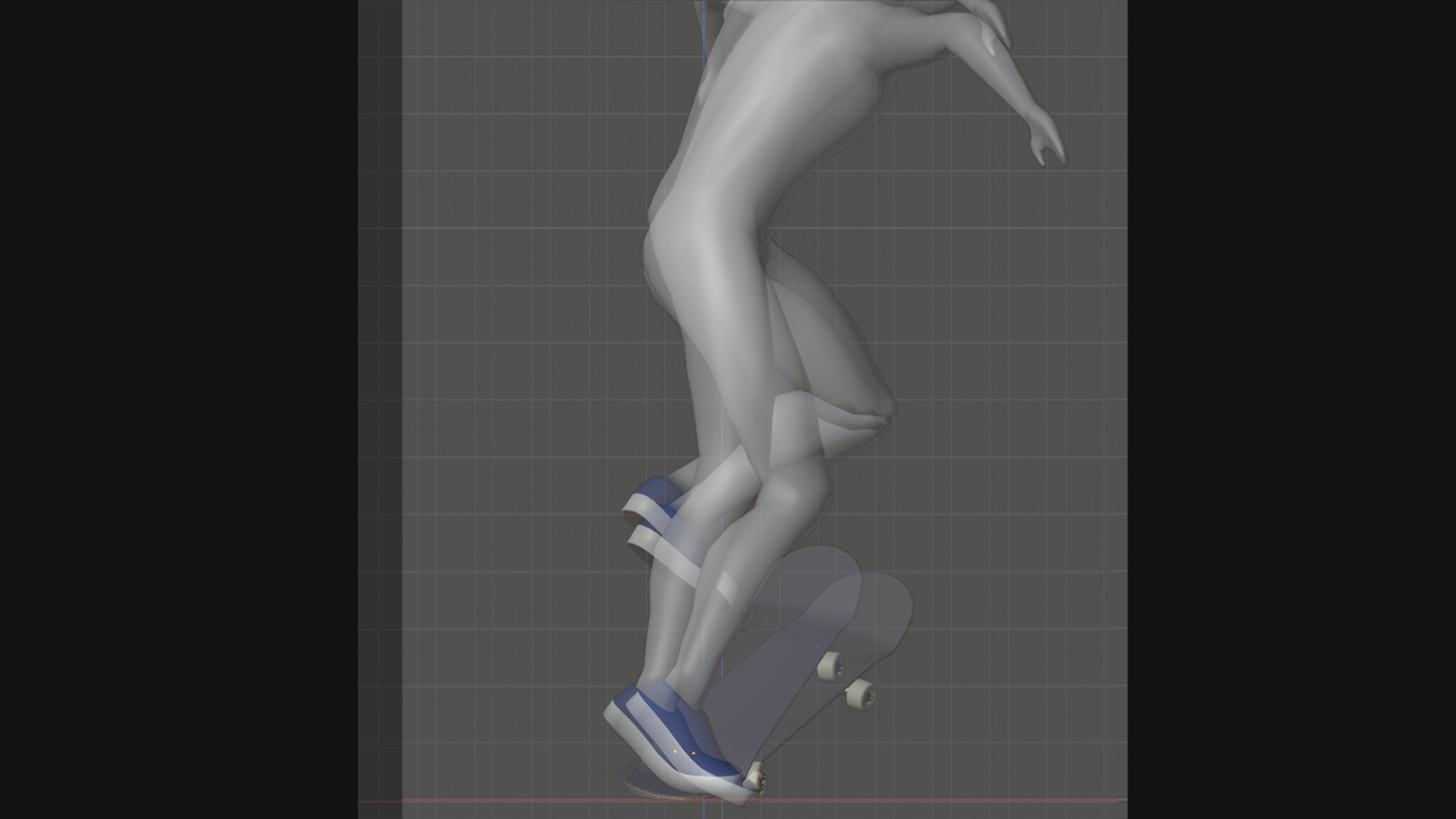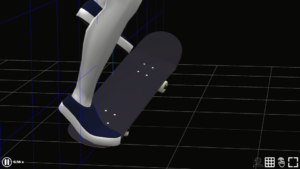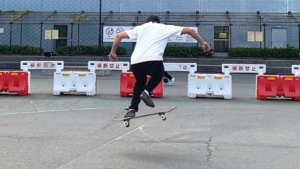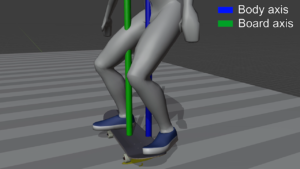
You may find it difficult to keep your board level during a Pop Shove-it. Considering that some skaters can perform Pop Shove-its, Treflips, and even Pressure Flips with almost identical foot placement, foot placement alone cannot fully explain why the board flips. In this article, we examine the role of foot placement in the Pop Shove-it and clarify the actual mechanisms that cause the board to flip.
Instantly discover issues with your tricks and how to fix them.
Deep analyze your motion with the cutting-edge technology.
Track your daily progress and ask questions to others.
Summary
Does foot placement cause the flip?
It can contribute, but it is not the primary factor. Avoid placing your back foot too close to the edge of the tail, as this may trigger an unintended scoop. Nevertheless, positioning it where you feel stable is far more important, as this supports a more influential element: overall weight distribution.
Why does the board flip in the kickflip direction?
It occurs because the tail is being scooped. When the tail is scooped, the rear truck attempts to return to its neutral alignment. This restoring force pushes the deck upward, creating torque that eventually leads to a flip in the kickflip direction.
Why does the board flip in the heelflip direction?
It happens when the tail is popped prematurely. If your body weight has not yet been lifted, pressing down on the tail too early forces the deck forward more than intended, producing a flip toward the heelflip side.
Simulation











The Flipping Problem
Is foot placement truly the cause?
Many skaters have experienced the board flipping even when the back foot is placed squarely at the center of the tail. I have encountered the same issue.
Later I found that I could still generate rotation even when placing my back foot in the pocket of the tail rather than at its center. This raises an important question: does foot placement alone really determine whether the board flips? To answer this, we examine the mechanics in detail.
A Pop Shove-it can flip in either direction, so identifying the specific symptoms is an essential first step in understanding the underlying cause.
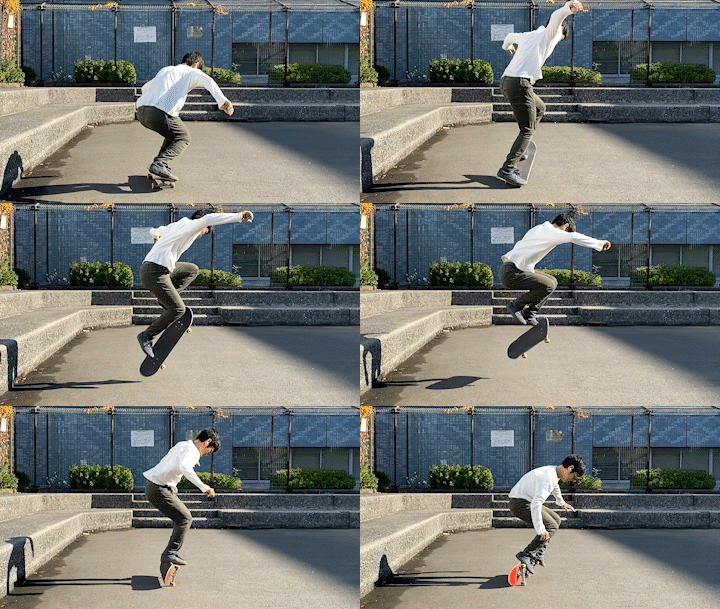
Type A: The Kickflip-Type Flip
Symptoms
This type occurs when the board flips in the kickflip direction, typically accompanied by the wheels turning toward the heel side.

Why does it happen?
This mechanism is essentially the same as what was examined in the previous article.
If the back foot rotates around the z-axis during the pop—or if a scoop is introduced—the rear truck becomes compressed. As the rear truck attempts to return to its neutral position, it produces an upward and rotational force that flips the deck, following the same principle that generates a Treflip.

How to avoid this problem?
Ensure that the tail is the final part of the board to make contact with the ground. By doing so, the energy stored in the rear truck disperses upward rather than into an unintended flipping motion. You may place your back foot wherever you feel stable—including the pocket—so long as you can maintain this timing.
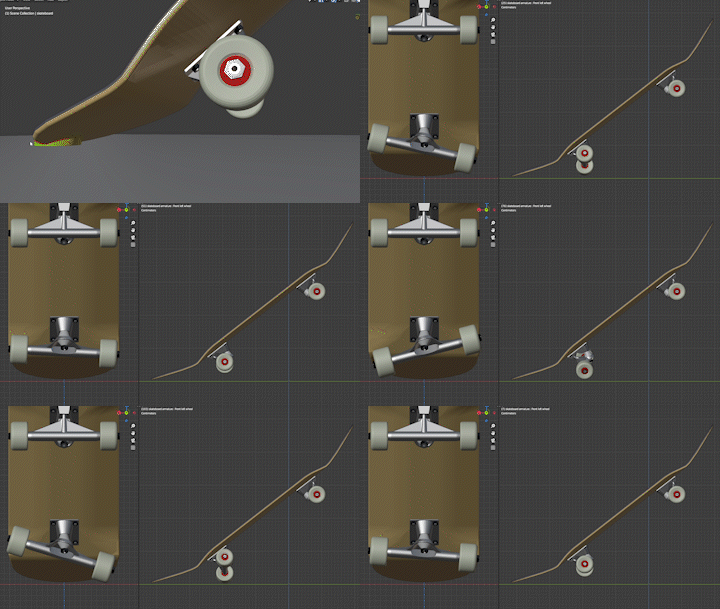
Foot placement
Positioning the back foot near the center of the tail helps prevent unintentional scooping, though it is entirely acceptable to place it wherever you feel comfortable. If the tail contacts the ground at the correct moment, you can even twist or apply force with your back foot without causing the board to flip. It does not need to be centered—I personally place mine in the pocket.

Type B: The Heelflip-Type Flip
Symptoms
In this case, the board rotates in the heelflip direction, and the wheels turn toward the toe side.

Why does it flip in the opposite direction with the same foot placement?
It may seem puzzling that the board can flip in the opposite direction even though the foot placement remains unchanged.
To understand this, consider what happens during an ideal pop. The tail should strike the ground nearly vertically and rebound upward. If, however, the toe-side edge of the tail is driven forward in the direction of travel, the board will flip toward the heelflip side. This often occurs unintentionally when the pop is mistimed.
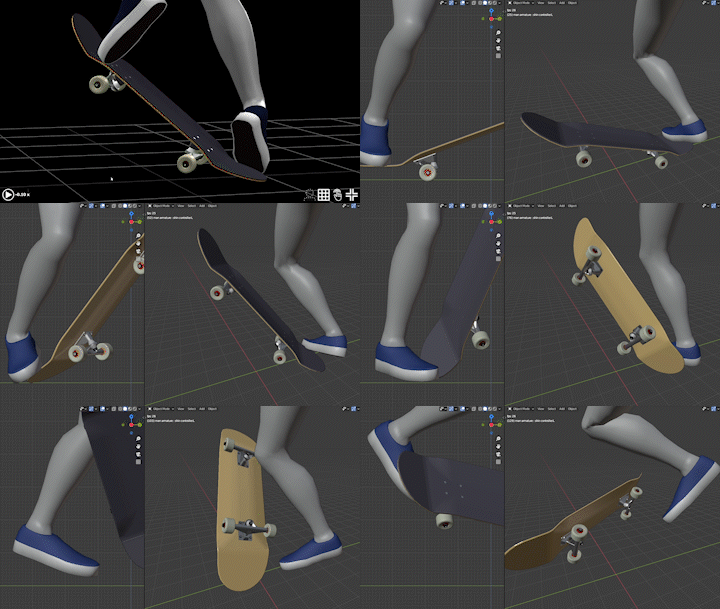
What happens when you pop too early?
If the pop is initiated too early, the board begins rotating before your body weight has lifted sufficiently.
This prevents you from pressing straight down on the tail and increases the likelihood of one side of the tail striking the ground first. As a result, the board becomes easier to flip, and the back foot may inadvertently scoop it forward.
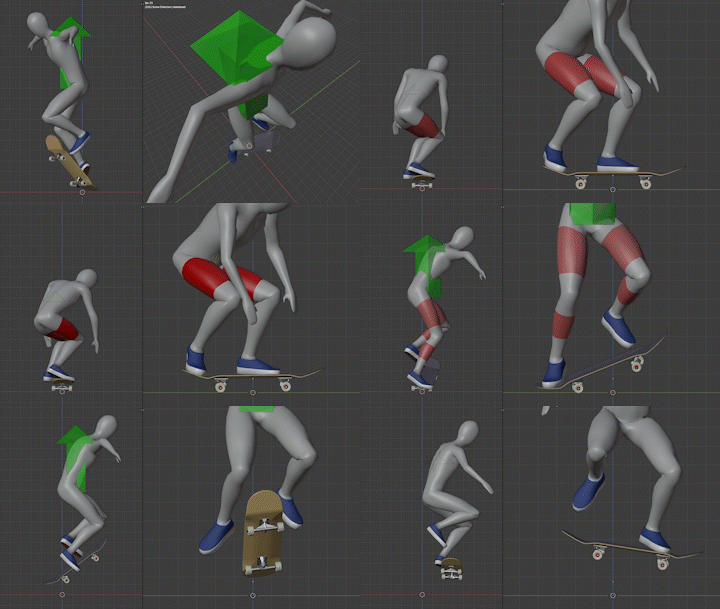
How to avoid this symptom?
Separate the jumping motion from the pop.
Ensure that your body is already moving upward before the tail strikes the ground. Engage your thighs to lift your body first, then time the pop so that it occurs only after upward motion has begun.
Placing the back foot closer to the center of the tail can improve stability. However, if the toe remains positioned toward the toe side of the tail, the underlying issue may continue.
Thus, foot placement is not the primary cause. The essential factor is raising your body first and then popping the tail straight downward at the appropriate moment.