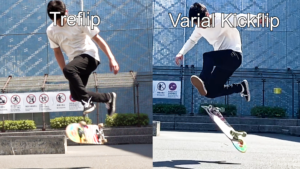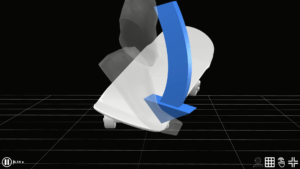
There has long been disagreement about the role of the front foot in a Treflip. In practice, there is no single correct method, and the usage varies according to each skater’s preference. In this article, I explain how I use my own front foot when performing Treflips.
Instantly discover issues with your tricks and how to fix them.
Deep analyze your motion with the cutting-edge technology.
Track your daily progress and ask questions to others.
Summary
A Treflip rotates without the front foot flicking it.
In the experiment discussed on this page, you will see that the board rotates even though the area normally used for a Kickflip flick is absent. This demonstrates that the rotation is not caused by the front foot.
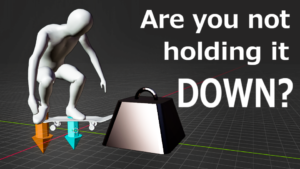
While the back foot applies the scoop, the front foot must hold the board down.
Without the front foot maintaining contact, the board would begin to overturn the moment the tail is pressed—well before the scoop is completed. The front foot therefore plays a crucial role in holding the board down until the back foot finishes its scooping motion.
Simulation











What do skaters say about it?
Different skaters explain it differently.
When discussing Treflips, skaters often provide varying explanations of how the front foot should be used. Common statements include:
- "It’s all in the back foot; the front foot only guides the board."
- "The front foot does almost nothing."
- "Scoop as strongly as possible."
- "Combine the mechanics of a Kickflip and a 360 Pop Shove-it."
- "Learn the Kickflip first, but use only a light flick."

Why do these explanations differ?
Due to the complexity of the trick, even when I attempted to show the exact behavior of my front foot, it was difficult to convey convincingly. To clarify the mechanism, we will drastically modify the setup by removing a portion of the skateboard and observing the result. This approach may offer a new perspective that is not apparent under normal conditions.
Premises
Previously on Whythetrick
In earlier analyses, I have consistently stated that my front foot does not initiate the flip in my Treflips. Instead, the rotation is driven by the rebound of the rear truck. While it is technically possible to flip the board using the front foot, I find it both more practical and more consistent to rely solely on the movement of my back foot.
Is there a correct way to Treflip?
This does not imply that one method is superior to the other. Whether to use the front foot is ultimately a matter of personal preference and board setup. In this article, I focus on how it is possible for me to perform a Treflip without using my front foot. To verify this, I remove a portion of the deck so that the front foot cannot influence the flip.

Preparation
Cutting the side of the deck
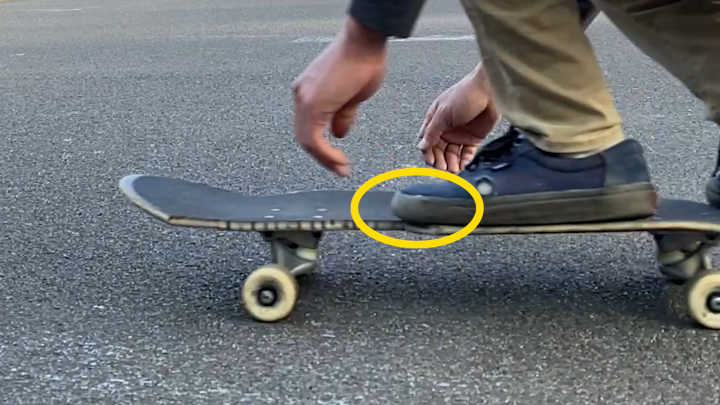
To create a condition where the front foot cannot contribute to the flip, I cut away the side of my deck. I must admit I felt sorry for Almost Skateboards for using their product in this manner. Due to the carbon disc around the front truck, I could not cut entirely through that area. Nevertheless, with the edge removed, there is no way for the front foot to generate a flick. Even if I attempted to flick, there is no surface left to apply force.

Experiment
Moment of truth
Here is the moment of truth. Although the board initially felt uncomfortable, unstable, and difficult to control, I was ultimately able to flip it without any issue. With no surface available for flicking, the front foot cannot be responsible for the rotation. This strongly supports the conclusion that my front foot does not generate the flip in my Treflips.
So why does it flip?
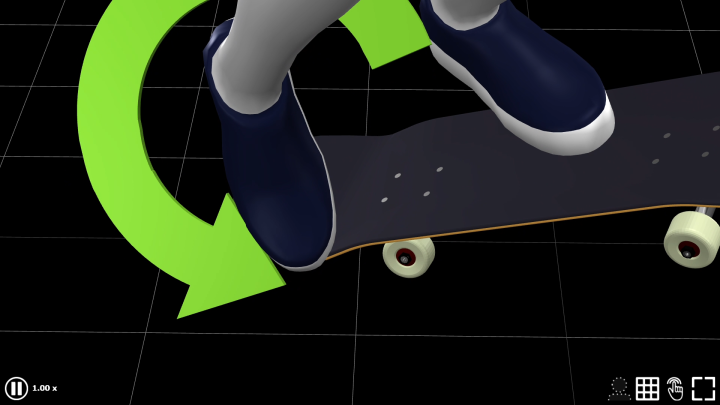
The rotation originates from the back foot. By scooping the tail and compressing the rear truck, the truck stores elastic energy. When this energy is released, it produces the flip. For a more detailed explanation of the scoop mechanics, please refer to "How do Treflips REALLY work?".
Function of the Front Foot
Does the experiment prove that the front foot does nothing?
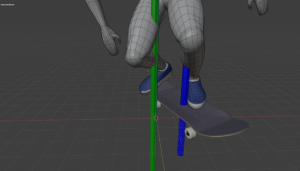
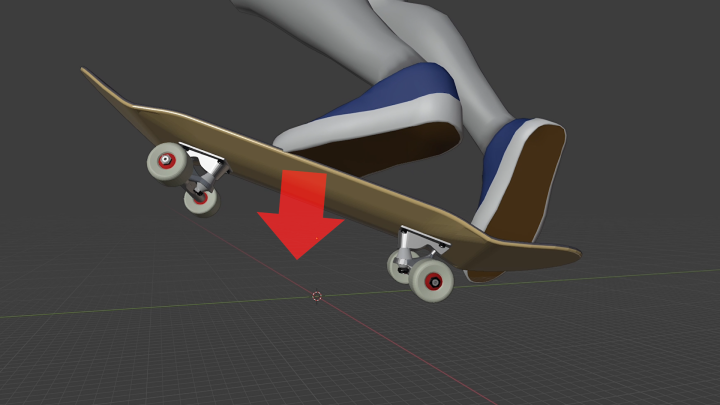
No. The front foot still plays an important role. Without it holding the board down, the deck would begin to tilt the moment the tail is pressed. In order for the back foot to compress the rear truck deeply enough, the front foot must stabilize the board until the back foot completes the scooping motion.
What happens without the front foot?
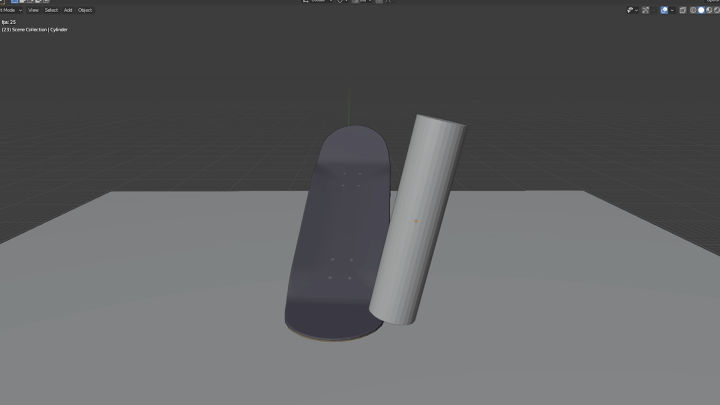
Consider the following: if you push down the tail without the front foot, the board will overturn before it has any chance to compress the rear truck. In this sense, the front foot functions as a counterweight, maintaining balance until the scoop is executed.
Re-summary
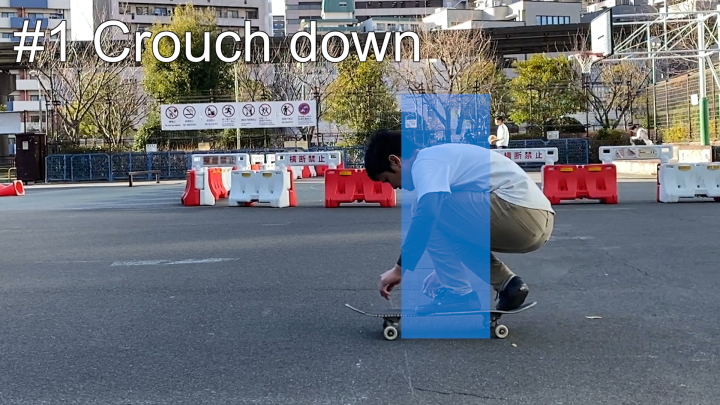
#1 Crouch with weight on the front foot
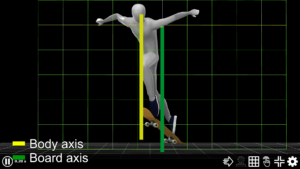
As I approach and crouch down, I place most of my weight on the front foot. With my head and center of mass positioned above it, I can stabilize the board effectively. What is more important is the ability to release this pressure precisely when initiating the jump.
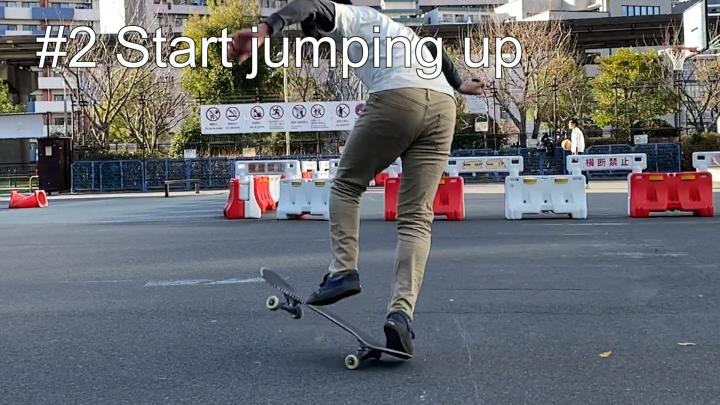
#2 Begin the upward jump
As I begin to jump upward, my front foot continues to hold the board down. This maintains the board’s stability during the transition from crouching to jumping.
#3 Execute the scoop
Once my body has upward momentum, I initiate the scoop. By this time, my front foot is almost no longer in contact with the deck. If preferred, you can also add style by extending your front foot after leaving the board.