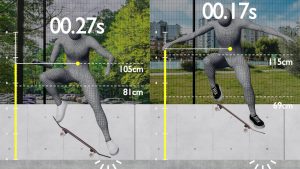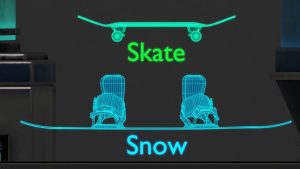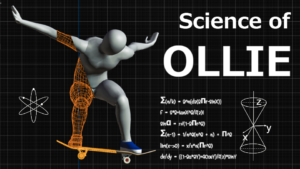
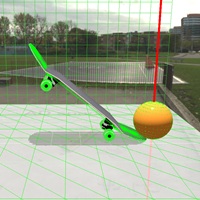
We will see in which direction the front foot should apply force to the board in an Ollie in an experiment in this article. Please note that the actual physics of an Ollie may differ, as the front foot continuously applies force in real situations.

Summary
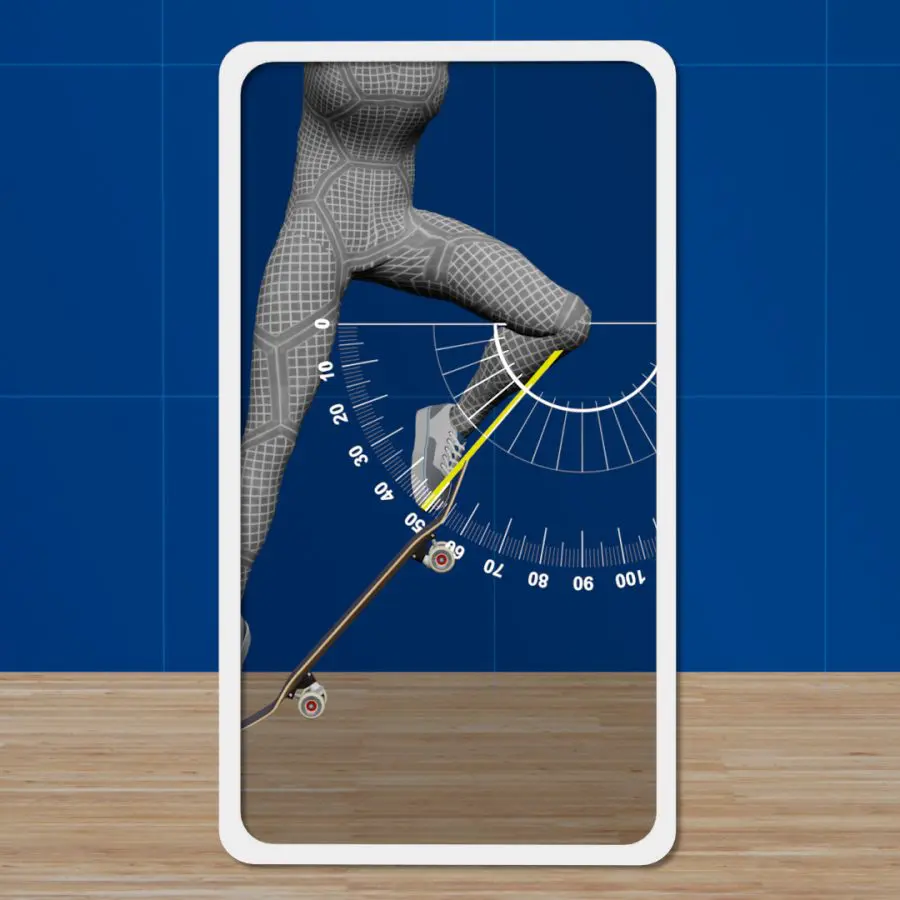
Pushing the front foot at 110° raises the tail most effectively.
According to the physics engine, pressing the nose from an angle of approximately 110 degrees helps suppress the upward motion of the nose and allows the tail to rise efficiently.
Premises of the Experiment
Basic Conditions
- The upward sliding motion of the front foot is excluded from the scope of this experiment.
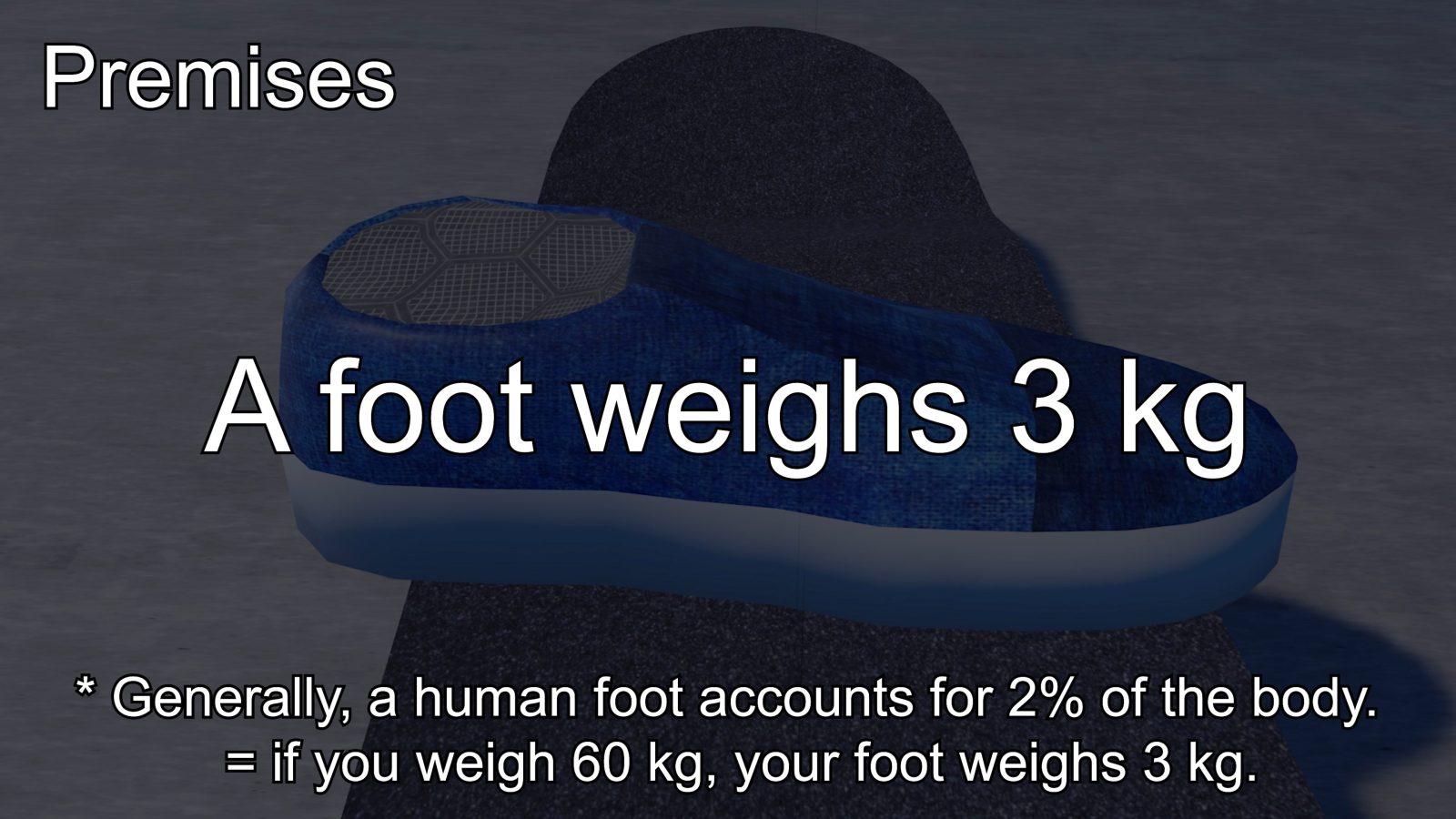
- The nose is pushed by a simulated foot (not a shoe) weighing 3 kg.
- As the foot is often said to account for around 2% of total body mass, a 60 kg body corresponds to roughly 3 kg.
Direction of Push: UP
In the first scenario, the front foot continues to move in the same direction as the sliding motion. This often occurs when one focuses excessively on the upward slide due to limited experience with the Ollie.
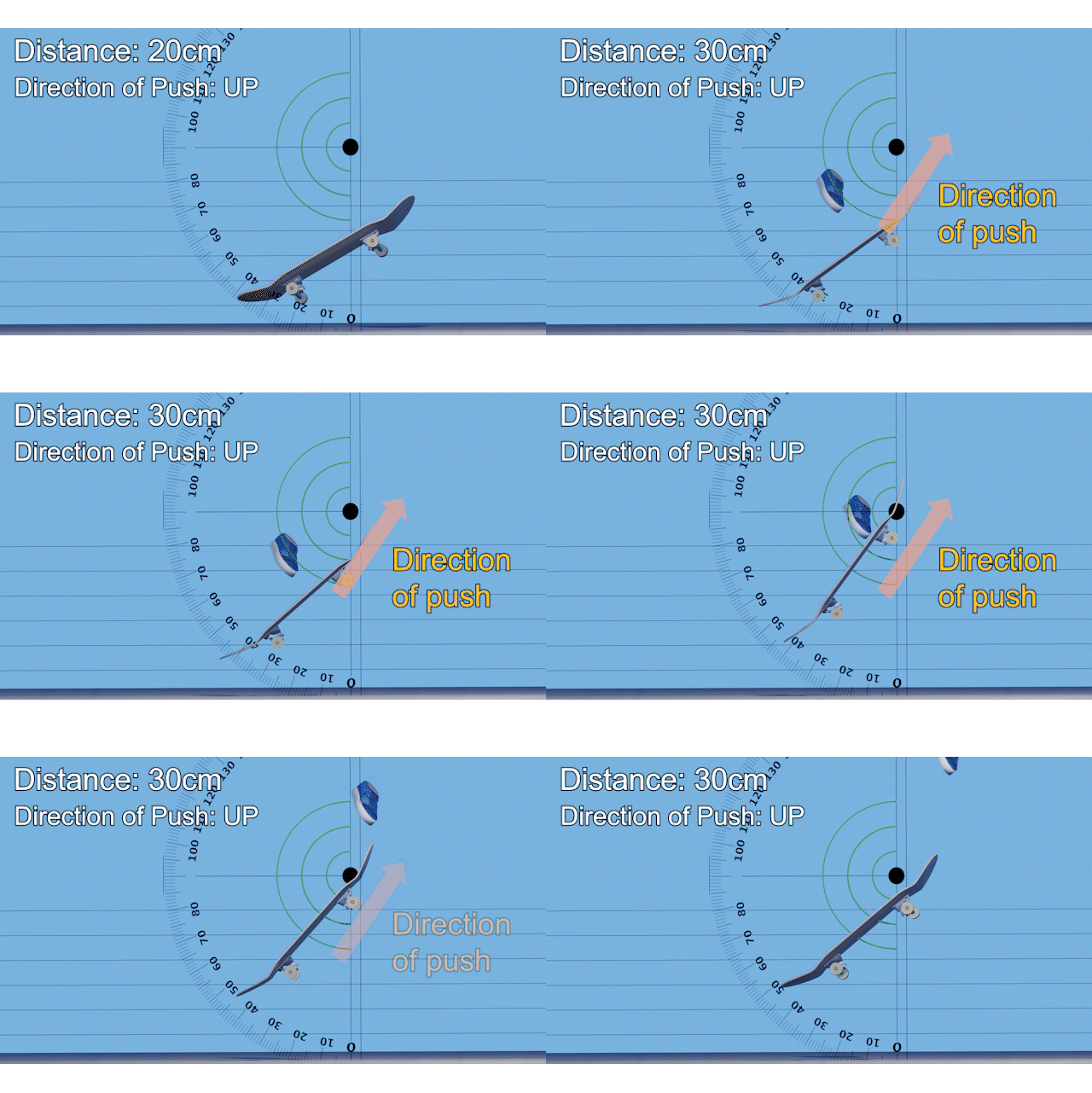
Even if the front foot moves more quickly, the deck does not level out.
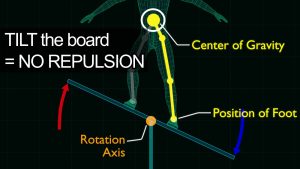
Why does this happen? Levelling the board requires making use of the board’s upward momentum. After the pop, the deck continues to rise even while the nose is being pressed down. When force is applied parallel to the board, it may lift the nose, but the board’s center of gravity cannot translate that force into lifting the tail effectively.

Direction of Push: HORIZONTAL
In this case, the front foot is moved horizontally. By lowering the front foot against the body’s upward momentum, it becomes possible to counteract that upward force and move the foot in a horizontal direction.

The deck levels in this scenario. However, depending on the speed of the front foot, the deck may level only after dropping relatively low. Sufficient speed in the front foot movement is required.
While the front foot suppresses the upward rotation of the nose, the board’s center of gravity continues rising, which allows the tail to lift.

Direction of Push: DOWN
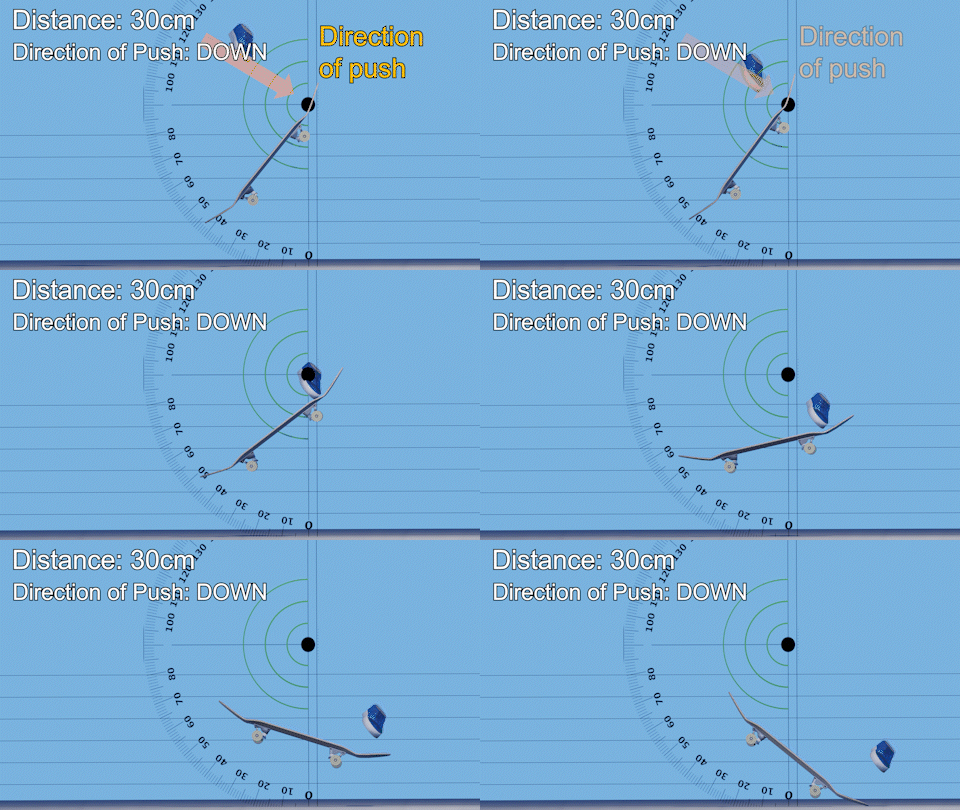
In this scenario, the nose is pressed downward from an angle of approximately 120 degrees.

With a small downward force, the board simply drops without producing a meaningful levelling effect. With stronger force, the front foot overpowers the board’s upward momentum and forces it downward.
If excessive downward force is applied, the upward motion of the board’s center of gravity is counteracted entirely, eliminating the mechanism needed to raise the tail.
Direction of Push: SLIGHTLY DOWN
In this case, the front foot applies force from an angle of about 110 degrees above the nose.
Although not every possible condition has been examined, this approach consistently produced the most favorable results.
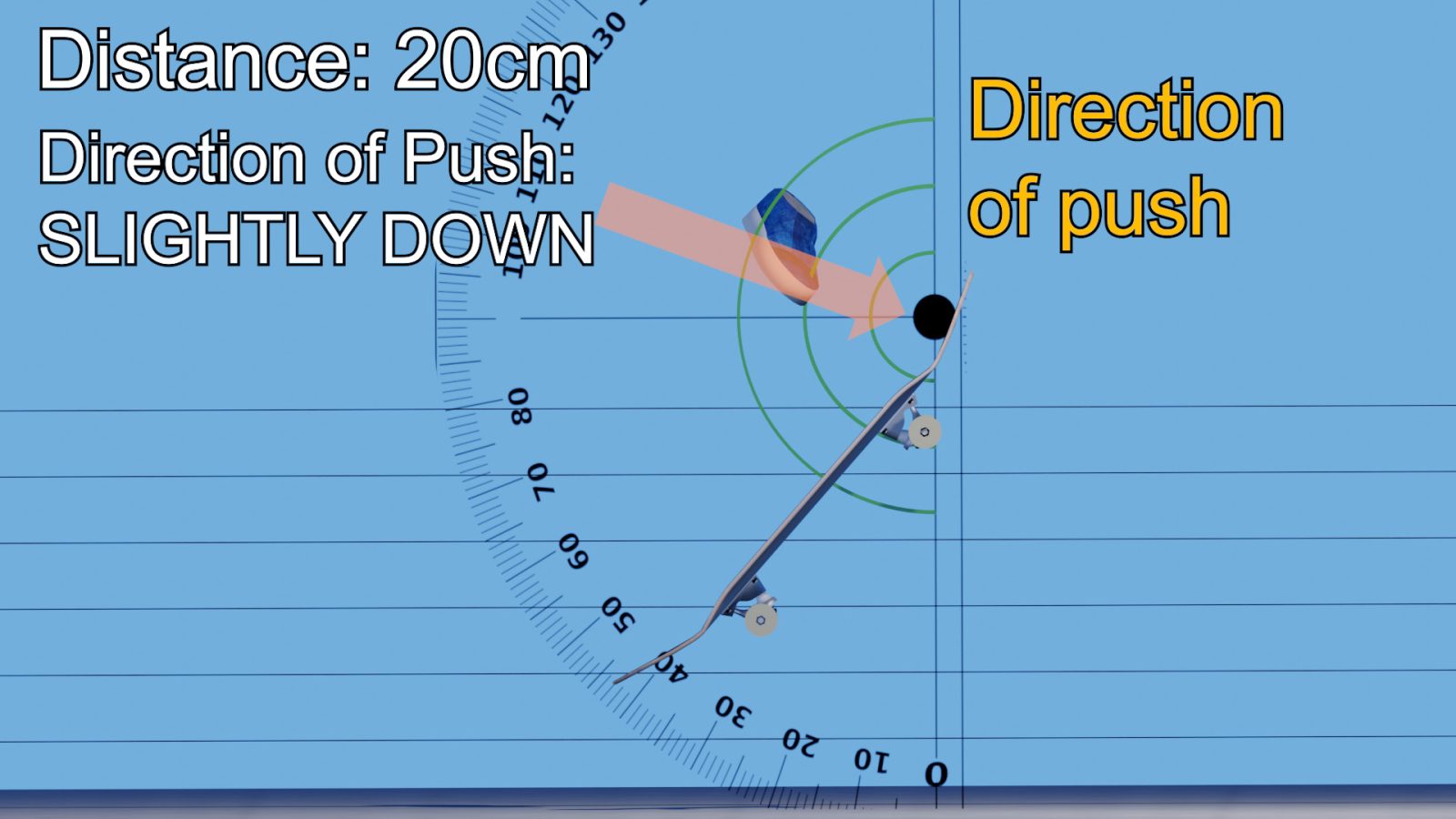
Pressing the nose from approximately 110 degrees effectively restrains its upward rotation. At the same time, the board’s center of gravity continues its upward motion, which lifts the tail without being negated by the force from the front foot.