Everyone knows that the angle of a skateboard’s kicktail plays an important role. But what exactly does it do?
Using a board that does not suit your riding style may lead to an over-popping issue. In this article, we examine the phenomenon through a scientific lens.

Summary
Steeper kicktail angle = Higher pop
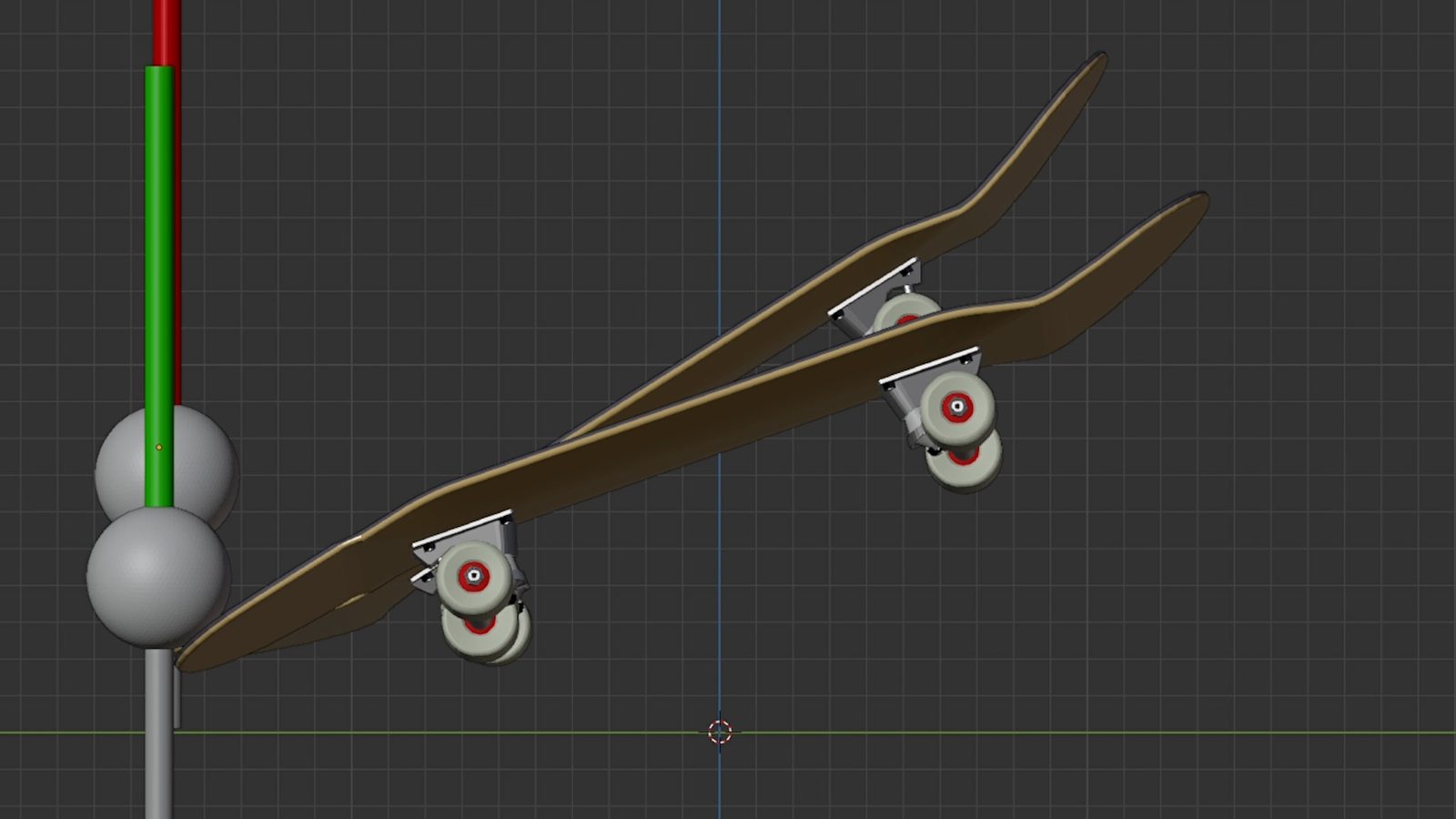
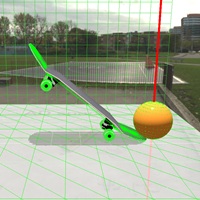
According to ball-drop tests conducted with a physics simulator, a board with a steeper kicktail generates a higher pop.
More mellow kicktail angle = Smaller pop
The tail strikes the ground with less energy. However, the board rises only slightly because the tail’s angle becomes shallow at the moment of impact.
Excessively steep kicktail angle = No pop
A board pops lower when the tail angle becomes too extreme. Beyond a certain point, the tail cannot even make proper contact with the ground after the snap.
Experiment
Equipment
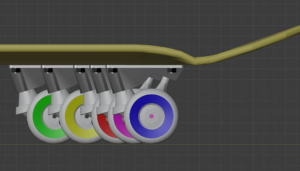
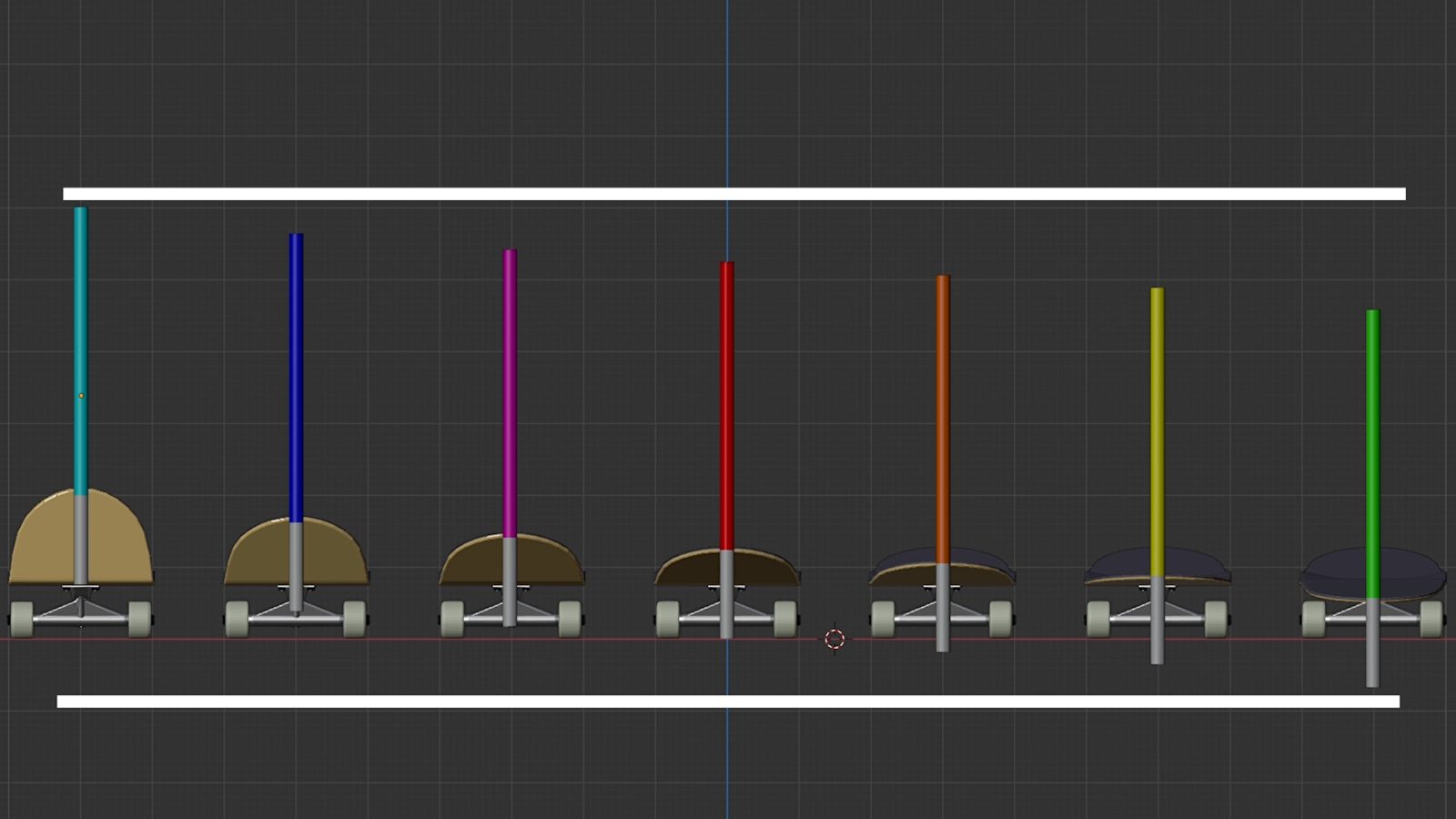
We used several skateboards with different tail angles. All other parameters—including deck size and total weight (3 kg)—were kept identical.

Experimental conditions
- A 2 kg ball was dropped from a height of 50 cm (the colored trails represent the trajectories).
- The colored section indicates the distance the ball traveled.
- The ball stops immediately after its first impact.
- The release height was adjusted so that each board received the same amount of energy.
Result
Side view
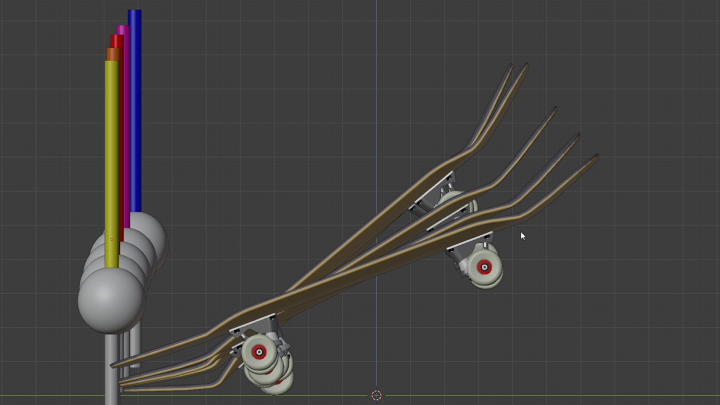
Seen from the side, the differences become apparent. Please note that all boards have identical nose shapes.
A board with a steeper kicktail rises higher upon impact, whereas a mellower kicktail remains much lower.
Boards with identical nose and tail shapes
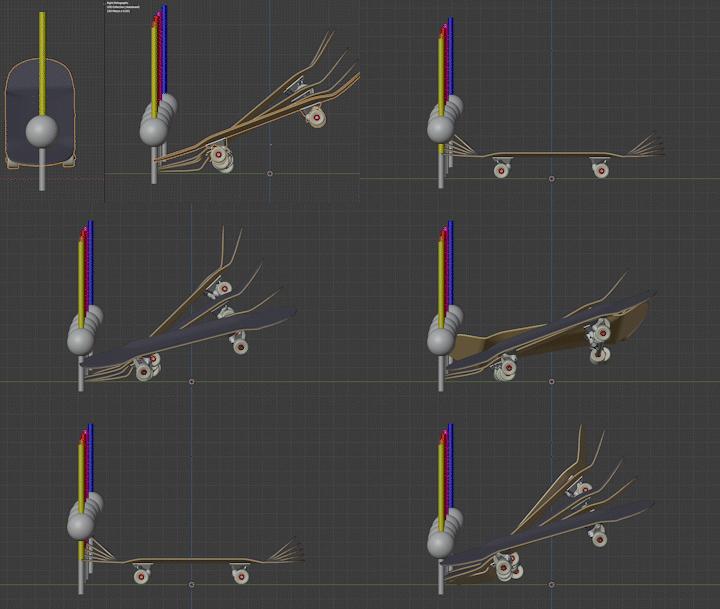
Next, the same experiment was conducted using boards whose noses and tails share the same shape.
Boards with steeper kicktails tend to “grip” your feet more because their noses rise higher during the pop. Which configuration do you think would fit your skating style best?
Extreme examples
The extremely steep kicktail
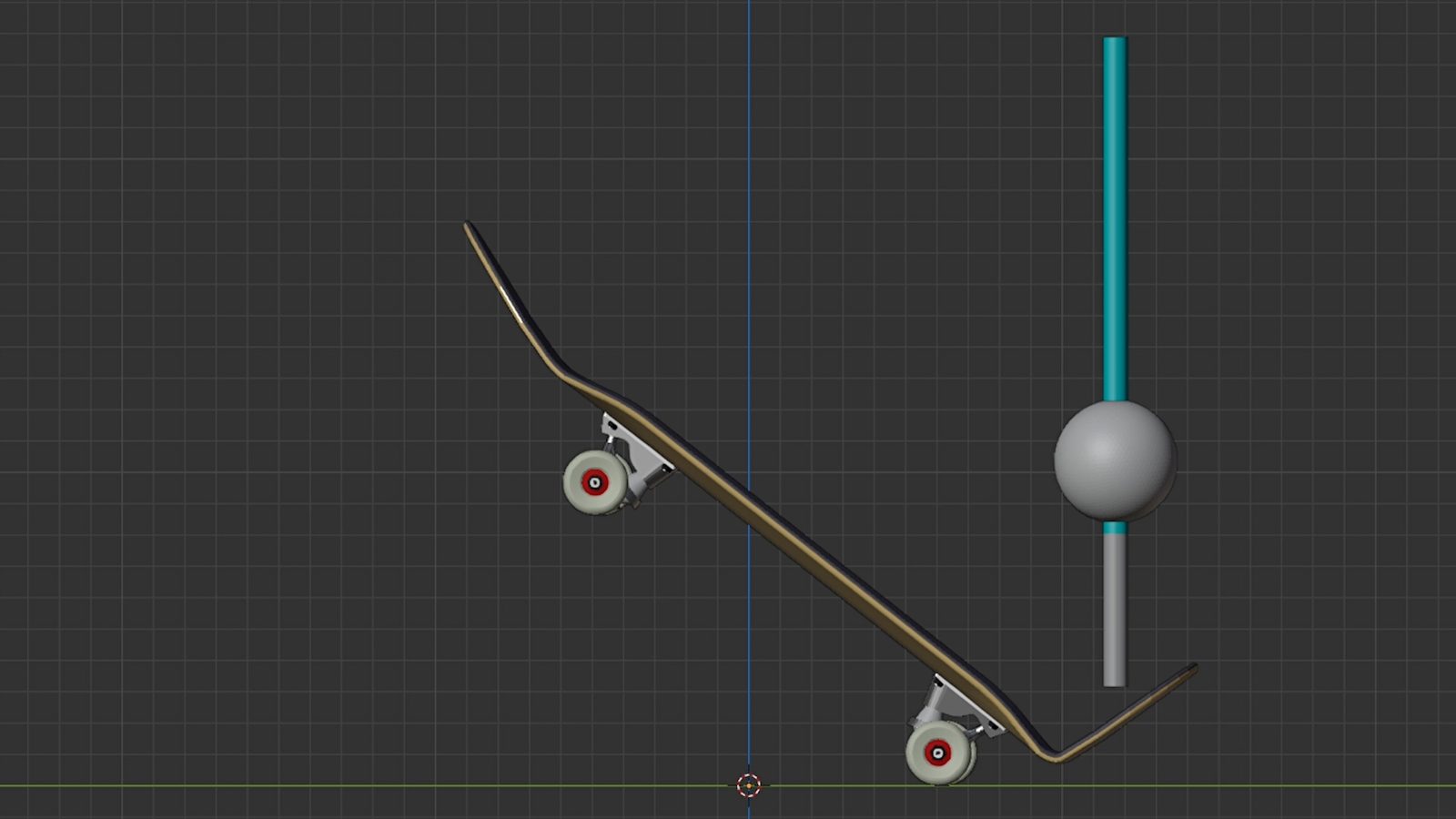
Here we examine a board with an exceptionally steep tail angle.
The energy from the ball transfers almost entirely into the wheels and the ground rather than into the tail itself. As a result, the tail barely makes proper contact with the ground and fails to generate any meaningful pop.
The warped, downward-curved tail
This example uses a board whose tail curves downward.
In this case, the tail strikes the ground very quickly. However, the board maintains a shallow angle throughout the motion, making it difficult to slide your front foot upward or ride the board comfortably.