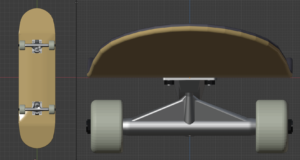
How should I choose my stance?
Your preference, dominant foot and riding style all play a role. What matters most is selecting a stance that feels stable and natural to you.
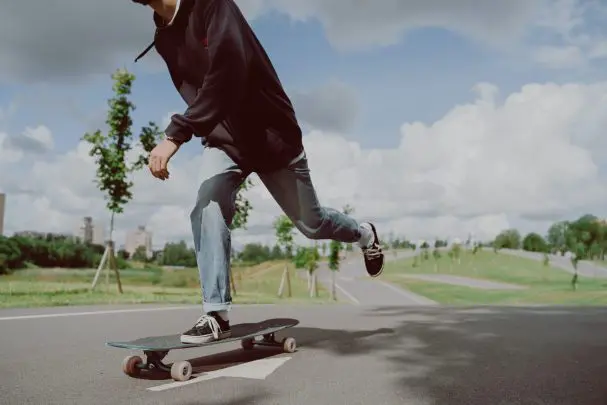
Choosing your stance is the first essential step in skateboarding. Although you can change it later, it is helpful to understand why one stance may suit you better than another so you can start with a stable foundation.
Summary
Find the stance that suits you
In many cases, the dominant foot becomes the back foot, allowing skaters to pop, push and turn more efficiently. However, individual comfort ultimately comes first. It is advisable to try both options and choose the one that offers the most stability.
Fakie is essentially your normal stance, just in reverse
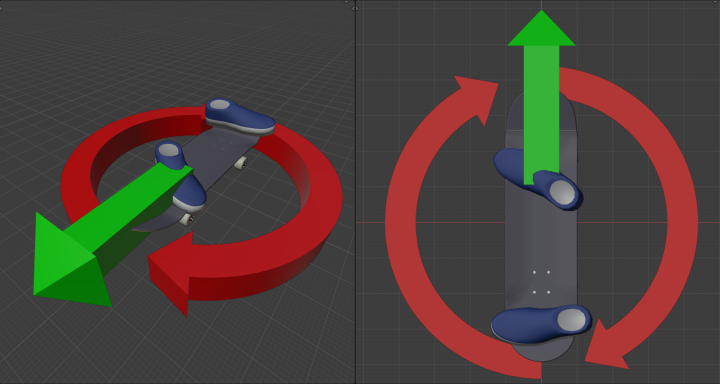
Unlike the Switch stance, the Fakie stance is simply your main stance moving in the opposite direction. Therefore, when you rotate in the same direction as in your main stance, the name of the spin remains the same.
Switch means changing your leading foot
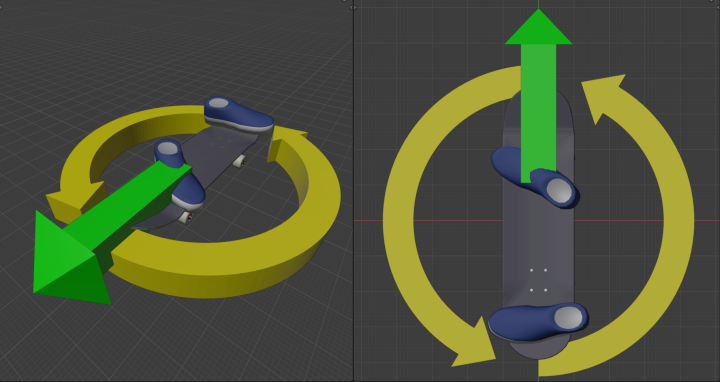
When a Regular-footed skater rides with the right foot forward, that position is considered Switch. In Switch, the naming of spin tricks is reversed accordingly.
Definition
What do the Regular and Goofy stances mean in skateboarding?
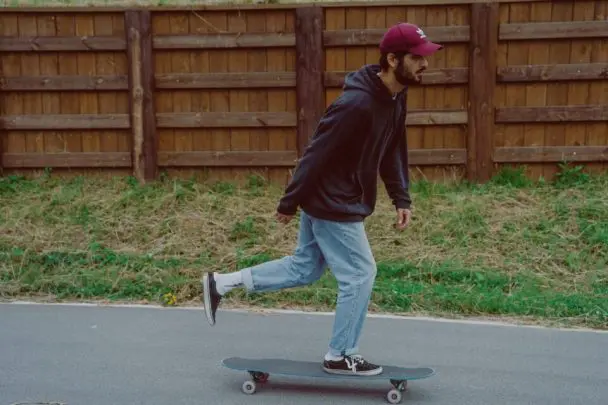
There are two primary stances in skateboarding. Regular riders place their left foot forward, while Goofy riders place their right foot forward.
What determines which stance feels natural?
The difference is influenced by more than simple preference. Skaters generally push with their dominant foot to apply force more effectively. We also tend to feel more secure placing our weight on the dominant side. Since turning and popping require applying pressure to the tail, placing the dominant foot at the rear of the board is typically advantageous.

How to find your stance
Options
Although your stance ultimately depends on personal preference, the dominant foot is generally placed at the back of the board. If you are right-handed, your right foot tends to be dominant, and vice versa. If you are unsure which foot is dominant, consider the following methods:
- Kick a ball. The foot you naturally use is usually the dominant one.
- Have someone gently push your back. The foot you step forward with to regain balance is typically your dominant foot.
- Stand still and prepare to sprint. The foot that instinctively moves back to push off is likely your dominant foot.

What if you do not like your stance?
You may also choose your stance simply based on comfort. Some skaters prefer placing their dominant foot forward, so there is no strict rule. What matters is selecting a stance that feels stable and natural for you.
Variations of the stance
Main Stance
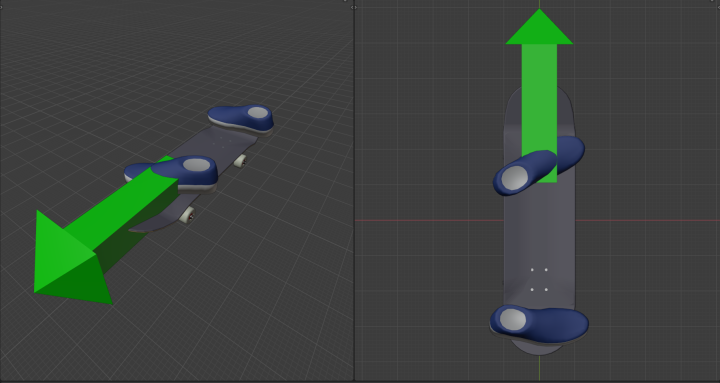
The stance you normally use when riding your board. It forms the foundation for every trick and style. Practise pushing until you feel stable and comfortable simply cruising around.
Nollie Stance
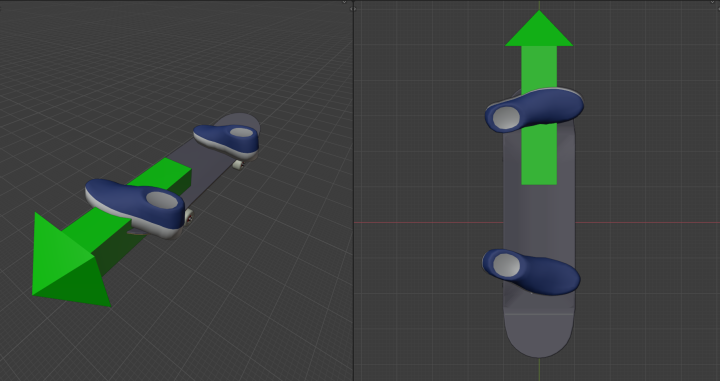
Place your front foot on the nose and your back foot somewhere on the deck, usually around the rear bolts. When performing a Nollie, you pop the nose with your front foot instead of using your back foot on the tail.
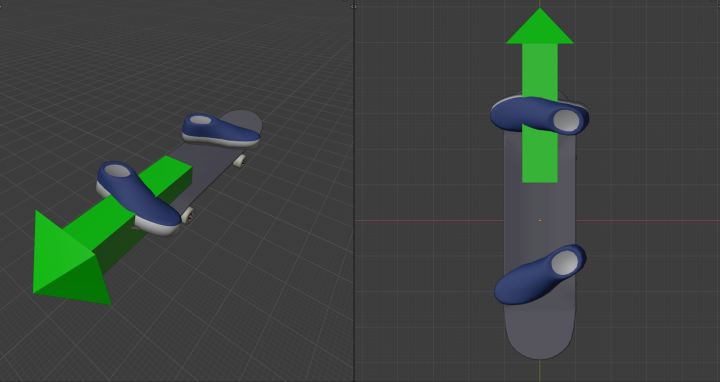
Fakie Stance
Your foot placement is identical to your main stance: front foot on the bolts and back foot on the tail. The only difference lies in the direction of travel. Since you roll backward, the back foot effectively becomes the leading foot.

Switch
The opposite of your main stance. If you are a Regular rider, this means placing your left foot on the tail and your right foot on the front bolts.
Directions of Spin

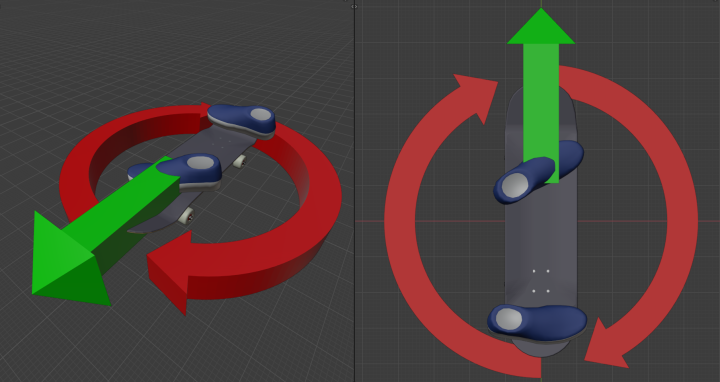
Main – Frontside
Frontside is often abbreviated as F/S. While a F/S 180 is considered one of the most fundamental tricks, frontside turns on transitions can feel intimidating because they require turning toward the obstacle.
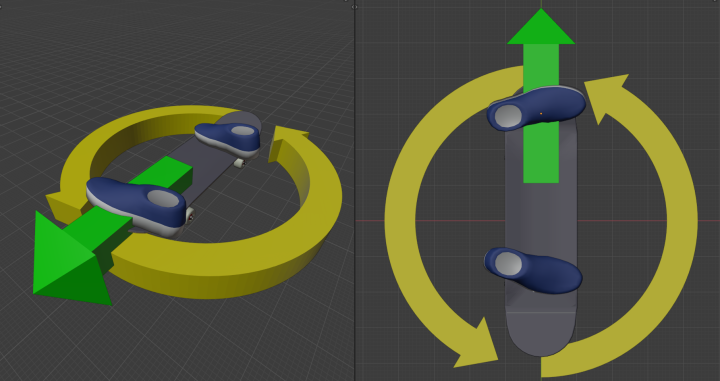
Main – Backside
Backside is commonly abbreviated as B/S. B/S 180s are often more challenging than F/S 180s because you cannot see the landing during the rotation. Conversely, backside turns on transitions tend to feel more natural.
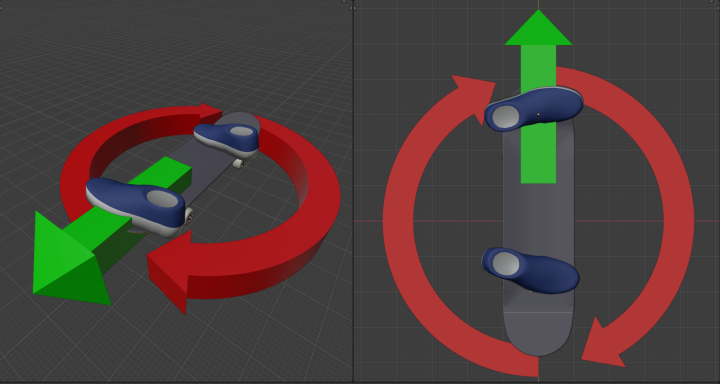
Nollie – Frontside
By popping the nose, you can perform a Nollie F/S 180. Mechanically it is the same spin as a regular F/S 180, but many skaters find it more difficult because the sliding foot can easily lose contact with the deck during takeoff.
Nollie – Backside
Pop the nose with your front foot and rotate backside to perform a Nollie B/S 180. This variation can also feel more demanding than its regular counterpart.

Fakie – Frontside
Unlike Switch, Fakie is simply your main stance moving in the opposite direction. Therefore, a Fakie F/S 180 rotates in the same direction as your main-stance F/S 180—for Regular riders, counterclockwise.
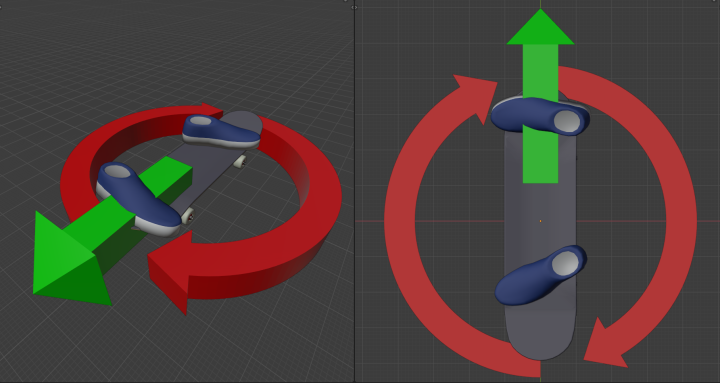
Fakie – Backside
Because Fakie is another form of your main stance, a Fakie B/S 180 corresponds to spinning in the same direction as your regular B/S 180. Even if your shoulders open toward the direction of travel, the spin direction is defined by rotation, not shoulder orientation.
Switch – Frontside
Switch means riding in the opposite stance, so the direction of spin is also reversed. If your regular F/S 180 spins counterclockwise, your Switch F/S 180 will spin clockwise.
Switch – Backside
This is also the reversed counterpart of your main-stance backside rotation. Some Switch variations may feel surprisingly easier, but Switch B/S 180s are often regarded as particularly challenging.