Pop shove-it might look simple, but before you get used to it, you may often encounter troubles such as landing Primo.
In this article, we will see the key mechanical elements of the trick.


Summary
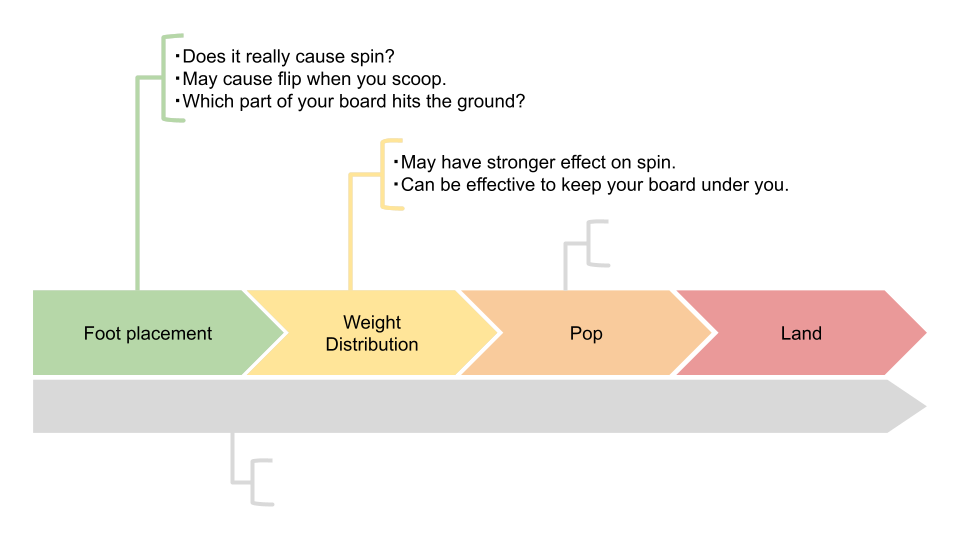
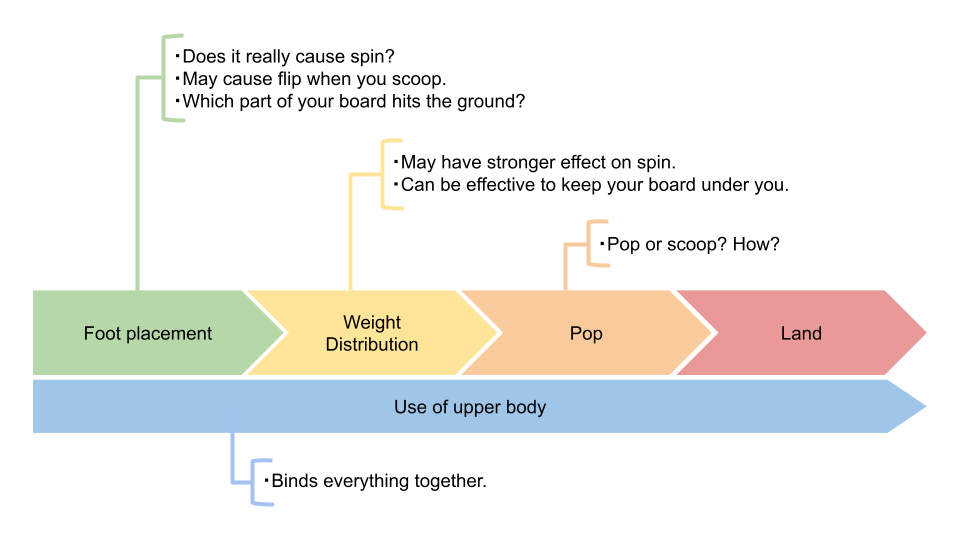
Step 1: Foot Placement
- They often say you should place your back foot in the center of the board, but it's not necessarily true. What matters the most is how to prevent the board from unintentionally flipping, and you may place your back foot anywhere as long as you can achieve a state where the tail hits the ground last.
Step 2: Weight Distribution
- This has a significant influence on rotation. When you try to jump with your weight on the toe side, you will naturally push the board toward the heel side.
- This can help keep the board beneath you because the board tends to move toward your toe side regardless of your body’s direction.
Step 3: Pop
- Should you pop straight down, or should you scoop? You may scoop if you choose, but due to the mechanism described above, you may not actually need to in order to complete the shove-it rotation.
Step 4: Use of Upper Body
- Should you attempt to jump as high as possible? No. Avoid jumping excessively high, as doing so wastes the downward energy that could otherwise be directed into the board.
Simulation











Breakdown #1: Foot Placement
An essential factor concerns how the board behaves mechanically. In a previous explanation, I mentioned that my treflips are largely driven by rebound — that is, the rear truck attempting to return to its neutral position after being compressed.
In general, we place the back foot in the pocket when performing a pop shove-it. This can indeed help initiate the rotation, but it also makes it easier to unintentionally flip the board. By placing the back foot in the pocket, we load energy into the rear truck, which is then released and can flip the board.
- The same applies to my own pop shove-its. It may look as though I am compressing the rear truck significantly — so why does the board not flip?
- And although landing primo is a common issue, is foot placement really the principal cause?
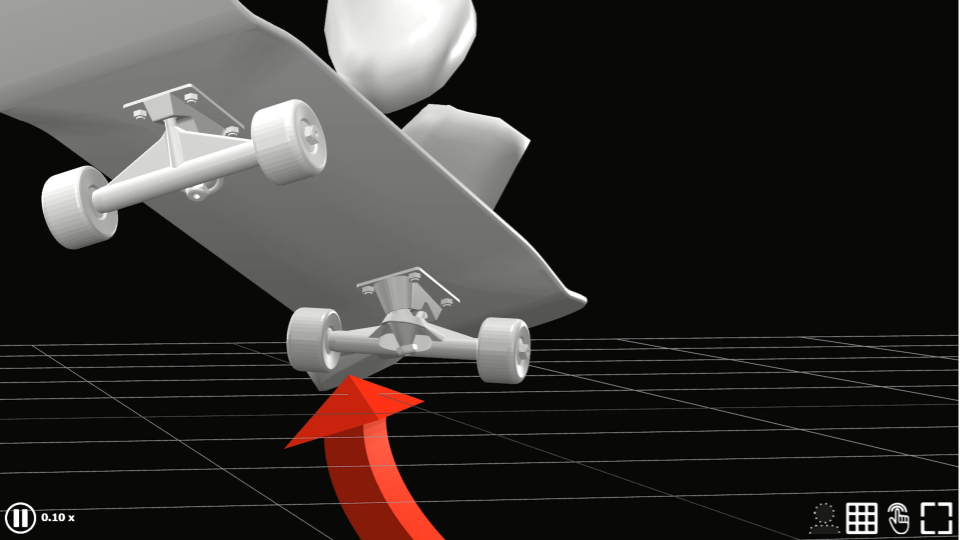
All these questions can be addressed by focusing on a single key idea: "Which part of the board makes the final contact with the ground?"
If the very tip of the tail touches the ground, the energy stored in the rear truck will disperse into the air rather than driving the board into an unwanted flip.
Break down #2 Weight Distribution
Now that we have examined the issues related to foot placement, let us move on to the next major factor: weight distribution.
In many pop shove-its, skaters struggle to keep the board beneath their feet. When this happens, the cause often lies in improper weight placement or the manner in which the pop is executed.
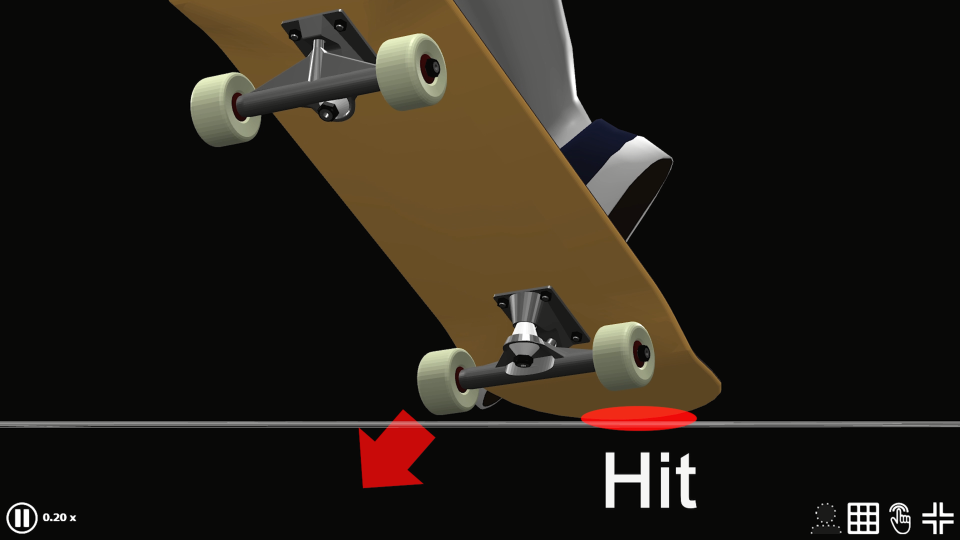
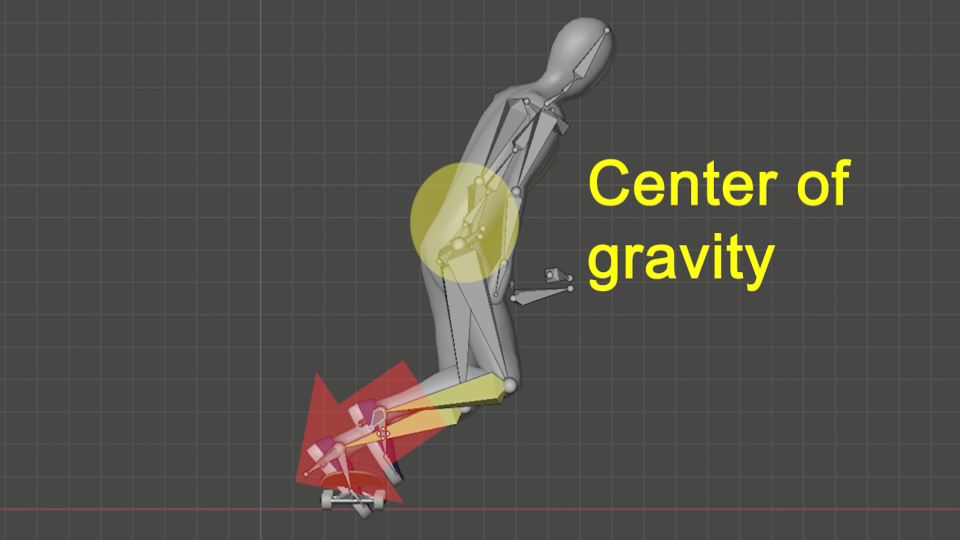
It is well known that the board tends to land on the toe side in pop shove-its. This occurs because, as we pop, the rear wheel acts as a pivot, causing the board’s center of gravity to swing toward the toe side.
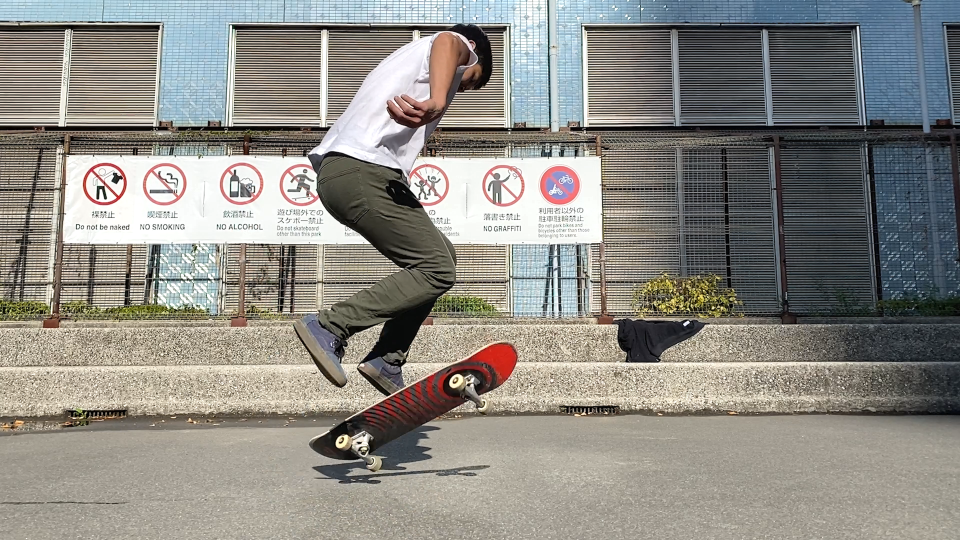
- As mentioned earlier, placing your weight slightly on the toe side before jumping allows you to generate both the rotation and a natural forward movement without consciously trying to do so.
- If your center of gravity begins on the toe side, your legs will naturally push the tail toward the heel side during the pop. In response, your body will be directed toward the toe side.
- Regardless of your body’s movement, the board will land on its toe side—so it is advantageous to learn how to stay positioned above that point.
- The essential task is determining how far to shift your weight toward the toe side.
Break down #3 Pop
Do you really have to pop that hard?
It is commonly said that one must pop and scoop simultaneously. Because regular shove-its and pop shove-its rely on slightly different mechanisms, some misunderstandings easily arise. Based on the concepts discussed so far, you may not need to scoop as aggressively as many assume.

Break down #4 Use of upper body
For beginners, there are times when, despite correct foot placement and weight distribution, the board refuses to rotate. In such cases, the height of your jump may be the key.
- If your upper body rises too quickly, your feet will follow before your back foot has time to apply proper force to the tail.
- Try distinguishing between "jumping upward" and "lifting your feet while keeping your upper body at roughly the same height." The latter allows the pop to be transmitted cleanly.
