

Backside Rock 'n' Rolls. When you get used to it, you will be able to poke out your front foot all the way into the ramp. It feels great and unusual, but it is not just a matter of commitment. There is actually a safe and easy way to practice it.
Summary
Hold a manual at the peak of a kickturn and push out the nose
Start with Kickturns and aim to pause momentarily in a manual at the peak of the turn. The first objective is to control that brief moment of stillness well enough to guide the nose outward, beyond the coping.
Keep your gaze at the front foot
When extending the front foot, the direction of your gaze is essential. Envision the exact point where you intend to place the deck; rotate your body in advance while keeping your eyes fixed on the board. Then return your gaze toward the interior of the ramp and maintain the forward-foot extension.
The more you extend the front foot, the more your body will be pushed back toward the bottom side of the ramp. As your weight shifts closer to the rear foot, applying pressure to the tail becomes easier, facilitating a smooth return into the ramp.
Practice Steps
Start with a kickturn. At the peak of the turn, do a light Manual and try to hold your weight. Gradually move higher up the ramp until you can do one similar to a Slash Grind.
Once you can bring the nose above the coping, lightly push your front foot outward beyond the coping. It is crucial to rotate your body and shoulders first during a turn, then push only the board outward.
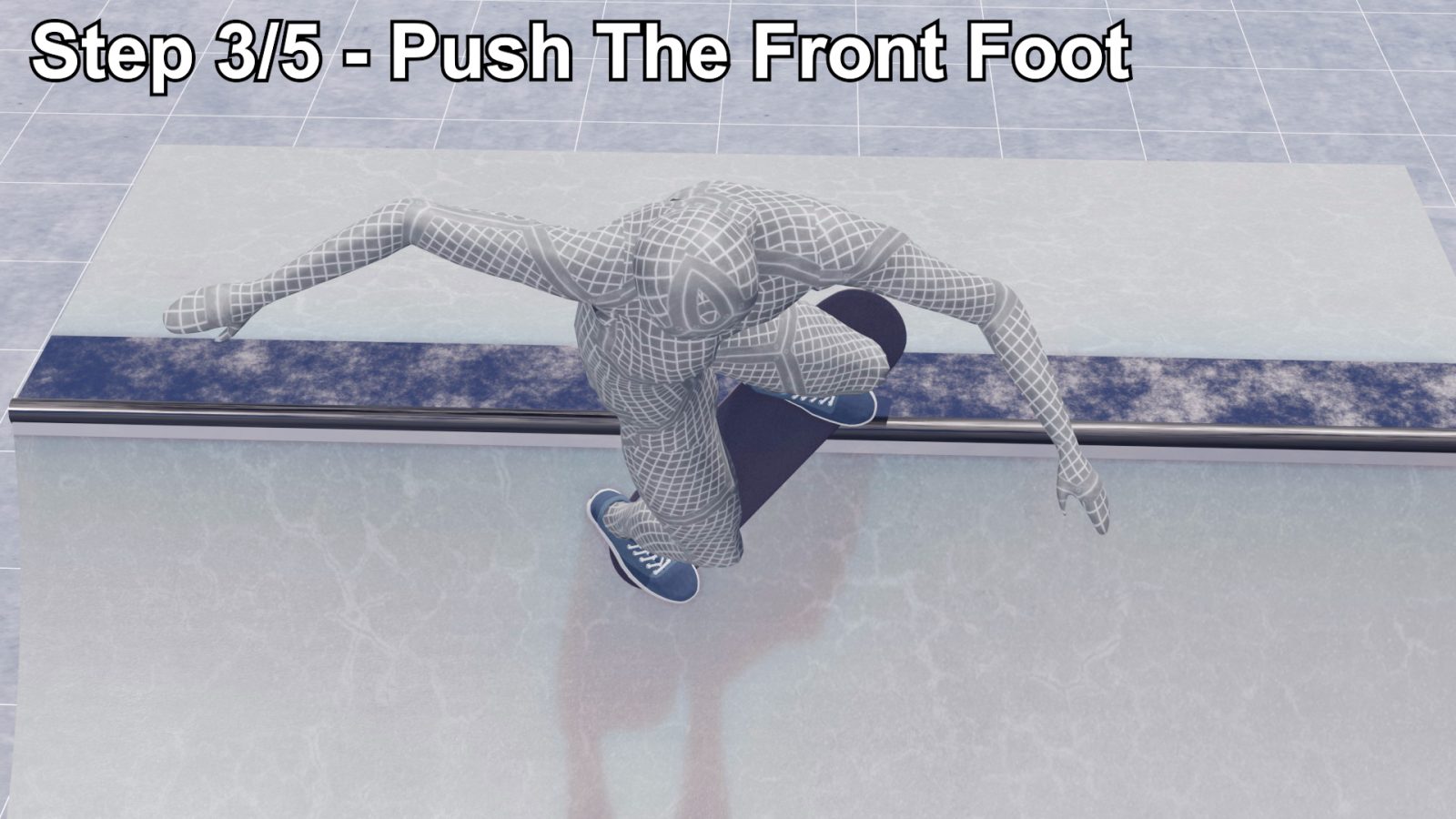
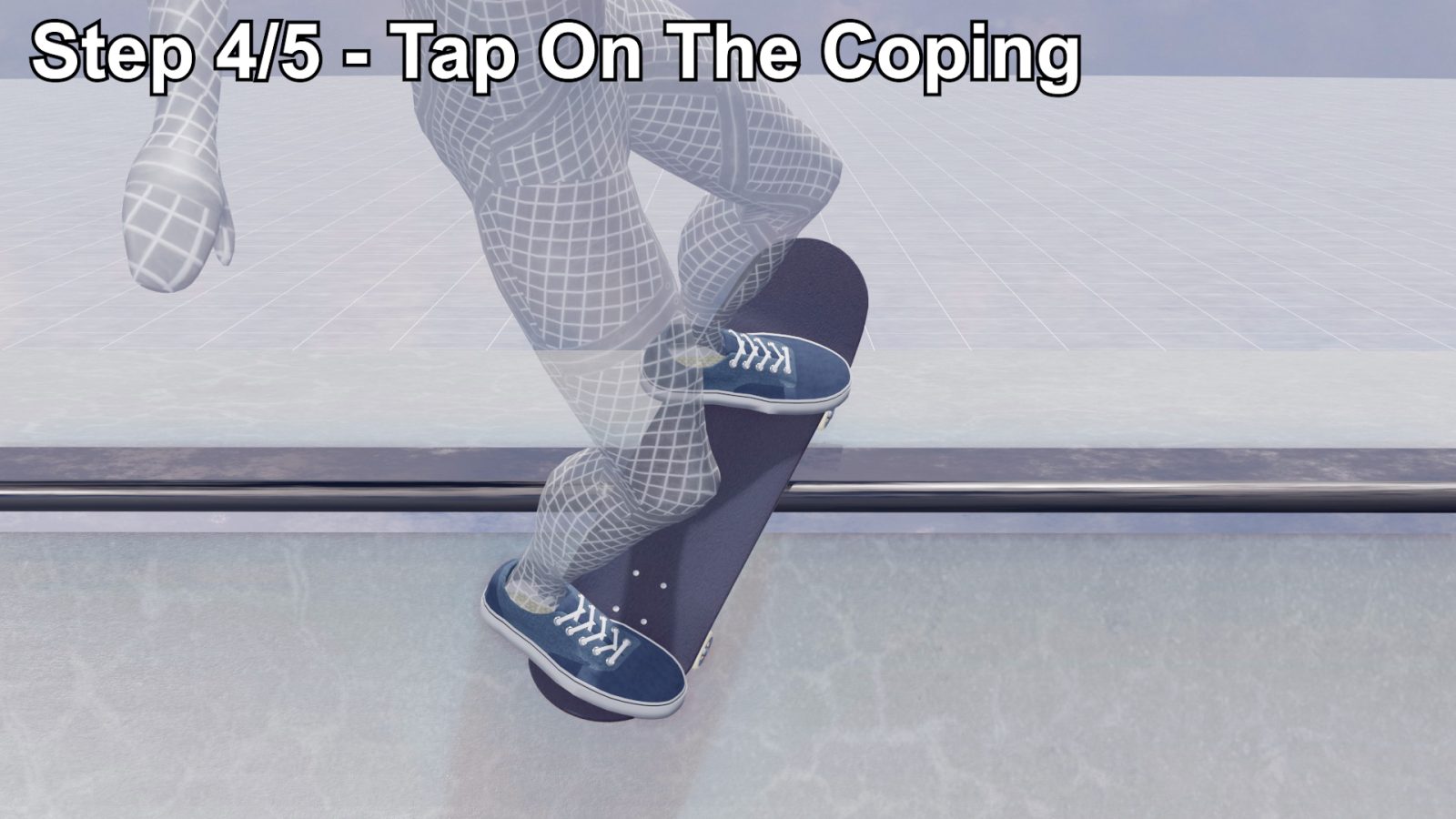
Increase the pushing force gradually, starting with a light tap on the coping. At first, set your board diagonally so the motion of coming back in is easier. Once you get comfortable, try pushing the board straight and fully into the ramp.
Basics of the ramp
Starting from the basics of the ramp. You will obviously gain speed when you roll straight, and slow down when you turn sideways. When you do a Manual during a kickturn, your wheels momentarily face perpendicular to the ramp. Then, you will slow down, creating a brief stall. This motion allows you to get used to the sensation of stopping and restarting on the ramp.
Pushing the nose beyond the coping
Now, you also need to learn how to push the nose over the coping. Use the moment of stall to push the nose over the coping. In the earlier steps, your body and board rotated together. But here, the key is to rotate your body first, while delaying the board's rotation.
Because the nose moves beyond the coping, the board takes longer to return to the inside of the ramp. By rotating your body first, you will face the bottom of the ramp, with the rear wheels remaining at 90 degrees. This is also why embedding the trick into the turning makes it easier. When your board reaches the coping, it's angled already. By keeping your weight on your back foot, the board quickly rotates up to 90 degrees, generating the friction necessary to hold your position.
Poking out the front foot
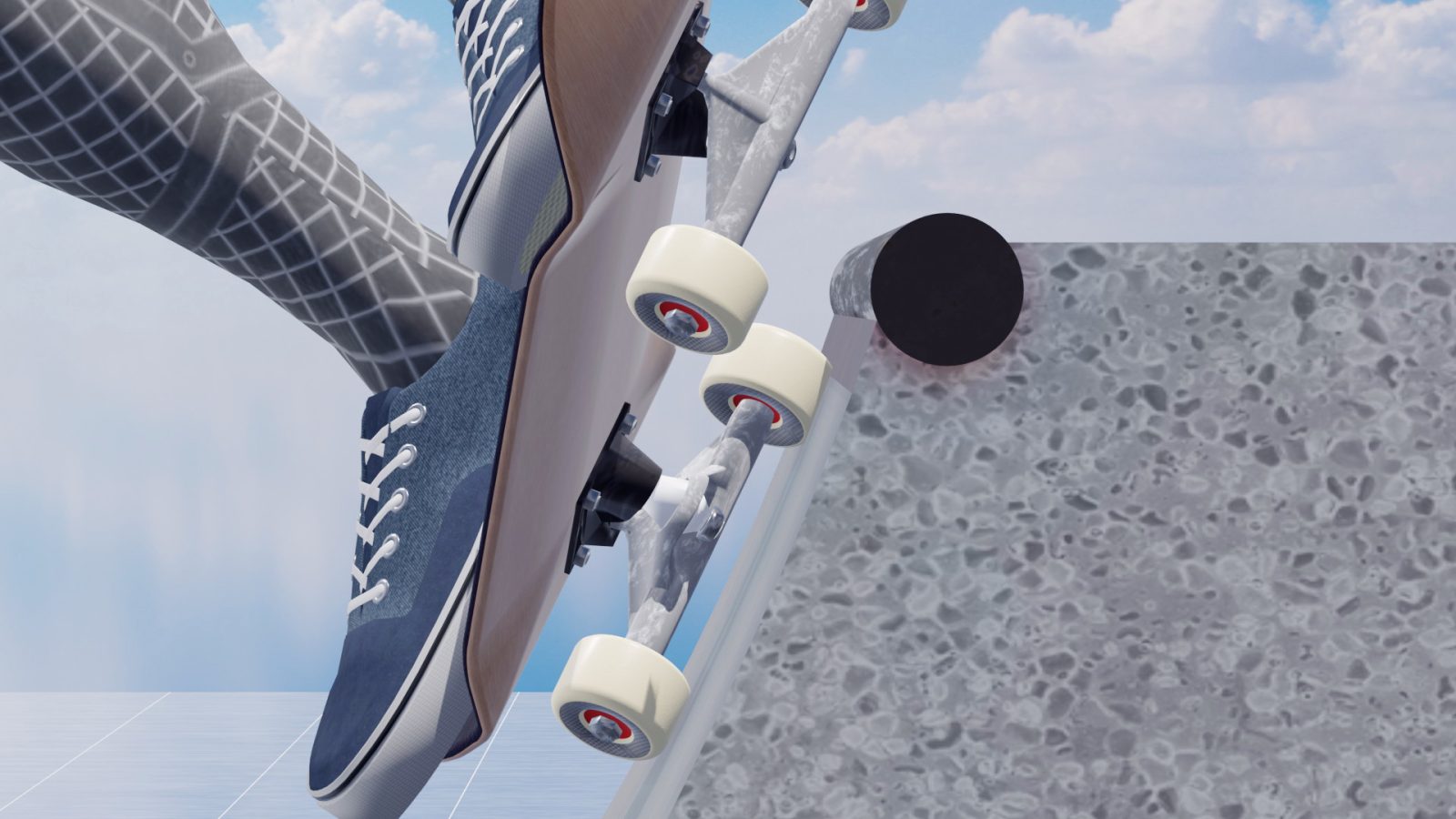
The more you poke out your front foot, the more your body is pushed back inside the ramp. As your body weight stays inside the ramp, you can stay close to your back foot, making it easier to apply pressure to the tail.
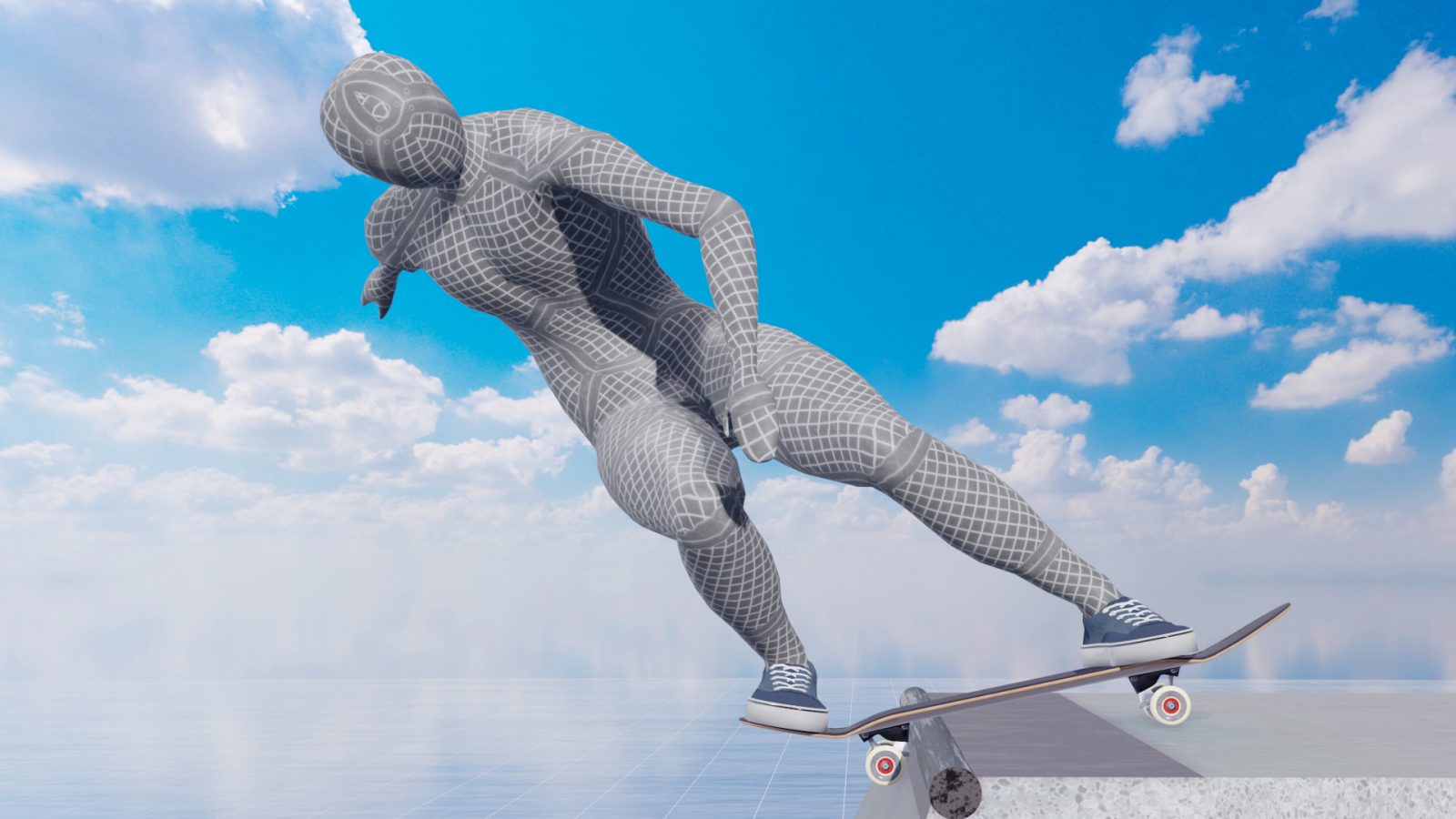
The key is the line of sight. Visualize where you want to place the board before you reach the ramp's peak and keep that image in mind. Ideally, the board should be aligned completely straight to the ramp. As you lean into the ramp, keep your eyes on your front foot. Since your body rotates first, your gaze will shift to the inside of the ramp right as the front wheels touch down, or just before they do.
Even after the board leaves your view, keep on pushing your front foot. Your body remains inside the ramp, your back foot presses the tail, and the nose naturally tries to lift. Use the inside of your front foot to push the nose back down so the front wheels make solid contact with the ramp deck.
Compared to locking in lightly, when locking in deeper, the motion of coming back in changes. Earlier, the board began rotating almost immediately after you pressurized your back foot. Now that the wheels are parallel to the ramp, there's minimal resistance, and you will start sliding down. The board begins to follow your body's rotation, and by the time resistance appears, you've already descended to an extent.
The challenge here is that if you try to rotate the board after it starts sliding, the nose can easily catch on the coping. Once again, the weight distribution becomes crucial. If you stand on the coping, you must move your weight a long distance to go back into the ramp, increasing the risk of hanging up on the coping. However, if you stay inside, you can press down on the tail anytime you want.