

Your toe is on the tip of the tail, your ankle is snapping, and your front foot is sliding enough—yet your Ollie still doesn't get high. This is a very common problem.
To give you the conclusion first: It is NOT because you need to pop harder. It's because you're not jumping. Because even if you pop hard, as long as your front foot blocks your board from going up, it can’t go any higher.
And actually, one of the best ways to understand the most common issues in an Ollie… is to compare it with a snowboard Ollie. This time, based on the difference between these movements, I'll break down why common Ollie mistakes happen and how to fix them scientifically.
How a snowboard Ollie works
First, let's think about how an Ollie in snowboarding works. It’s not the same as jumping on both feet. Instead, you use the flex of the board. Shift your body axis toward your back foot, and push the board forward. This moves the tail underneath your center of mass. Then, as you lift your front foot, the nose rises, and the board begins to flex.
Once the board is flexed enough, kick downward with your back foot. As you push down, your body will be launched upward. And the rebound of the board gives you a boost. This is why you can Ollie off the ground. In other words, you can raise your center of mass by continuing to lift your front foot from the beginning all the way to the peak. Well, it seems natural, as you want to raise the nose.
How a skateboard Ollie works
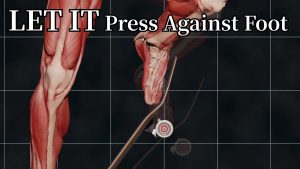
On the other hand, in skateboarding, if you lift your front foot from the start, you can’t lift your body weight. To lift your weight, you have to push the board downward with your front foot. It’s just like jumping. You need to push down to lift your weight. Only then will your body lift, and you can start sliding up your front foot.
The difference in how your body gets lifted
You must have already noticed, but let's look at the difference again. In snowboarding, you can lift your front foot from the start, which is more intuitive as you want to raise the nose. In skateboarding, however, you must push it down before lifting it, which may be counterintuitive because you want to lift it, not lower it. Both movements are needed for the same purpose—lifting your body weight—but the direction of force at the beginning is completely opposite.
What happens when your body doesn't get lifted
Now, let's take a closer look at what happens when you forget the motion of pushing down with the front foot to lift your body weight. The earlier example was extreme, but there are more common problems, such as "The tail is definitely hitting the ground, but the board doesn’t come up." or, "The front foot is sliding, but it’s not lifting the board any higher." And you may think you are not popping or sliding hard enough. But the real issue isn't there.
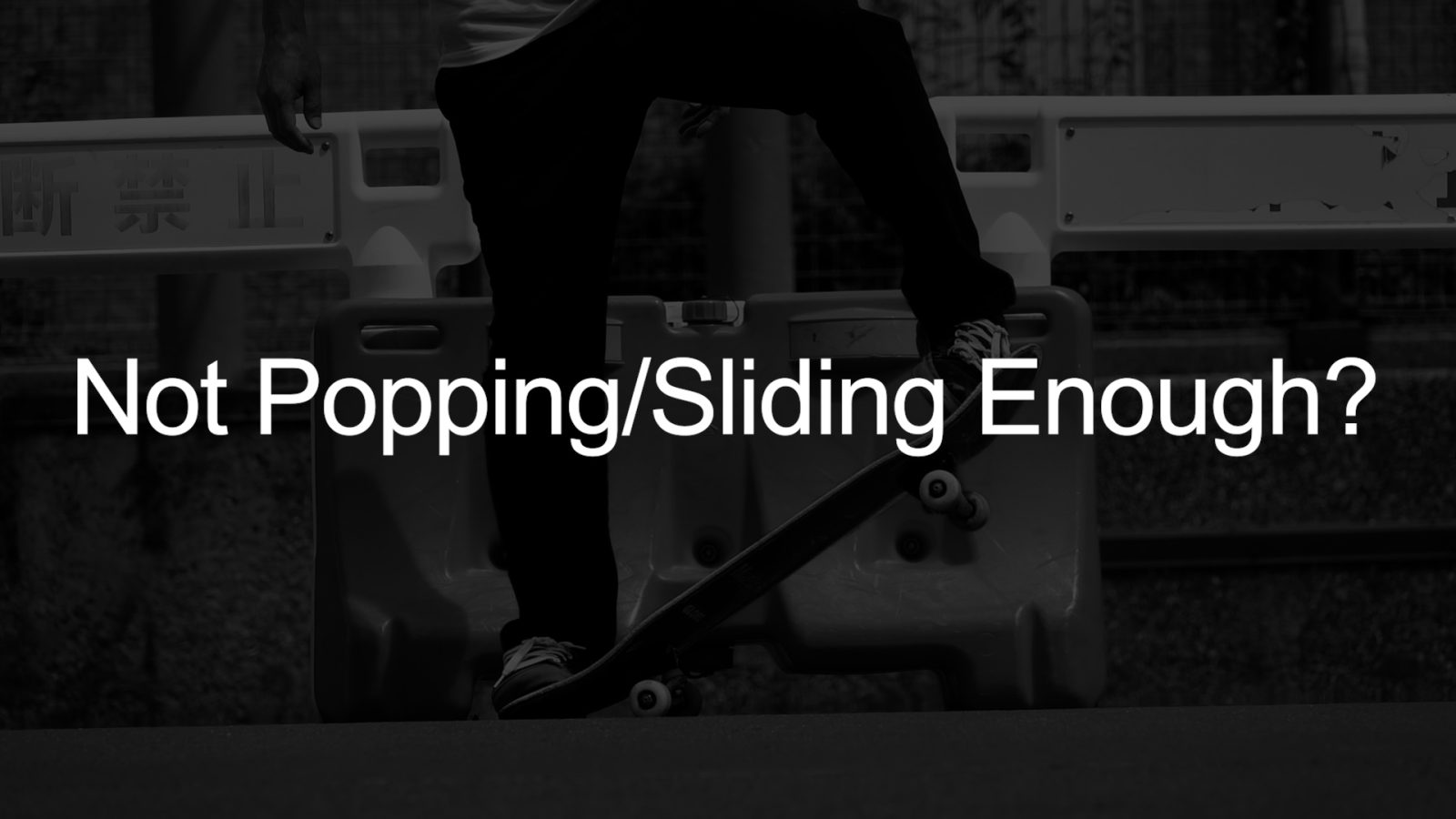
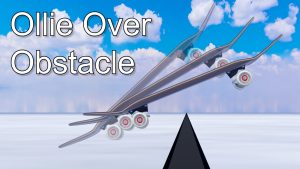
Indeed, compared to when popped weakly, the board bounces back up higher when popped hard. But what matters is not the height of the peak of the pop like this. Because as it bounces back up, it starts spinning around its center of mass. In an actual Ollie, before the board reaches the peak, it’s held by the front foot, which determines how high the board lifts.
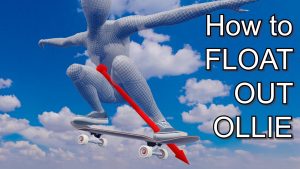
The problem is that as long as your body weight stays low, you can’t lift your front foot so high. Your front foot is basically "capping" the board's movement. And that is what we need to work on. In order to Ollie higher, you need to lift your body weight first so you can raise your front foot higher while guiding the board to lift.
So what should you do?
So, how can you actually learn the feeling of lifting your body weight? On flat ground, I recommend doing pseudo Hippy Jumps. You can forget about popping for now—just get used to the sensation of lifting your body weight while keeping your feet in contact with the board.
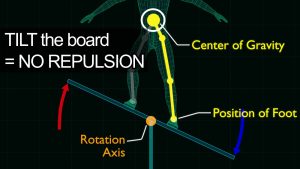
Remember. When you push down with your back foot alone, the board moves. But if you press down with your front foot, which is between the trucks, your weight will rise without affecting the board. This body-weight-lifting motion has a lot in common with pushing. In terms of supporting your weight with one foot, it’s the same thing.

2 Replies to “Reason Your Ollie Doesn't Get High - Scientific Comparison Between Skateboarding & Snowboarding”