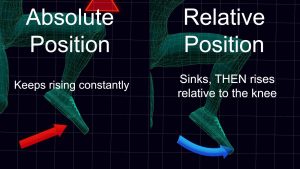
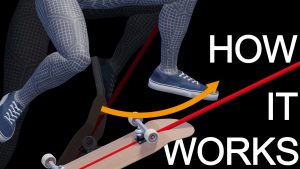
Why does my Kickflip stick to the front foot?
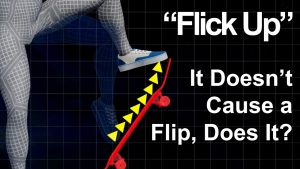
Because the energy of your flick is directed parallel to the spinning axis.
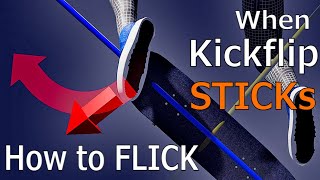

You may flick your board with considerable force, yet it still clings to your front foot and fails to rotate, even though you can flip it easily with your finger. In this article, we examine the mechanics behind this “sticking problem.”
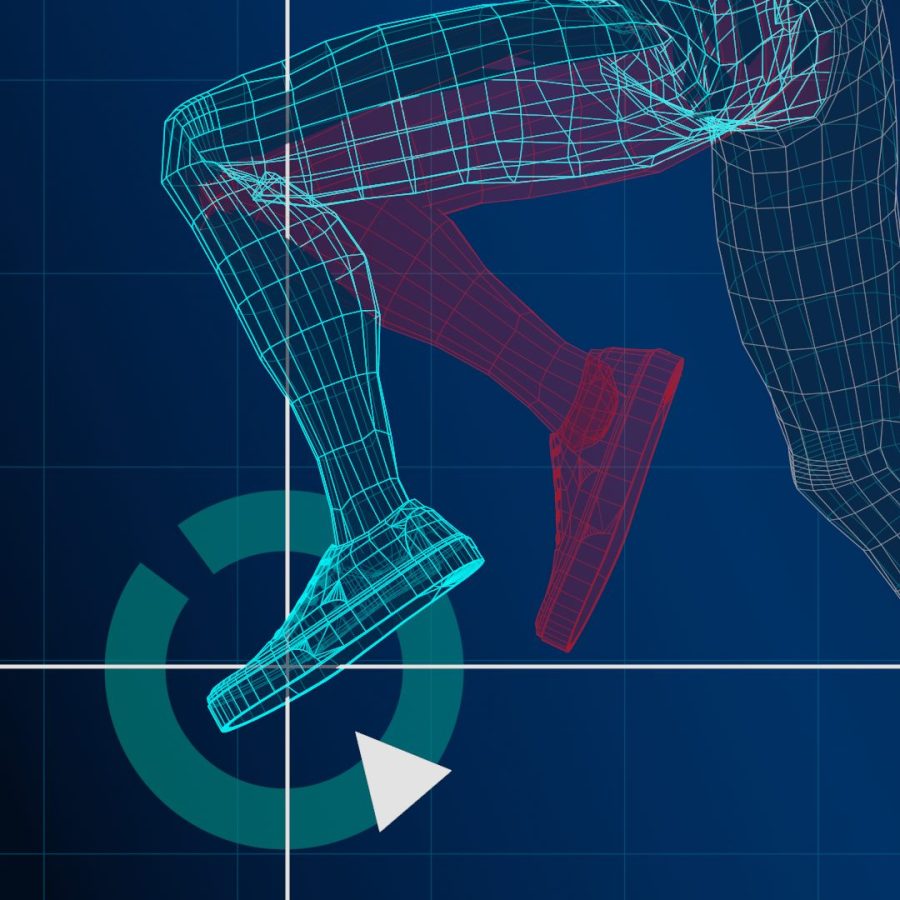
Instantly discover issues with your tricks and how to fix them.
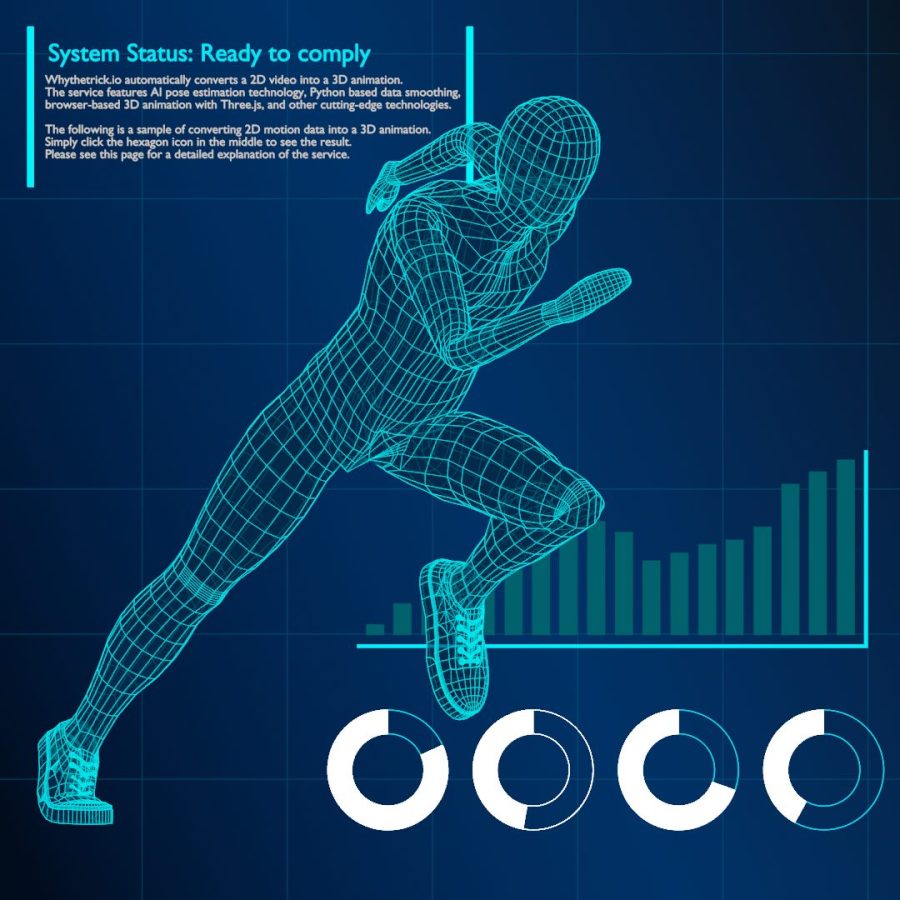
Deep analyze your motion with the cutting-edge technology.
Track your daily progress and ask questions to others.
Summary
Why does a kickflip stick to the front foot?
The sticking issue often occurs when the energy of your flick travels parallel to the board’s spinning axis. To generate an efficient kickflip, the applied force must be directed vertically to the x-axis (the kickflip axis). A forward-directed flick shifts the rotation toward the y-axis (the forward-flip axis), resulting in a slower and less stable kickflip.
How strongly should you flick?
You do not need to apply excessive force. It requires surprisingly little energy to flip the board—consider how easily you can flip it with a finger. Flicking unnecessarily hard may introduce horizontal rotation and destabilize the trick.
Simulation
Tap the icon to activate the 3D simulation.












Premises
Is it really because you need to flick harder?
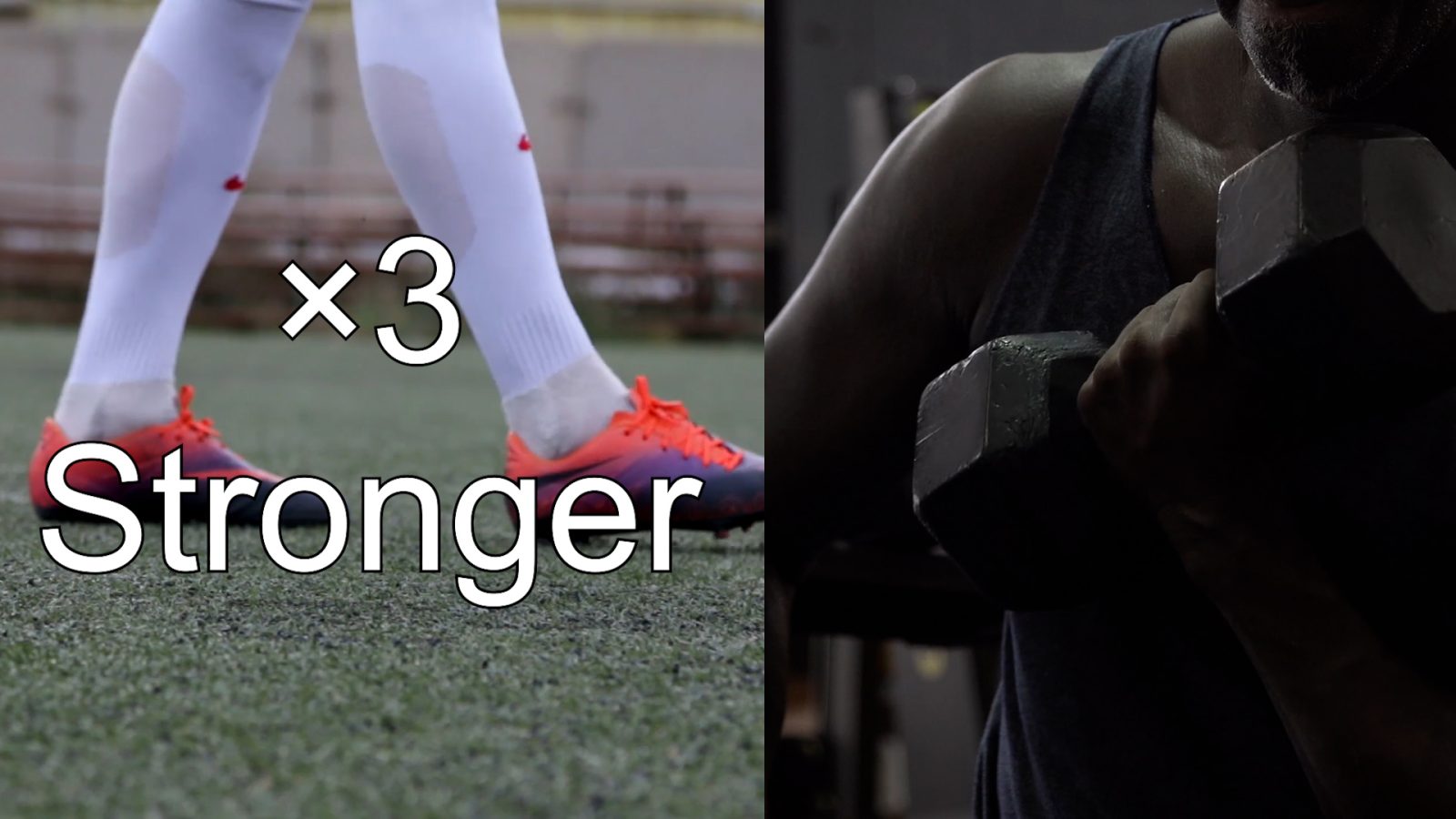
The average human leg is known to be roughly three times stronger than an arm.
How many times stronger is it compared with a finger? While it is difficult to quantify precisely, it is undoubtedly far stronger.
If you still cannot flip your board with your foot, something else may be missing in your technique. Please also refer to other kickflip articles for a broader understanding.
Review of the mechanics of kickflip
Apply a vertical force to the x-axis
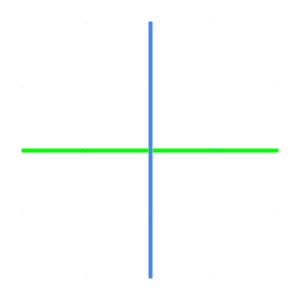
Every physical object, including a skateboard, has three rotational axes. Let us call the longest one the x-axis, the toe-to-heel direction the y-axis, and the remaining one the z-axis.
To flip the board efficiently according to mechanical principles, your flick must be applied perpendicularly to the x-axis. Practically, this means directing your flick toward the nose or the region near the beginning of the nose.

How a forward flick produces vertical force
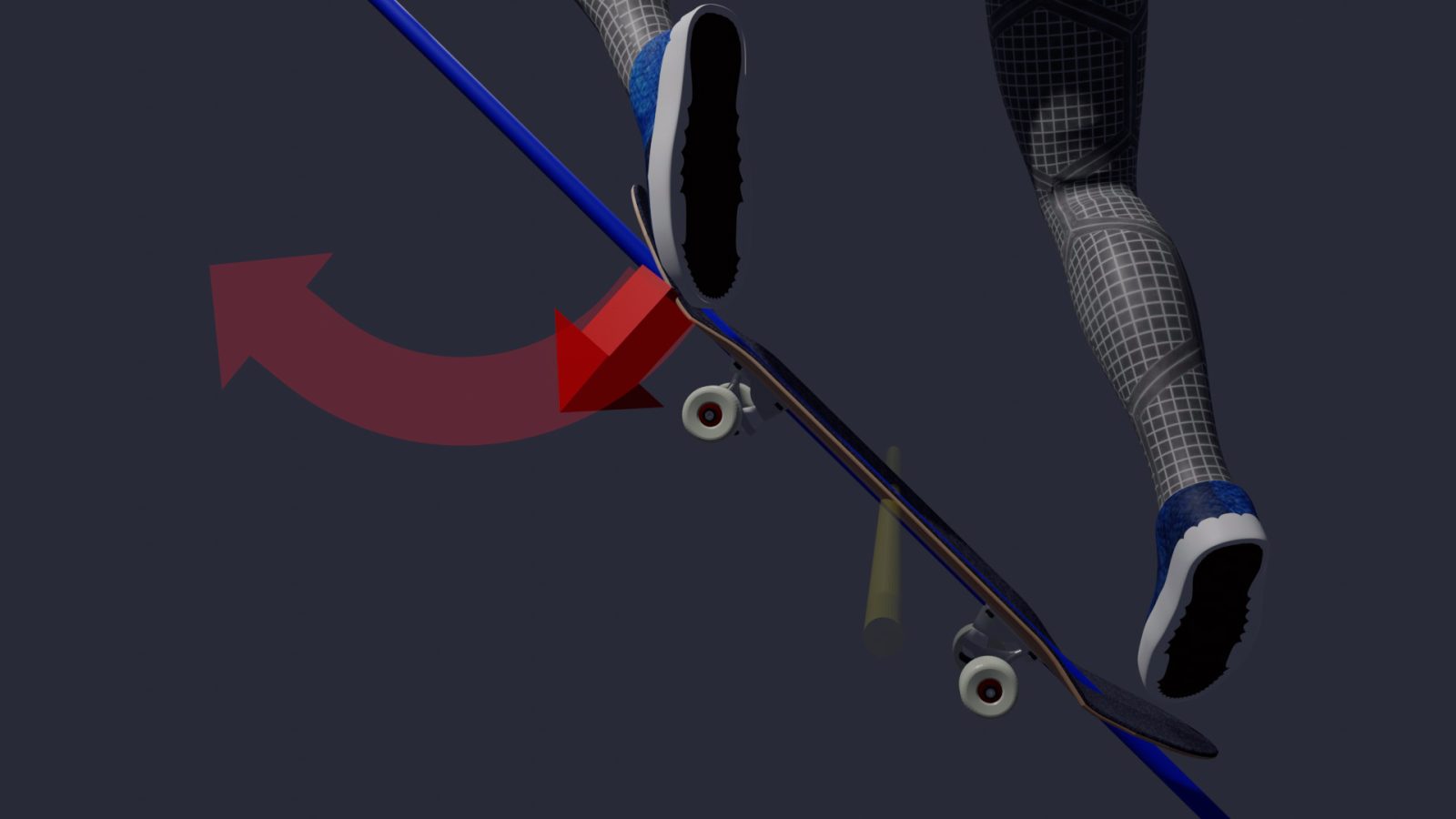
Upon closer observation, the arc traced by your toe generates a vertical component of force that acts on the board, enabling an efficient flip.
This is a subtle point: although the motion appears forward, the arc naturally produces a vertical force on the axis, allowing the kickflip to occur.
Problem
Why does the sticking problem occur?
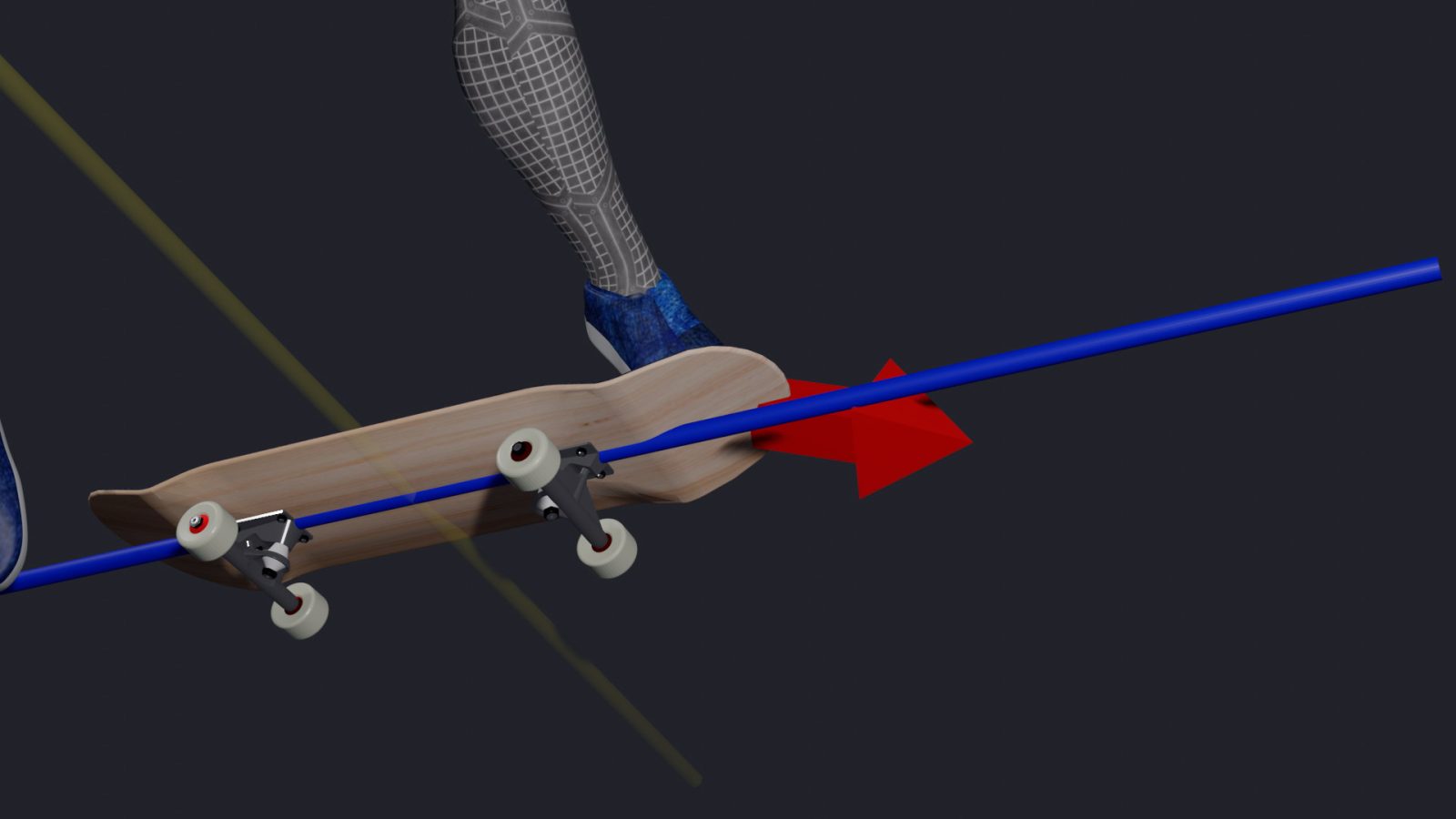
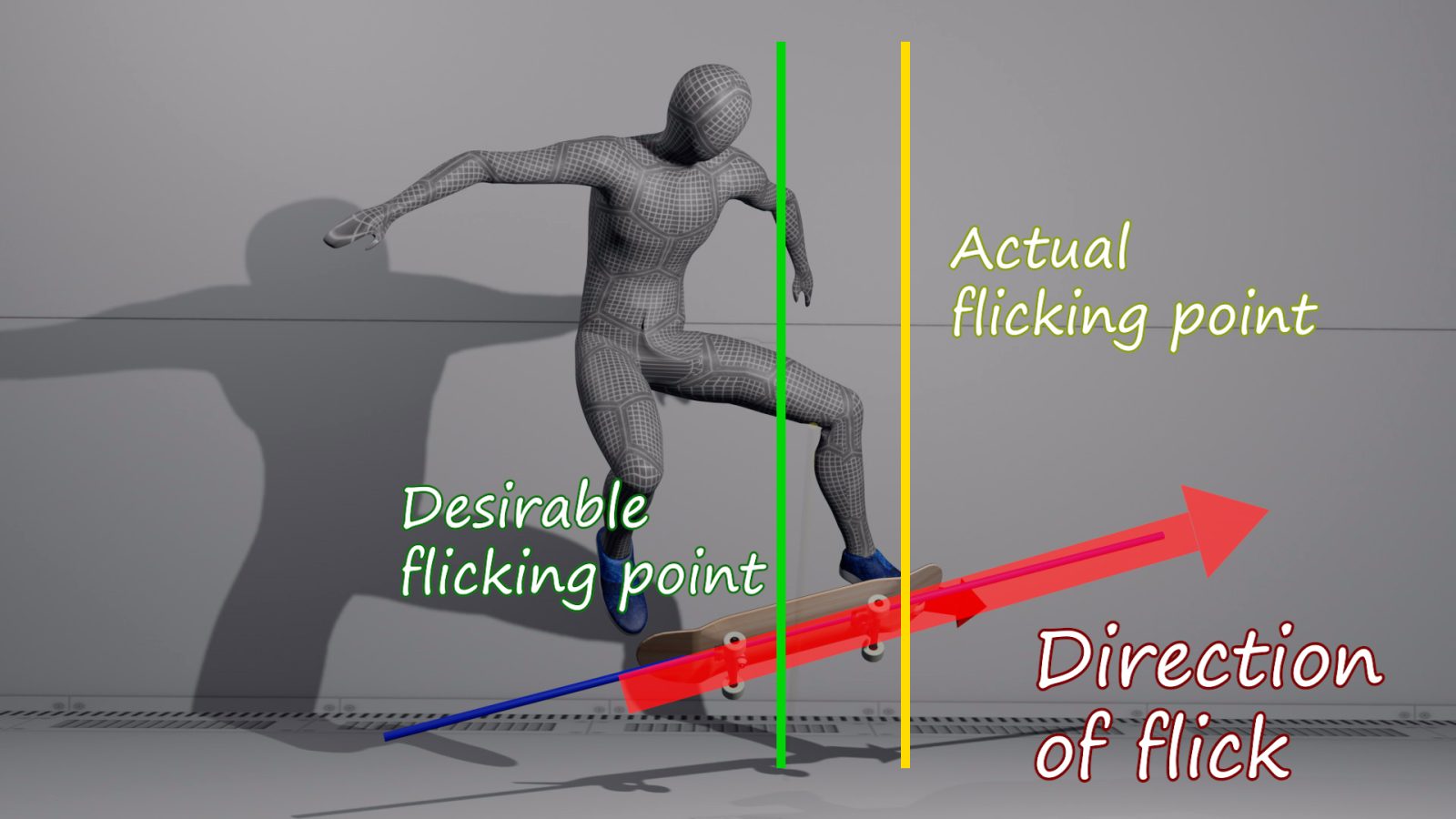
The sticking problem tends to arise when the applied force travels too closely parallel to the x-axis.
When this happens, the board’s dominant rotational axis shifts from the x-axis to the y-axis, causing your flick’s energy to rotate the board forward rather than initiating a clean kickflip.
As a result, the spinning force of the kickflip weakens, making the board feel as though it is clinging to your front foot.
In more severe cases, the board may even rotate forward excessively, causing the tail to rise too high and making you catch the board upside down in midair.
Should you flick downward to generate vertical force?
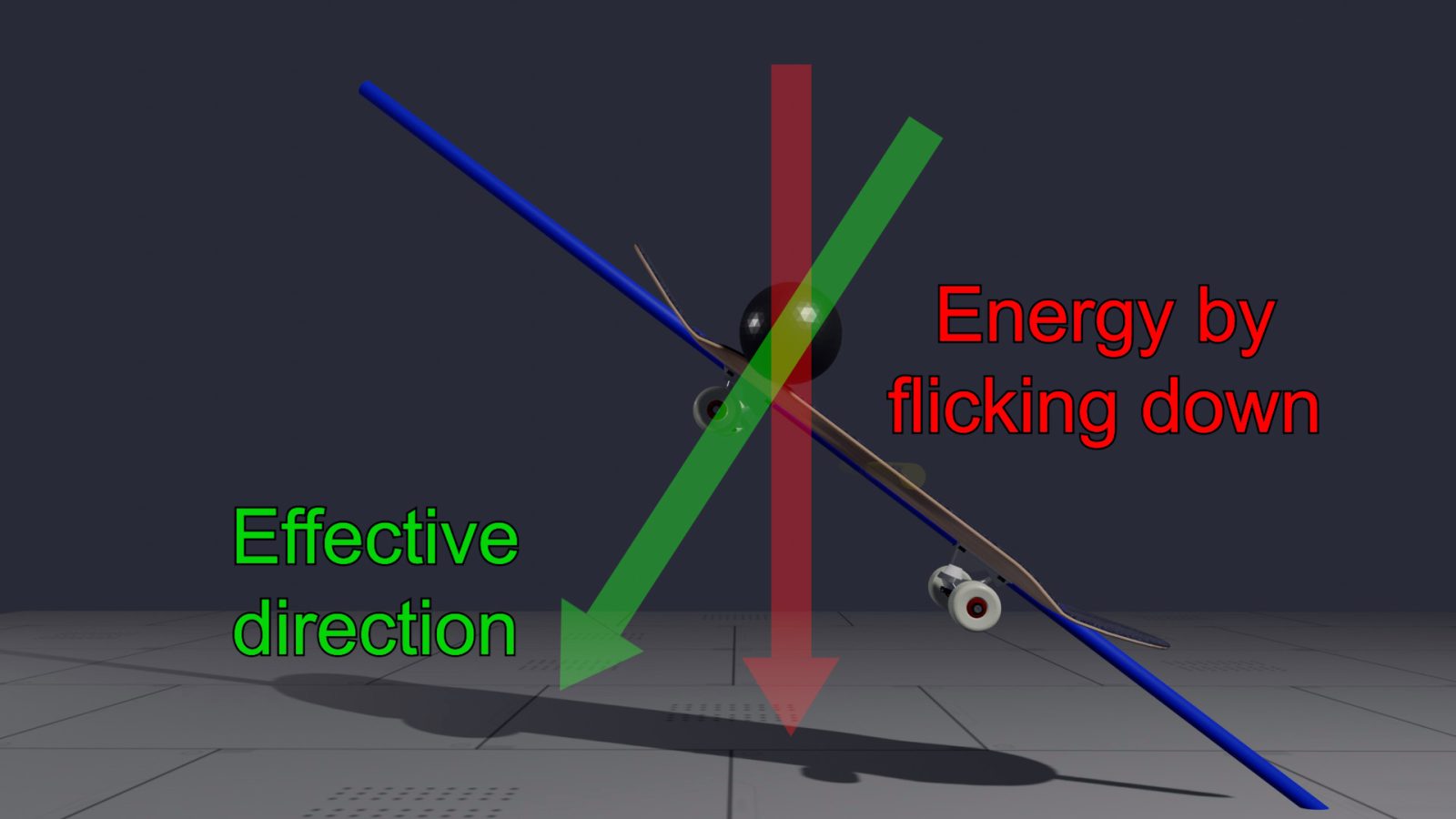
Does this mean that flicking downward is the correct approach? As many skaters point out, it is not.
Consider the following: Flicking downward may generate a force perpendicular to the ground, but not necessarily perpendicular to your board’s x-axis.
A downward flick produces only a slanted force relative to the deck, which is inefficient for creating a clean kickflip rotation.
Common mistakes that may cause the sticking problem
When does the sticking problem occur?
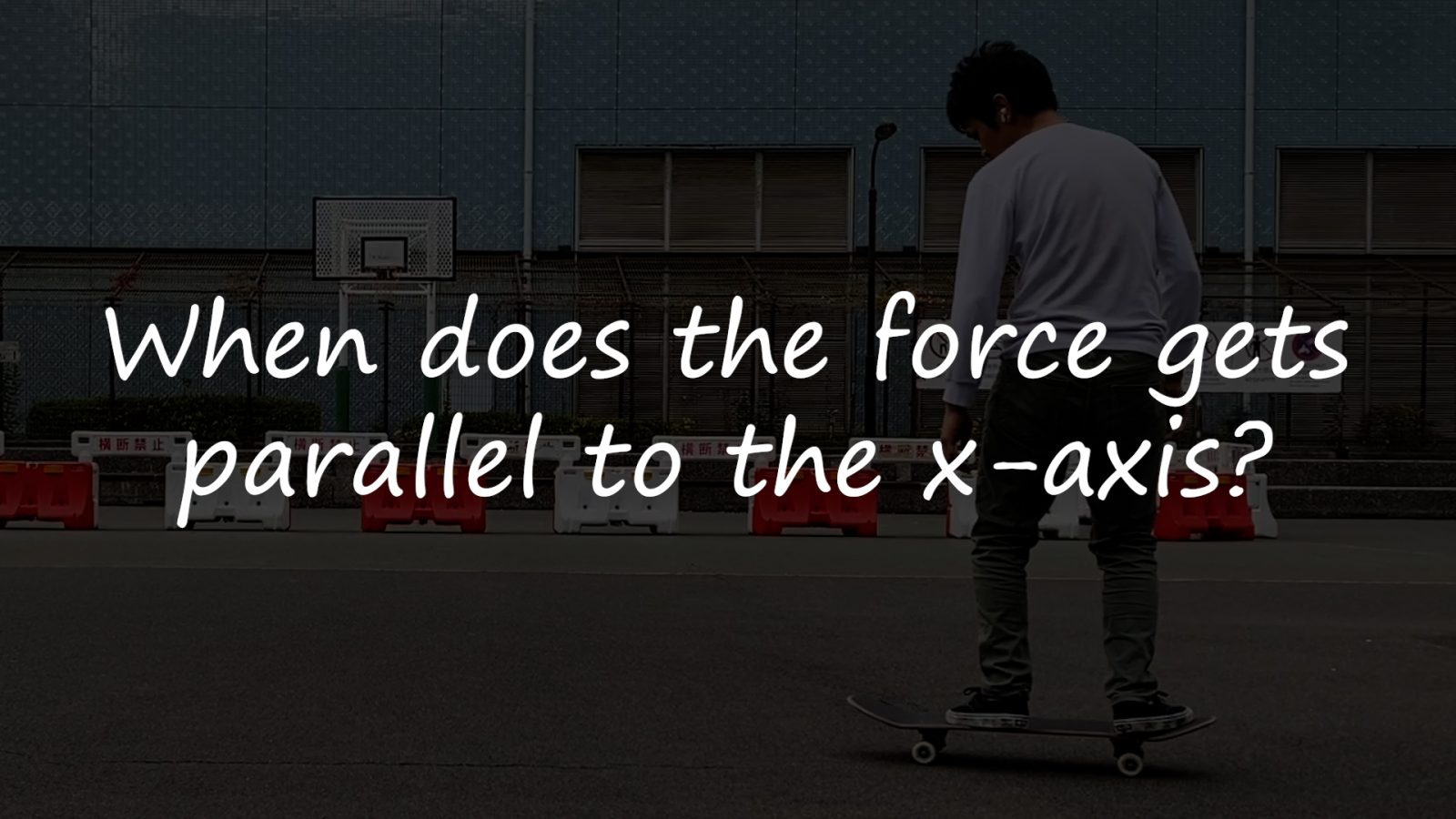
Now that we understand the importance of the spinning axis, let us examine when the direction of the flick tends to drift too close to parallel with the x-axis. Two common mistakes often contribute to this issue:
- Raising your body excessively high.
- Flicking too far forward.
Let us take a closer look at each one.
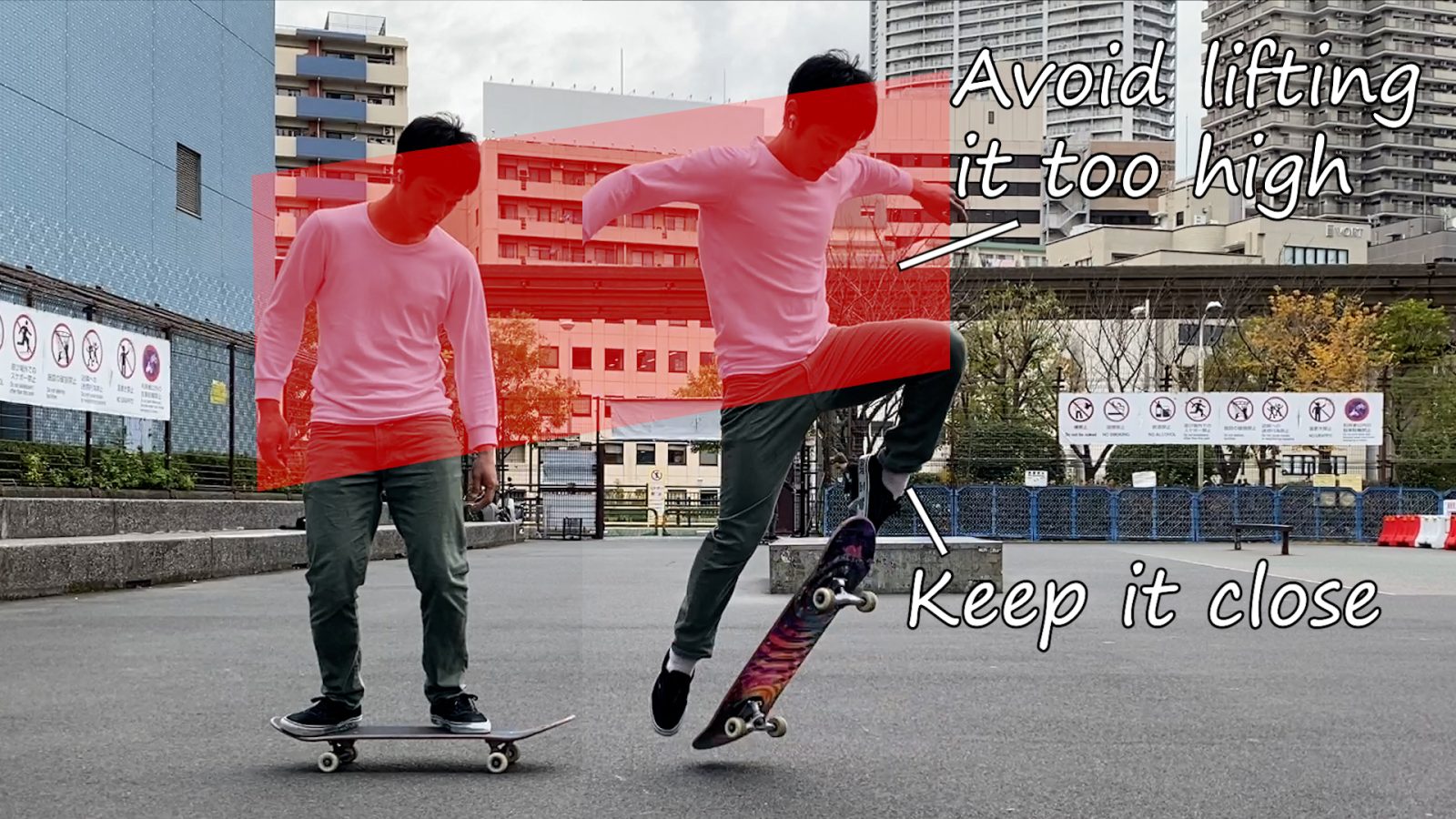
1. When you lift your body too high.
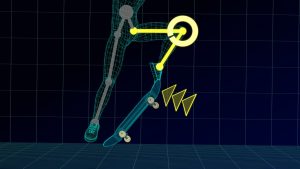
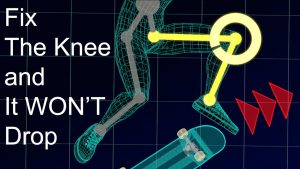
If you rise too high without bringing your front knee upward, your front foot loses the ability to draw the necessary arc.
Instead, it tends to move almost straight forward, making it extremely difficult to generate the vertical component of force required for an efficient kickflip.
I personally try to avoid jumping higher than needed, as keeping the jump modest allows me to raise my knee more effectively.
Of course, you may jump as high as you prefer—but in that case, be sure to pull your knee close to your chest.

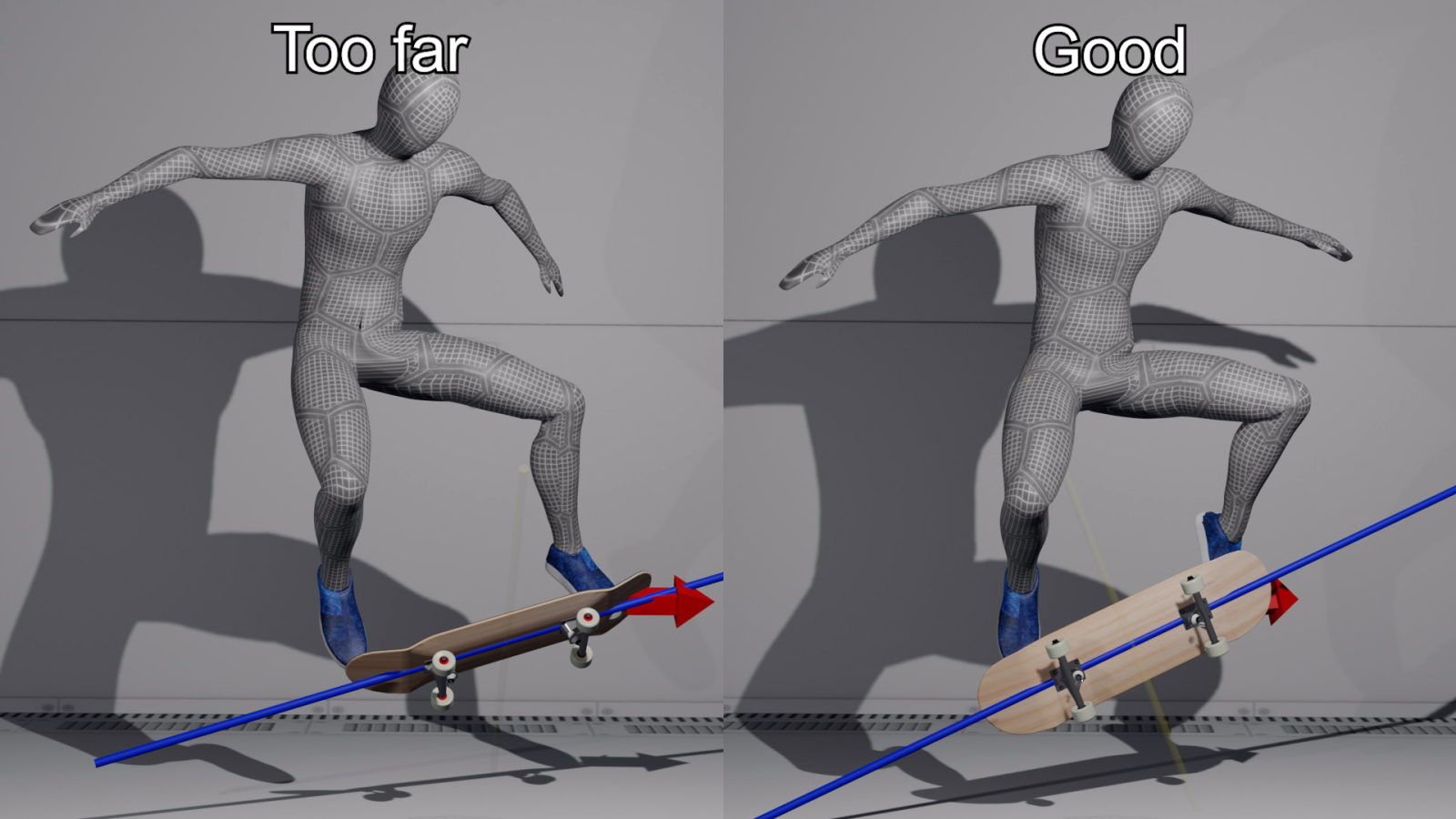
2. When you flick too far forward.
It is common to flick too far—toward a spot you can visually identify—simply because you can clearly see that area in front of you.
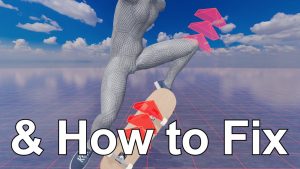
However, once your front leg extends too far, it becomes difficult to generate sufficient vertical force around the x-axis. Your front foot must remain close to your center of gravity in order to exert upward rotational energy effectively.
If you merely push the board forward with an extended leg, the nose will drop as the board rotates around the y-axis, which slows or prevents the kickflip.
Key points to avoid the sticking problem
To prevent the sticking issue, it is essential to "avoid raising your body unnecessarily high" and "avoid flicking too far forward." Although this advice is simple, applying it consistently takes practice.
To develop a better sense of the flick, try practicing the motion while stepping off the board before attempting to land it with both feet. The next step offers a closer examination of this practice method.

Practice
Importance of practicing the flick
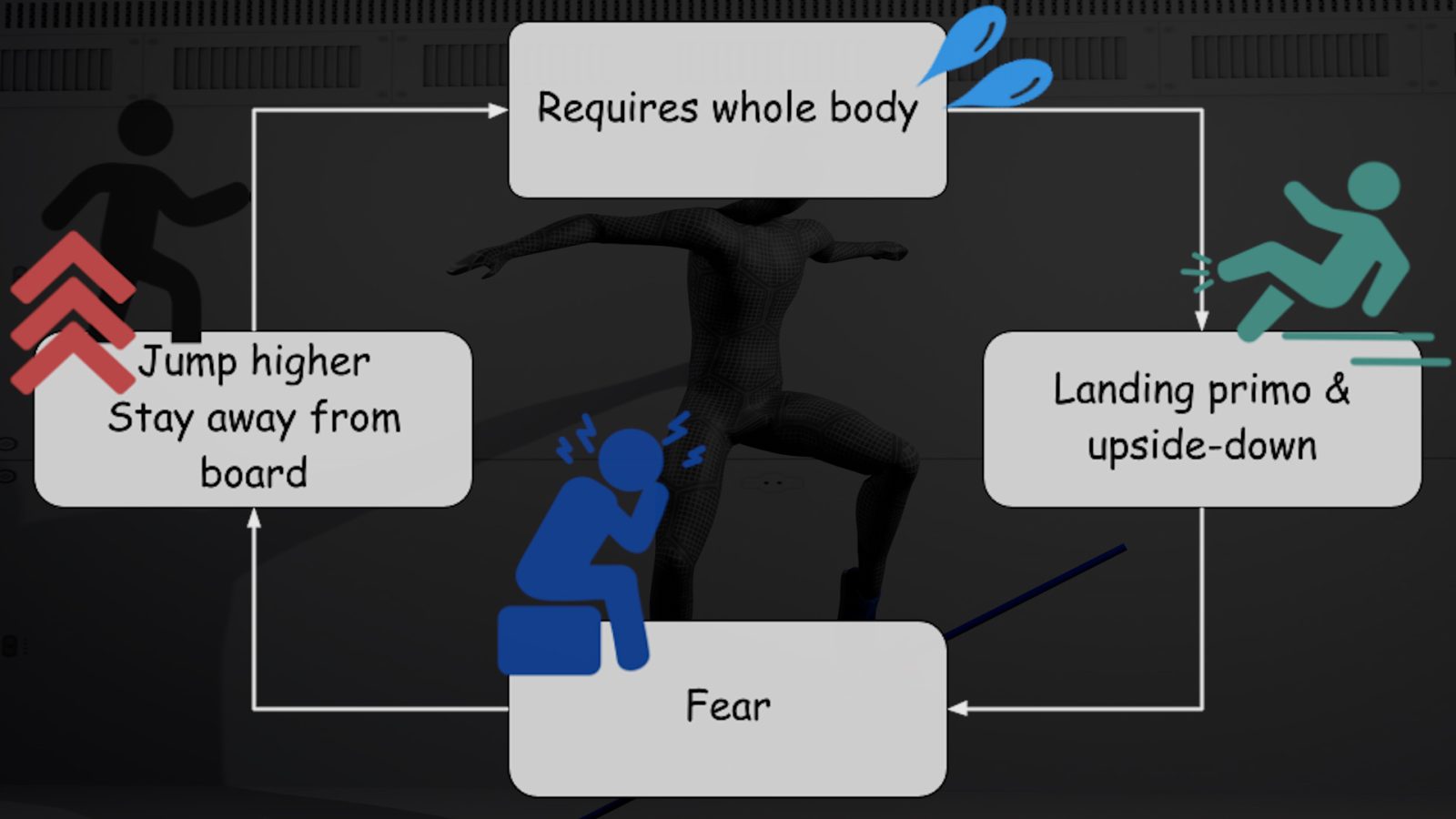
It is essential to practice correctly in order to develop a precise sense of the flick. By removing the pressure of landing with both feet at the beginning, you can easily recognize whether you are flicking too far or raising your body too high.
If you attempt to land with both feet while you are still trying to acquire the correct flicking sensation, you will end up involving your entire body and consuming unnecessary energy. Because the flick becomes less efficient, you may land primo or upside down, which increases fear. This, in turn, encourages you to jump higher to avoid your board.
The more you force the motion, the stiffer your body becomes due to fear and fatigue, making the trick increasingly difficult.
Foot placement
Place your feet in your preferred kickflip stance. Because our body structures and ankle mobility vary, the ideal placement differs from person to person.
For reference, I position my front foot slightly above the front bolts and place my back foot slightly toward the toe side of the tail. Use the placement that feels most natural for your body, and proceed with the following steps.

Step #1 Crouch and begin to rise
Make sure not to lift your body higher than necessary. Aim to rise only to about the same height as your normal standing position. Remember, once your body rises too high, it becomes much harder for your front foot to draw the required arc.
Step #2 Pay attention to weight distribution
I usually shift my weight slightly toward my front foot at the moment of the flick. Leaning too far back increases the distance between your flicking foot and your body’s center of mass, making the flick travel parallel to the x-axis.
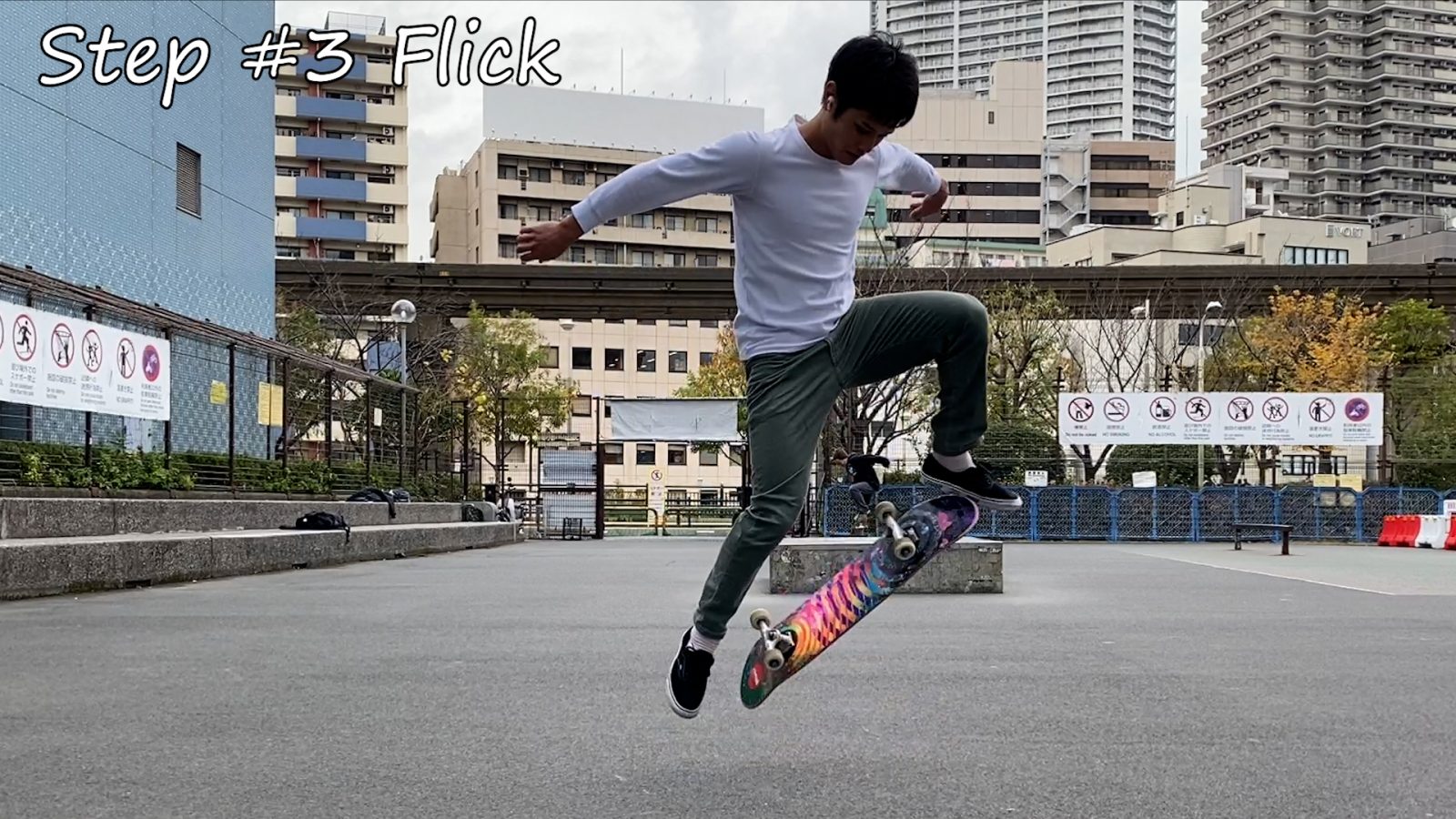
Step #3 Flick your front foot
Flick your front foot with a quick and compact motion. Keep in mind how little energy is actually required—after all, you can flip the board with just a finger. As long as your flick applies vertical force to the x-axis, excessive strength is unnecessary.
Overflicking can compromise your balance and may even cause the board to rotate horizontally.
Introduction of whythetrick.io
A platform that allows you to convert your motion into a 3D animation with ease
Anyone should have the opportunity to analyze their own movement objectively. However, creating full 3D models—as I usually do—can take up to two weeks for a single motion. If we could convert our movements digitally and effortlessly, the results would not only support personal improvement but could also contribute to a collective knowledge base when shared with others.
In essence, we need a platform that connects individual effort and transforms it into shared progress—one that helps us refine our skills while accelerating the evolution of human understanding as a whole.

To bring this idea to life, I present whythetrick’s AI-based automatic motion converter. Simply select or drop a file, and the system automatically transforms your video into a 3D animation. You can view it directly in your web browser and adjust angles, playback speed, grid visibility, and more.
The system is still under development and may contain errors, and its accuracy is not yet perfect. Nevertheless, I hope it helps you discover something meaningful.
For the project to advance, I genuinely need your support. Live data is essential for improvement, as is your qualitative feedback. Please try the system and let me know your thoughts.