

Fakie Bigspin is often said to be the easiest type of Bigspin, but when you try it, the board surprisingly refuses to rotate. Why does this happen?
Summary
Lift your body weight by pressing down with BOTH feet
While you can spin the board easily when you are standing on the ground, you can't spin the board when your body weight is holding your board down. Make sure to lift your body weight first, and scoop the tail at the very end.
Guide the board's rotation with the front foot
As you press down on the tail, the nose lifts and pushes agaist your front foot. If you stop your front foot, the board stops spinning. So, send it forward in a way you guide the board's rotation.
Success-Fail Comparison
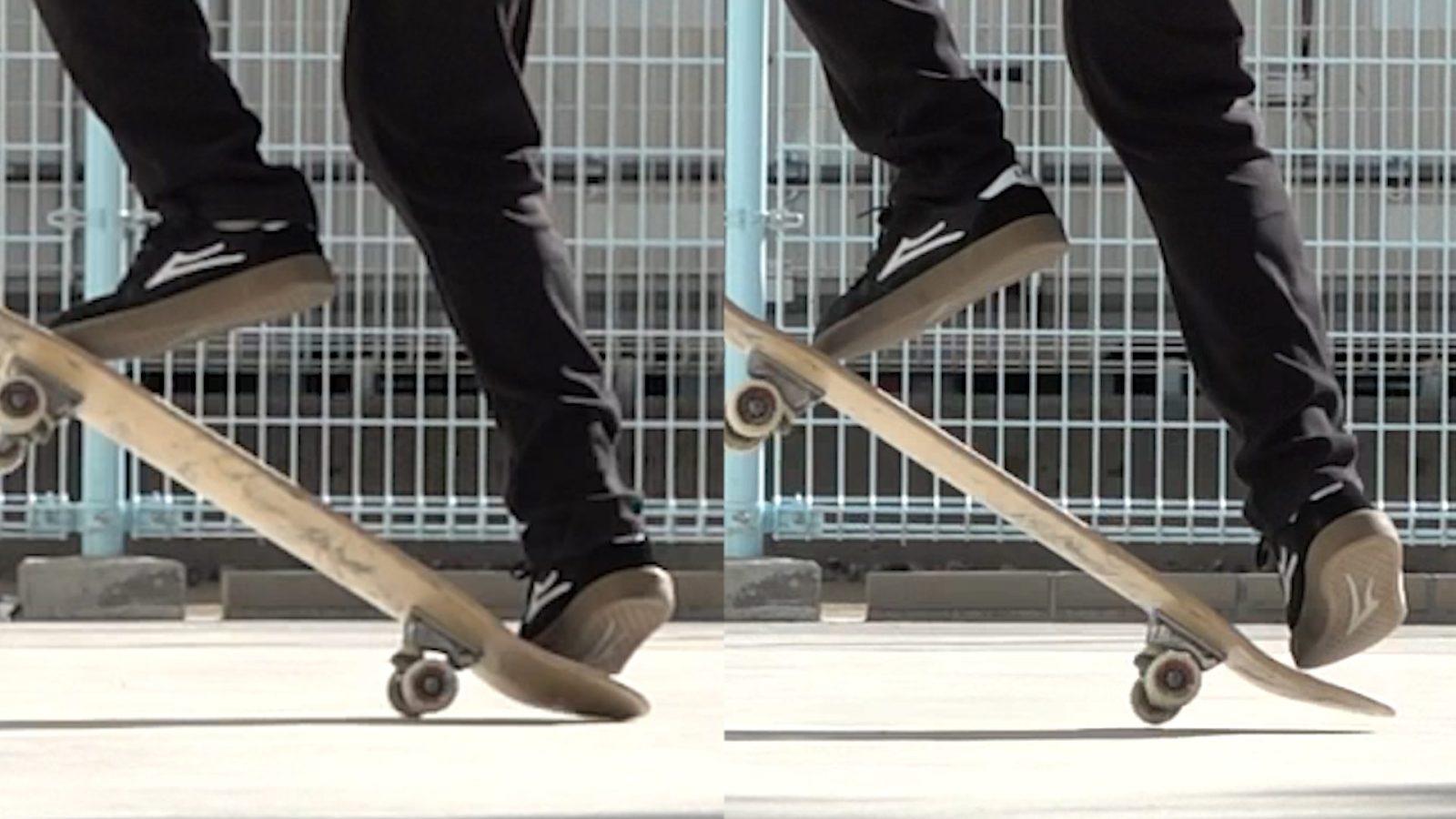
First, let's compare a successful attempt with a failed one. Even though the movements look almost identical, only the case on the right fails, and the board and the body stop halfway. Did you notice any difference?
Since the upper-body movement is nearly the same, the shoulder angle, as commonly mentioned, is not relevant.
Instead, the difference shows up in a much smaller detail. At the moment the board rotates 90 degrees, in a successful attempt, both feet remain pressing down on the board. Whereas in a failed attempt, the back foot is already in the air. It might look like a timing issue at first glance, but simply delaying the pop doesn't solve the problem.
A condition to spin the board
Let's think from the beginning. When you're just standing on the ground, the board spins like nothing. That's obvious because nothing is weighing down the board. In other words, if you can recreate this situation during the trick, the board will spin.
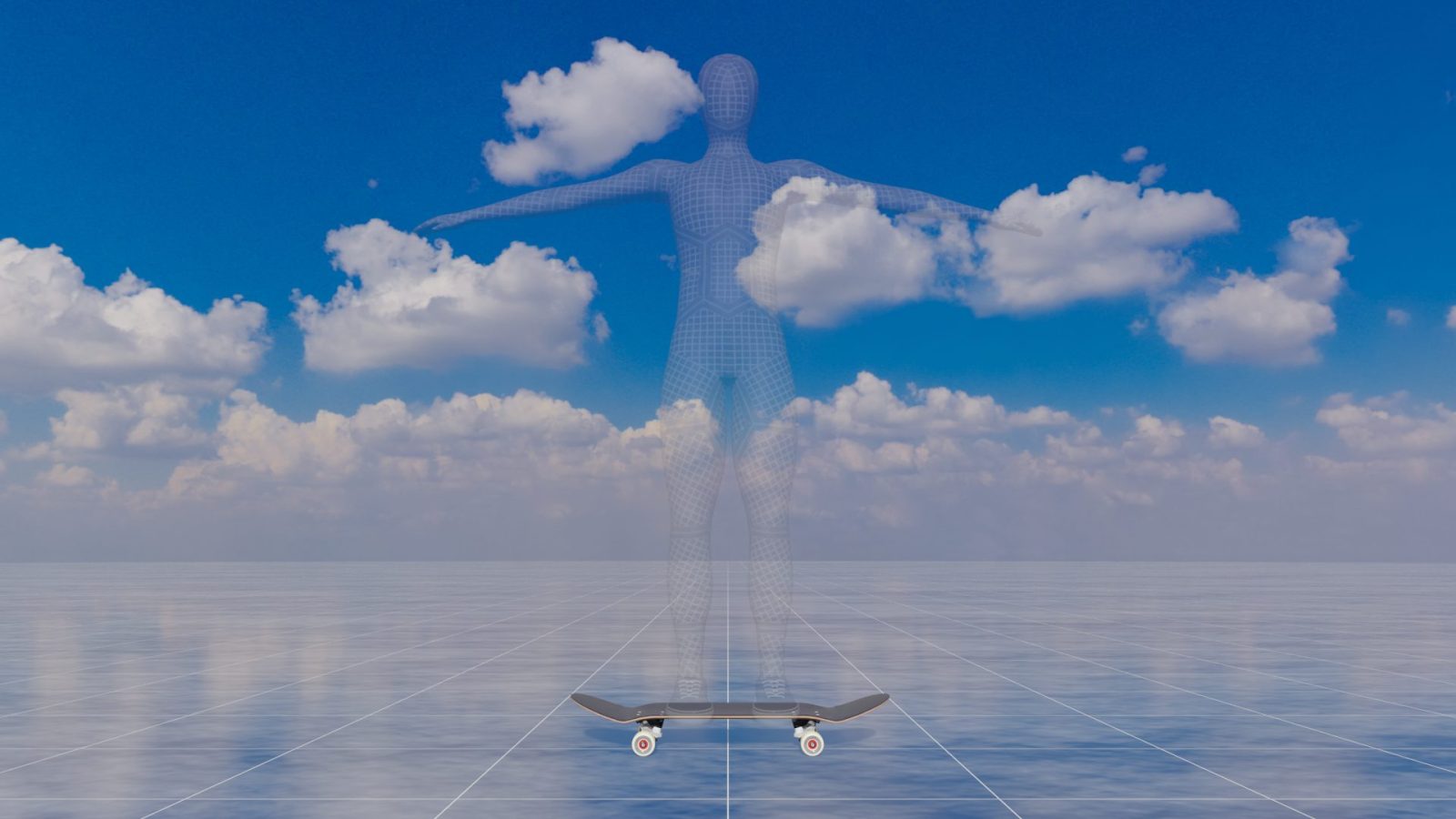
It is true that the back foot ultimately spins the board, but focusing only on its movement causes problems. During a trick, your body weight presses down on the board. No matter how hard you try to scoop with your back foot, the board wouldn't budge, as your body weight pins it down.
And even if you try to compensate by swinging your back foot harder, you won't be able to lift your body weight, and you can't get the airtime you need.
The role of the front foot
To solve these problems, the front foot plays an extremely important role. By rotating your shoulders while pressing the board downward with both the front and back foot, your body weight lifts upward on the rear truck. This not only gives you the airtime but also removes your weight from the board, allowing you to spin it with the same ease as when standing on the ground.
The front foot's role isn't just to lift your body weight. Because the back foot pushes the tail downward, the nose rises and pushes up your front foot. If you stop your front foot halfway, the board's rotation will stop as well. So you need to guide the board's rotation with the front foot, in a way that you send it forward.
Returning to the comparison
In a successful attempt, both feet press down on the board to lift the body. As the body rises, the back foot finally pops the tail at the very end. By this point, there's no weight left on the board, so it spins with tiny effort. You can also see that the front foot stays in the same position from the approach.
In the failed attempt, I'm trying to pop while my body weight is still on the board. The back foot desperately tries to push the tail down, but the board won't budge, only to waste potential energy. By the time I reach the moment when I should pop, there is no energy left. After popping, I spontaneously lift my back foot, which prevents me from transmitting enough energy to the board.
Returning to the comparison
That said, if you are having trouble, trying a different version might give you something new. Open your shoulders and revert first, and then scoop the back foot. I'm not sure if this is even a Fakie Bigspin, but hopefully it gives you something useful.