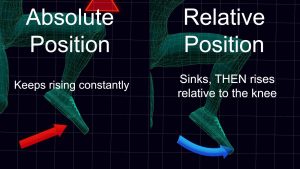
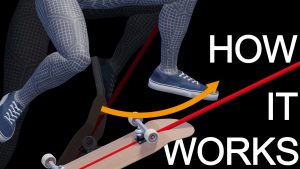
What is the secret behind proper kickflip weight distribution?
Shift your weight toward the heel side before popping, and the board will move naturally beneath you.


Mastering weight distribution is essential for landing back on your deck. This section revisits some fundamental physics to explain how it works.
Instantly discover issues with your tricks and how to fix them.
Deep analyze your motion with the cutting-edge technology.

Track your daily progress and ask questions to others.
Summary
Your board lands toward the heel side.
During the flick, the front foot naturally pulls the board in the heel-side direction. Your body must follow that direction as well.
Lean toward the heel side and jump while keeping your body axis straight.
You cannot change direction once airborne. Distribute your weight toward the heel side before popping so that you can rise vertically while still shifting your mass in the required direction.
Shift your weight backward without tilting your body.
It is important to distinguish between shifting weight toward the heel side and tilting the body’s axis. Avoid leaning your body axis backward, as it will compromise your balance and control.
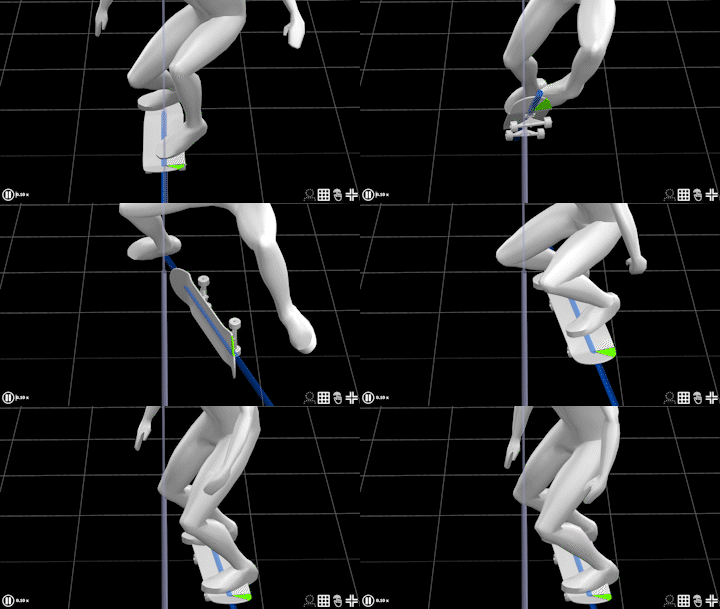
Simulation












Common Question
Do you REALLY jump straight upward?
Many tutorials claim that “you must jump straight upward.” Yet in practice, the board clearly travels toward the heel side during a kickflip. If the board moves in that direction, jumping perfectly upward should make it difficult to land back on it. What explains this difference?
This section reviews the physics behind where the board actually travels and reveals how riders manage to land back on the deck despite this apparent contradiction.
Premises
Where does the board go when you flick it?
When a force is applied to an object in the air—including a skateboard—the object moves in the direction of that force. In a kickflip, the front foot applies force toward the heel side, so the board naturally travels in that direction.
Note
The distance the board travels depends on both the angle and the strength of the flick.
Jump upward while placing your weight on the heel side.
Jumping vertically while distributing your weight toward the heel side allows you to land in that direction without forcing it. It is important to distinguish this from tilting your body’s axis, which may cause you to lose balance. Excessive tilt can also unintentionally push the board toward the toe side.
By shifting your weight toward the heel side while keeping your body axis upright, you can take advantage of the ground’s reaction force: it propels you upward while simultaneously guiding your mass toward the heel side.

Execution
Step #1: Master the flick and learn where the board lands.
Before focusing on weight distribution, it is essential to master the flicking motion. You must be able to flick consistently and recognize where the board tends to land.
A practical exercise is to flick while stepping off the board toward the toe side, allowing the back foot to land on the ground. Keep your body axis vertical. Continue practicing until your board consistently lands about one deck-width toward the heel side from where it started.
Note
If the board shoots off unpredictably, this is often due to either overflicking or overpopping. Revisit those fundamentals as needed.
Step #2: Shift your weight toward the heel side and then flick.
Begin the movement by shifting your weight toward the heel side. The image demonstrates how the body’s center moves laterally. The required distance varies depending on foot placement, body composition, and personal riding style, so find the distribution that aligns best with your balance.
Note
- Do not tilt your body axis. Instead, shift your weight toward the heel side while keeping your body upright.
- Avoid leaning excessively backward. Unlike overpops or overflicks, overleaning is easy to notice because you will immediately lose stability on the board.