

A frequently reported issue is the difficulty in keeping the board aligned with the direction of travel. But does this problem truly arise only from the shoulders?
Instantly discover issues with your tricks and how to fix them.
Deep analyze your motion with the cutting-edge technology.
Track your daily progress and ask questions to others.
Summary
Why does my Ollie turn?
There are several factors that can contribute to this issue. Although shoulder alignment is a major influence, weight distribution is equally critical. When the body leans toward the heel side, it naturally attempts to maintain balance by drawing the front foot back underneath the center of mass. Even with closed shoulders, this compensatory motion can cause the board to turn.
Should I close my shoulders?
It is advisable to avoid opening the shoulders excessively; however, they do not need to be perfectly parallel to the board.It's just like you can jump with your shoulders somewhat open.
Where should I keep my weight?
Maintain your weight directly over the board throughout the motion. Leaning toward the heel side increases the likelihood of the board turning, even if the shoulders are properly aligned.
Simulation













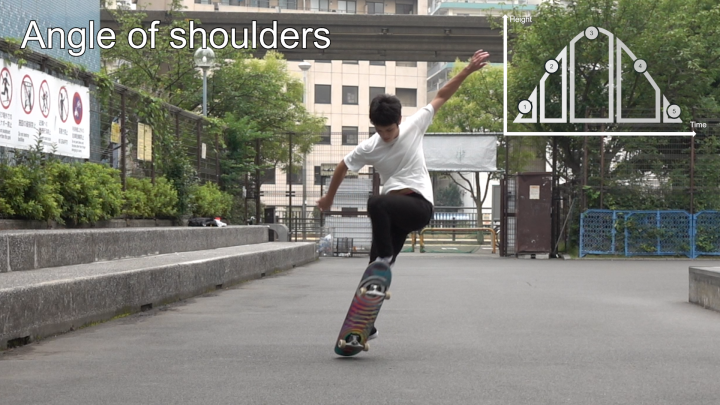
Angle of shoulders
Opening the shoulders can certainly contribute to the issue under certain conditions, but it is not always the primary cause. More importantly, there are several distinct ways in which the shoulders can open.
For example, you may open your shoulders at the moment you jump, or you may maintain an open shoulder angle throughout the entire Ollie. These are fundamentally different actions, each producing different mechanical consequences. Let us examine these variations separately to understand their individual effects.
Case 1: Opening your shoulders when jumping up
This should be avoided, as it imparts horizontal momentum to the board. This case is characterized by the board beginning to turn while it is rising.
Once horizontal momentum is introduced, the board begins rotating immediately after leaving the ground. By the time it reaches the peak of the Ollie, it will already have turned noticeably.
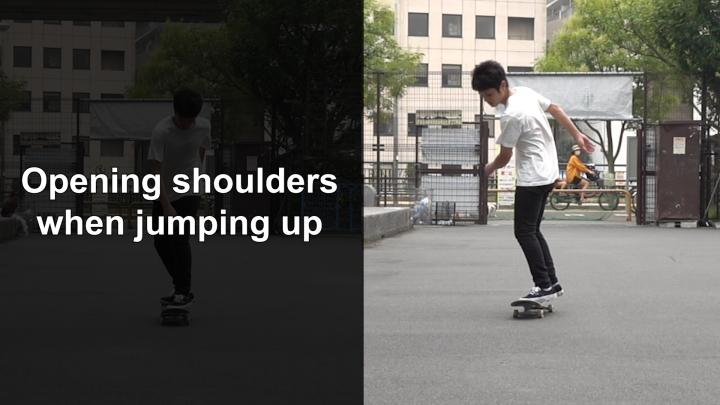
Case 2: Ollieing with your shoulders open throughout
Although maintaining open shoulders may make it more difficult to align the board with the direction of travel, it is not a direct cause of the board turning.
For instance, during a light Ollie, the lower body maintains some distance from the upper body and can absorb the upper body’s horizontal rotation.

The problem arises when performing a higher Ollie. As you pull your feet upward and closer to your torso, the angle of the lower body approaches that of the upper body. When this happens, the board will begin to turn near the peak of the motion.
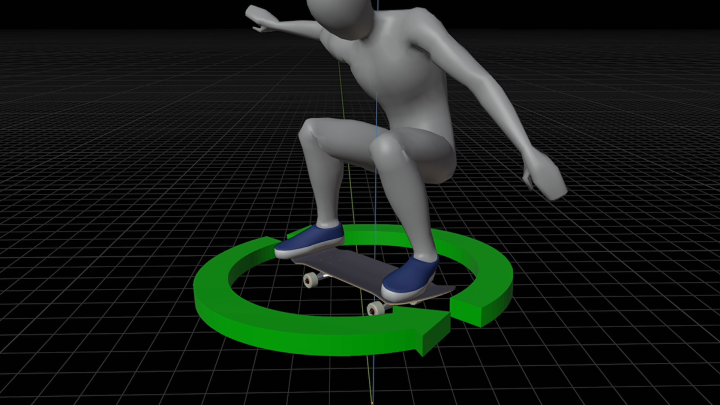
Conclusion on the angle of shoulders
You do not need to force your shoulders to be perfectly parallel to the board. What matters the most is to find a right angle of shoulders at which you can crouch firmly.

Weight distribution
The most underestimated yet fundamentally important factor
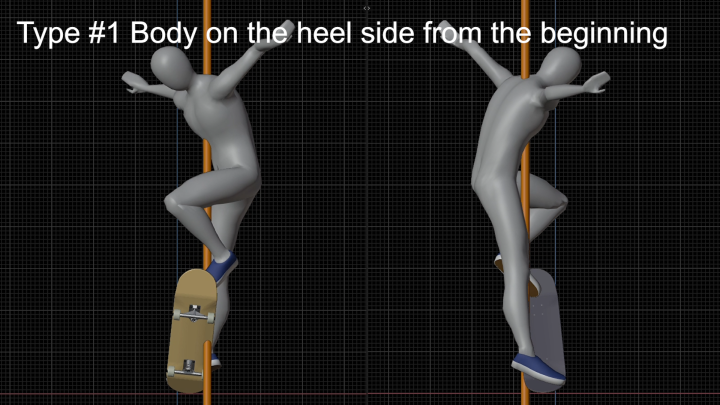
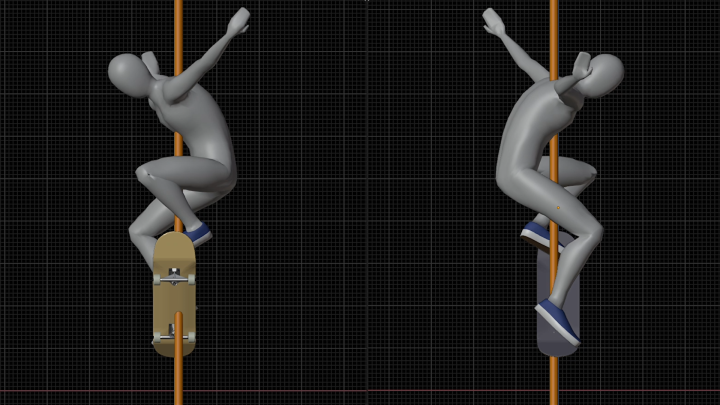
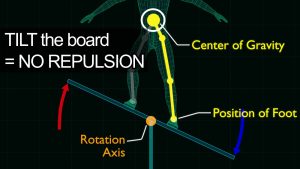
When your weight shifts to the heel side after popping the tail, the body instinctively draws the front foot back underneath the center of mass to regain support before landing. Even with closed shoulders, this motion can cause the board to turn. This problem is classified into the following two patterns.
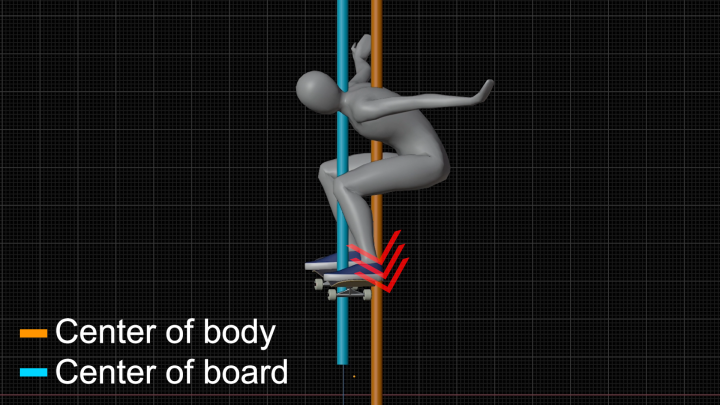
Type #1: Your center of gravity is on the heel side from the start
This often occurs when skaters feel hesitant about landing back on the board, particularly when they are not yet accustomed to the sensation of committing fully.
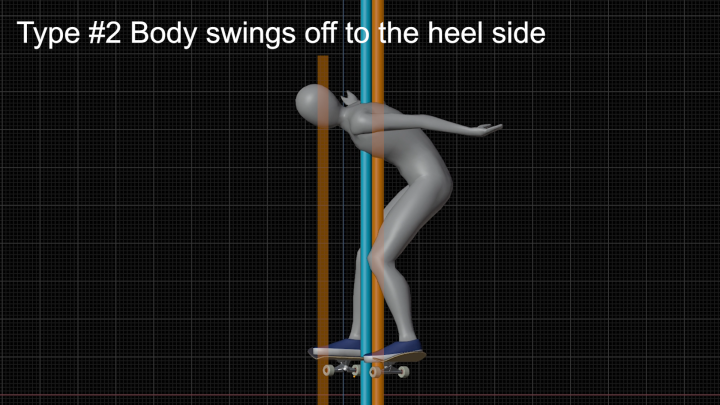
Type #2: Your center of gravity shifts to the heel side during the motion
If you hunch forward while crouching, your center of gravity may initially be on the toe side. However, as you extend your back during the jump, the center of gravity can swing toward the heel side, which may induce rotation.
How to avoid these problems
Keep your center of gravity directly above the board throughout the entire motion.
A simple way to check this is to remain low momentarily after crouching. If you can continue traveling straight, your center of gravity is positioned correctly.
If you begin turning at this stage, your weight distribution may be off. Adjust it according to which of the two patterns applies to you.
Foot placement
How can foot placement turn your Ollie?
Even with proper shoulder alignment and weight distribution, the board may still turn. In such cases, the remaining factors—including foot placement—should be examined.
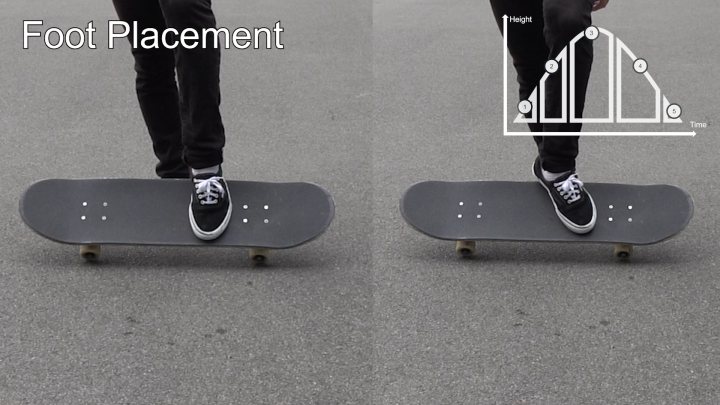
Placing the front foot at a strict right angle to the board can sometimes induce rotation, particularly if your toes naturally point outward.
When you twist your front foot inward to force a right angle, the foot naturally tries to return to its original orientation. This recoil can cause the board to rotate in the air. This effect typically begins as soon as the board leaves the ground.

Place your front foot in a naturally comfortable position
To prevent this, set your front foot in a position that feels natural rather than forcing a perfect right angle.
Direction of pop and slide
Popping or sliding in the wrong direction may also turn your board
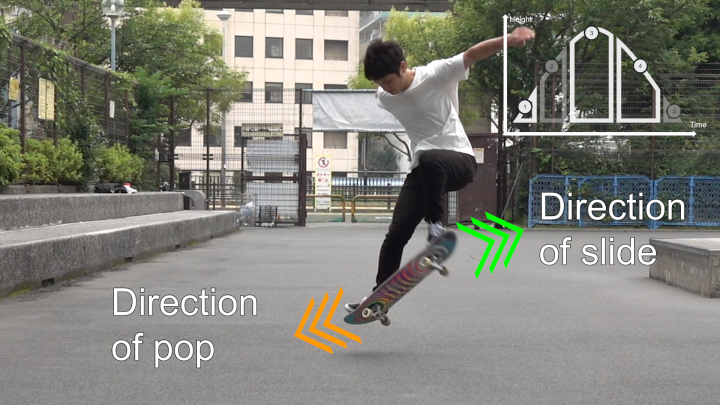
If you push your back foot outward, as if initiating a Frontside Pop Shove-it, the board will begin to rotate. Likewise, sliding the front foot diagonally to the side can produce the same result.
To avoid this, pop the tail straight down and slide the front foot upward in a direction parallel to your path of travel.
Consider these factors in combination with the angle of the shoulders
Excessively opening the shoulders may unintentionally direct the slide sideways.
However, your shoulders do not need to be perfectly parallel to the board. If you put your front foot at an angle you feel comfortable and crouch, your shoulders naturally open to an extent. So, don't be particular about the angle of shoulders.

sweet analysis man