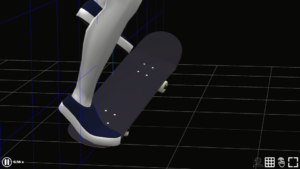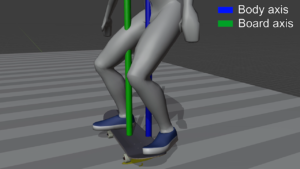
In this article, my aim is to explain how to perform a low, effortless, and consistent pop shove-it, and how to practice it effectively. This principle also forms a foundation for more advanced variations, whether you are working on flat-ground big spins or tricks performed off a bank.
Instantly discover issues with your tricks and how to fix them.
Deep analyze your motion with the cutting-edge technology.

Track your daily progress and ask questions to others.
Summary
Make sure to lift your body weight first.
Have you ever wondered why your board does not rotate even when you apply a strong pop? As long as your weight is pressing down on the deck, the board cannot spin efficiently. Lift your weight first, and then the board can rotate with only a minimal amount of energy.
How to spin the board?
You do not need to swing your back foot deliberately. When your weight is placed on the toe side, simply pushing down the tail is enough to initiate the rotation.
How to land back on the board?
Because the front portion of the deck has greater mass than the rear as you pop, the board naturally swings out toward the toe side. Shift your weight toward the toe side and let the board slide underneath you.
Simulation












What makes it difficult to spin your board?
Necessary amount of energy
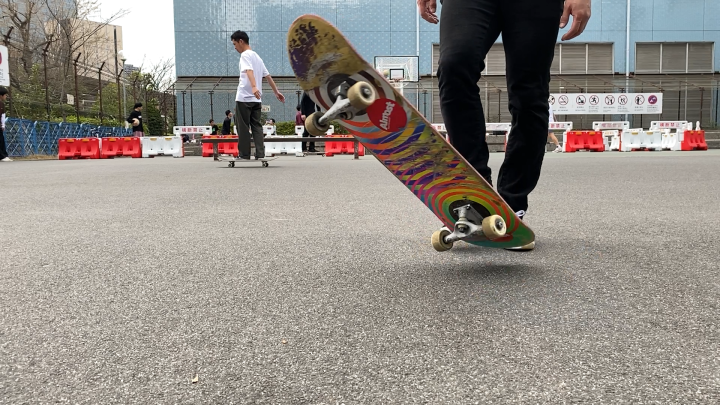
First, consider how little energy is actually required to make the board rotate. When the board is on the ground with no weight on it, even the slightest nudge—not even a full shove—is enough to make it spin smoothly.
Why is it so much harder when you are on your board?
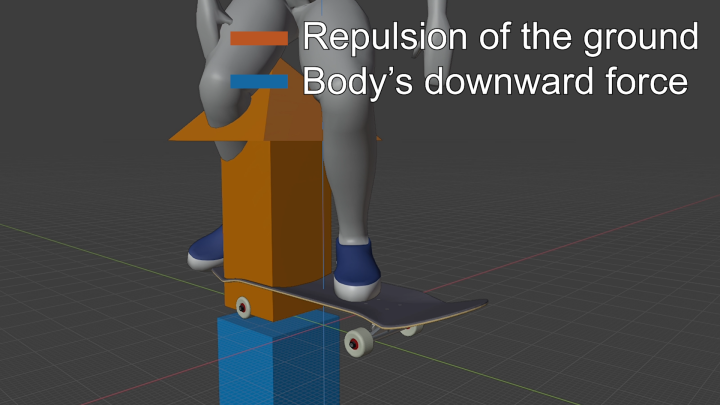
The reason is simple: your body weight is pressing down on the deck. When your body tries to generate upward force to jump, that force is first applied downward onto the board.
During this phase, your front foot transfers that downward pressure directly to the deck, effectively making it heavier. And as you know, a heavier object is less likely to move. This is exactly why spinning the board becomes difficult while you are standing on it.

How to spin your board most effectively
Conversely, the moment your body begins to rise, your weight is no longer pressing down on the deck.
Once that downward force disappears, the board rotates with the same minimal energy you would use when spinning it on the ground with no weight on it.
Timing of the pop shove-it
What happens if your timing is wrong
If the timing is off, you are forced to scoop the tail while your front foot is still pressing the board down. Needless to say, this is highly inefficient and makes rotation much harder.
How to practice the correct timing
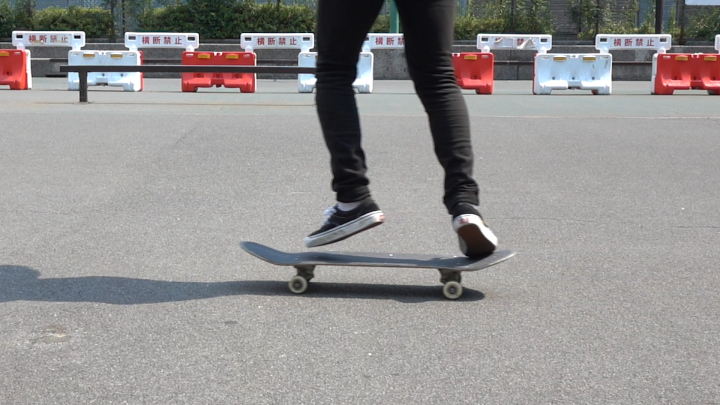
Before you pop, your body must already be moving upward. A good way to practice this is to learn to lift your weight without actually jumping. When you feel your body lighten and your feet start to feel weightless, the timing is correct. From that state, simply push down the tail, and the board should rotate as easily as it does when placed on the ground.
Another issue: the turning-shoulder problem
Why do your shoulders turn in a pop shove-it?
This timing mistake often reveals itself when your shoulders rotate in the opposite direction of your scoop.
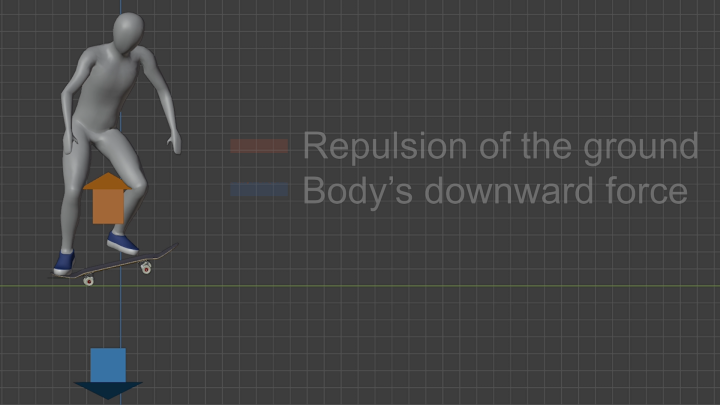
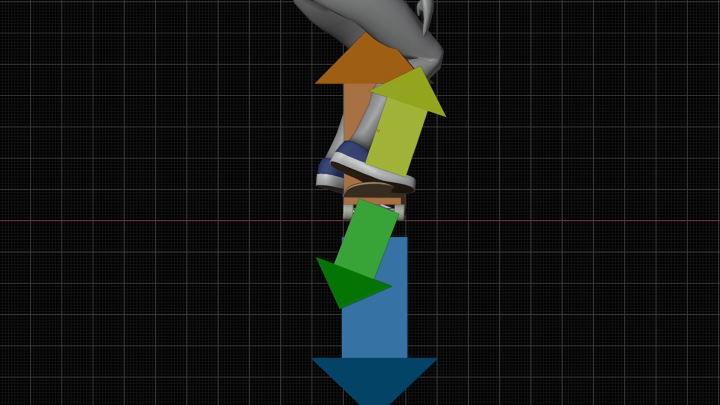
When you jump, the downward momentum of your body is transferred into the ground, and the ground reacts by pushing your body upward. This reaction is what allows you to leave the ground.
If you add horizontal rotation to this process, the same physics apply: the ground pushes your body in the opposite direction of the force you exert. In other words, if you try to scoop the tail while your body is still generating upward force, the ground creates a counter-reaction that twists your body in the air.
How to avoid the turning-shoulder problem
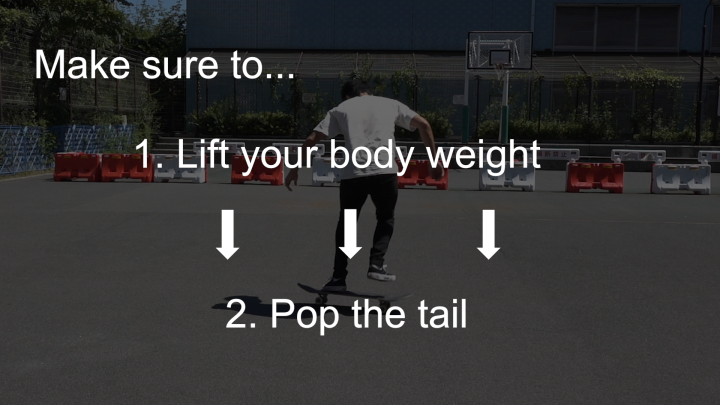
To avoid receiving this direct reaction from the ground, ensure that you lift your weight first and only pop after your body is already rising.
Once your body is moving upward, the repulsive force from the ground becomes significantly weaker, even when you push down on the tail.
Landing
Where does your board go in a pop shove-it?
Because the mass concentrates on the front part of the deck as you pop, the board naturally swings out toward the toe side as it rotates. Therefore, if you jump straight upward, the board tends to move out in front of you.
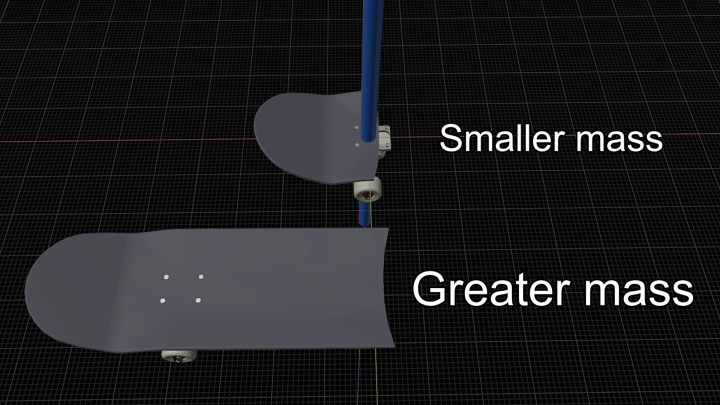
Let the board slip back under your feet
To land properly, try shifting your weight toward the toe side before leaving the ground.
This creates a difference between your body’s center of mass and the point of action—in this case, the tail. This difference makes it possible to rotate the board with little more than a simple downward press on the tail.
As the board moves toward the toe side for this reason, it naturally slides back beneath your feet before you touch down.

Practice while moving
To develop this movement, practice the trick while rolling. When you are moving forward, leaning toward the toe side still allows you to continue riding along an arc without losing balance.
Try to visualize where your body will be just before leaving the ground. As a general guideline, shifting your weight roughly 30 cm forward works for many skaters, although this varies depending on your body structure and your board setup.
Experiment with different weight distributions and find the one that suits you best.