

Sweeper is safer than you might think. There's a way to avoid injury.
Key points:
1. Try it on flat ground first. Place your back foot right next to the tail, and step on it with a minimum jump. On a ramp, start with the same motion and gradually jump farther forward.
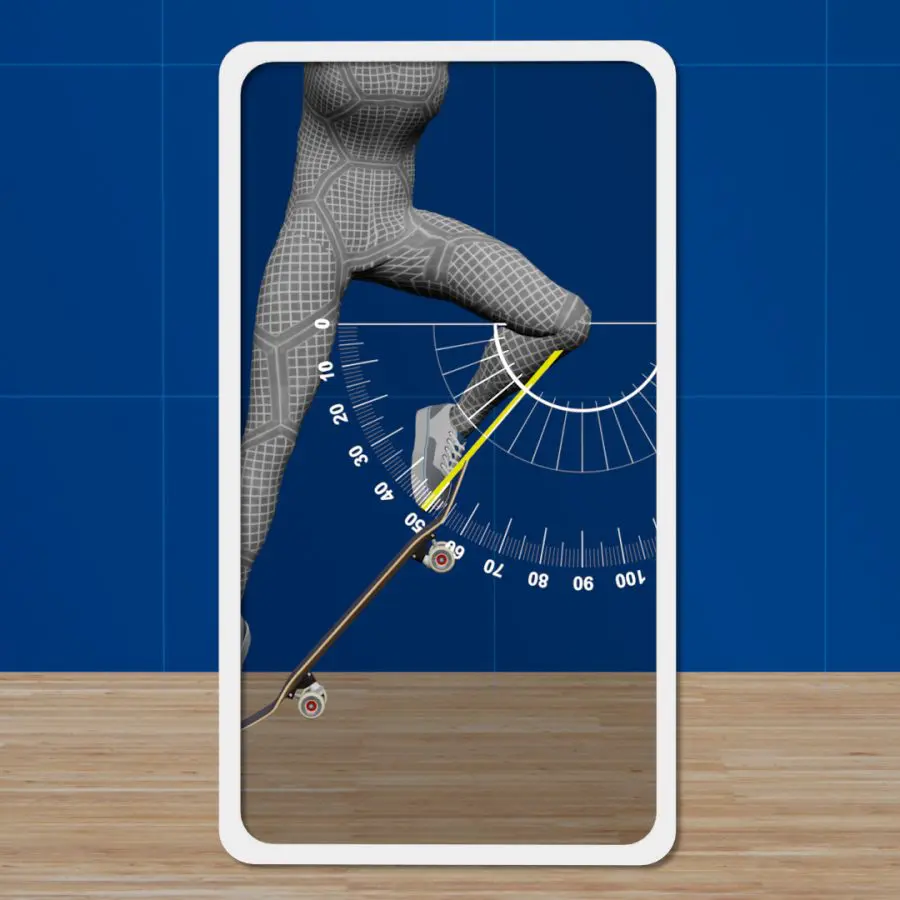
2. The board often flies away. So, lightly push the tail and let it come up vertically. After catching it, tuck your knee to lock the board in place.
How to Overcome The Fear of Jumping Back On
The biggest fear is probably missing your footing and rolling your front foot or falling from your board. When we feel fear, our bodies tense up to protect ourselves from external threats. But this stiffness makes it easier to lose balance.
In order to break through the barrier of fear, practice jumping onto the tail on flat ground in a safe environment. When you do this, place your back foot right next to the tail and try to keep your body movement to a minimum. That's the key to maintaining balance.
Once you're comfortable, move on to the ramp. At first, take your time and set the tail onto the coping. Just like you did on flat ground, keep the jump as low as possible and place your back foot onto the tail. Once you put your weight on the tail, it's essentially no different from a normal drop-in. As you get used to this motion, gradually practice jumping slightly more into the ramp, little by little.
Another common fear is getting caught on the coping. Since you will swing the board out onto the ramp deck and then bring it back in, the rear truck can sometimes catch on the coping. Again, take your time at first. Guide the Nose with your front hand and make sure the rear truck has completely cleared the coping before jumping onto the board.
How to Keep The Board Under Your Feet
The next important part is catching the board. The board often flies off somewhere. Since many ramps have a mellow transition, it's natural for the board to follow a trajectory that sends it toward the deck of the ramp. If you try to bring the board back into the ramp from a distance, the extra movement makes it harder to return smoothly. Therefore, even with a mellow transition, you need to find a way to keep the board over the coping.
To achieve this, when the board is about to leave the ramp, give the tail a gentle push. It's not a pop—imagine gently guiding the tail closer to the surface of the ramp. Doing this brings the board back inside the ramp, and it pops up vertically. If you feel the wheels bonk against the coping, you are doing it right.
Now, it's easier to catch it. But even if you manage to grab the board, sometimes you can't keep it under your feet. This happens because the more you try to return to the inside of the ramp, the more your body leans back, and as a result, your front foot ends up pushing the board away from you. To fix this, pull your front knee toward your chest and keep your body compact. If you pull the Nose with your front hand while gently pushing it with your front foot, your body and the board can move as one. Wherever the board goes, your front foot follows, and it won't slip off the Nose.
The height of your body's center of gravity changes depending on the ramp's height and your approach speed, so adjust how you extend your back leg to support your body weight while keeping your upper body compact.
Variation
There are many variations of footplants. This is my favorite. Because you get out and in in your main stance, it feels stable. Jumping back onto the board is the hardest part, but remember, you don't have to jump really high and risk rolling your ankle. Instead, if you place your board on the ramp and jump onto it, it becomes nothing. The point is, there are always ways to make it easier.