

There are four key points.
1. Push your back foot forward as if you see your heel.
2. As you do this, you'll be thrown forward if you do nothing, so extend your body and push out the board against friction.
3. Loosen the angle of your feet to avoid leaning too far forward.
4. If it's hard to slide, consider using larger wheels.
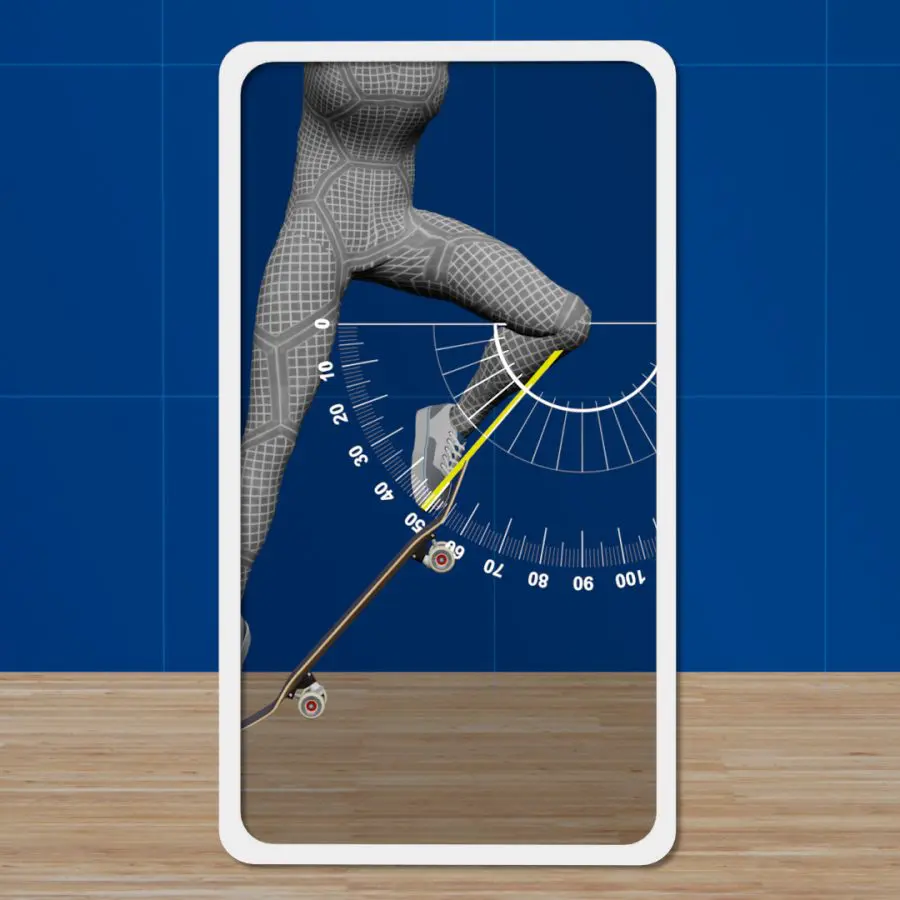
Push your back foot forward until you can see your heel
First and foremost, the most important thing is to push your back foot forward so much that its heel becomes visible.
A common mistake is dropping your gaze and rotating your upper body too much; this can cause you to spin a full 180 degrees or end up with your back facing the direction of travel.
In order to reorient the board back toward the original direction of travel, twist your body and use the force generated as it tries to return. The body has elasticity, so when it is twisted, it naturally attempts to return to its original position.
Specifically, keep your center of gravity slightly toward your front foot. Keep your gaze in the direction of travel, open your shoulders, and push your back foot forward until it enters your field of view. What matters is that the back foot comes far enough forward to be visible; there is no need to stare at it. At first, don't worry about re-rotating the board or about sliding for a long distance. Just focus on making sure your back foot moves forward reliably. You don't get to see the heel of your back foot in Skateboarding very often, do you? It's fun and very unique to this movement.
You also don't need to worry too much about the board's angle; you can still slide it without rotating it all the way to 90 degrees. If the board rotates less, your upper-body rotation can also be smaller. That said, the feeling of pushing the back foot forward while twisting your body is quite unique, so I'd recommend getting used to the feeling of rotating it close to 90 degrees as much as possible.
Extend your body and push the board out while resisting friction
By doing all these so far, your body can build up a twist that will help re-rotate the board back to its original direction. However, as is, the board will receive strong resistance from the ground, and only your body will be thrown forward. Therefore, you need to push your center of gravity in the direction opposite to the travel in order to overcome the resistance from the ground.
Keeping your feet flat
Try to keep your feet flat so that the pressure is distributed over a wider area of the board. This is actually the biggest factor that makes Backside Powerslides difficult. When you extend your body to push your board through friction against the ground, it's only natural that you want to extend your toes.
However, doing so makes it harder to rotate the board, as the wheels bite into the ground more firmly. And it is very much understandable that you want to rotate your shoulders so that you can force the wheels to scrape the surface of the ground. But even if you manage to rotate your board, you won't be able to rewind its angle, and putting too much weight on your toes can cause your body to lean too far forward and fall.
To prevent this, even though it is against intuition, loosen the angle of your feet so that you can keep them flatter. Acquiring the sensation of the proper angle of the feet requires practice, but it does not necessarily involve risk. You can try different angles by leaning your body backward while holding onto something. The ideal angle depends on your setup and approach speed, so try different angles yourself.
Use larger wheels if it's hard to slide
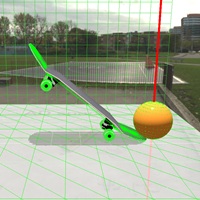
If you find it hard to slide no matter what, try switching to larger wheels. In fact, Powerslides can be easier with larger ones due to physics. Let's consider what happens when you slide the board sideways while stationary. In this situation, the same spot on the wheel continues to rub against the ground, generating resistance as it deforms. The more strongly and the longer the same spot deforms, the more energy it consumes, and the faster you slow down.
During a Powerslide, unlike in a stationary state, the wheels spin as they slide sideways across the ground. As a result, the points of contact with the ground constantly change.
This is when the importance of wheel size comes into play. Please note it is NOT 100% accurate, but we could say friction from the ground increases when the resistance concentrates on a single spot for a longer period. Now, smaller wheels tend to lose rotational speed quickly with even a small amount of resistance. As the rotation slows, the same section of the wheel stays in contact with the ground longer, increasing resistance.
On the contrary, larger wheels are less likely to stop rotating compared to smaller ones. So, the load is distributed over a wider area, and one part of the wheel stays in contact with the ground for a shorter time, which can reduce resistance.
Please also note. While smaller wheels can stop spinning easily, when stationary, they have less friction with the ground, so it takes less force to start sliding. The problem is that if they start sliding too easily, you can easily lean your body axis too suddenly, which can cause you to fall backward. Although larger wheels require more force to initiate the slide, the benefit of being able to entrust your body weight to them is far greater.